


Effect of the side ethylene glycol and hydroxyl groups on the polymerization kinetics of oligo(ethylene glycol methacrylates). An experimental and modeling investigation
文献信息
发布日期
2020-05-05
DOI
10.1039/D0PY00498G
影响因子
5.582
作者
Mohammad Nahid Siddiqui, Dimitris S. Achilias, Halim Hamid Redhwi
查看原文
摘要
Polymers based on methacrylates bearing short oligo(ethylene glycol) side parts constitute a modern class of stimuli-responsive, biocompatible materials exhibiting several important biological applications. A study of their polymerization kinetics considering also the effect of functional (such as hydroxyl) groups in the macromolecular chain is very important in order to set the appropriate reaction parameters (such as time, temperature, etc.). The materials investigated were based on oligo(ethylene glycol) methyl ether methacrylate with 4–5 ethylene oxide units, POEGMMA300 and oligo(ethylene glycol) hydroxyethyl methacrylate with nearly 5 ethylene oxide units and a terminal hydroxyl group, POEGHEMA. Experimental data on their bulk radical polymerization were collected under both isothermal and non-isothermal reaction conditions and compared with the corresponding data from polymers without PEG units. An appropriate theoretical model was also developed taking into account the effect of diffusion controlled phenomena on the reaction kinetic rate constants and used to simulate the experimental data over the whole conversion range. From the experimental data the term that combines the kinetic rate coefficients of the propagation and termination reaction, i.e. kp2/kt, was evaluated. It was found that these values increase with the increasing size of the ester group for both POEGMMA300 compared to PMMA and POEGHEMA compared to PHEMA. The presence of the hydroxyl group in POEGHEMA resulted in a higher polymerization rate compared to POEGMMA300. In contrast, verifying similar literature findings, the effective activation energy, as well as the activation energies of the propagation and termination reactions were found not to be significantly affected by the presence of the side groups. Furthermore, the presence of the hydroxyl groups leads to slightly higher critical free volumes for the onset of the gel- and glass-effect, meaning an earlier effect of the diffusion-controlled phenomena on both the termination and propagation reactions. Using appropriate equations correlating all parameters with temperature, the predictive capabilities of the model were tested in non-isothermal runs and the simulation of the experimental data was found to be very good. Depropagation reactions were not found to play a significant role, since all non-isothermal experiments were completed at temperatures less than 120 °C, below the ceiling temperature of the systems.
期刊推荐
Bioorganic & Medicinal Chemistry Letters
Biocatalysis and Biotransformation
Polycyclic Aromatic Compounds

Journal of the Indian Institute of Science
Cellulose
Journal of Asian Natural Products Research
Medicinal Chemistry Research
Electroanalysis
NDT & E International
Acta Metallurgica Sinica-English Letters
相关文献
Benzimidazole-1,2,3-triazole hybrid molecules: synthesis and study of their interaction with G-quadruplex DNA
Ushasri Chilakamarthi, Namita S. Mahadik, Bhamidipati Keerti, Santosh N. Mokale, Narayana Nagesh
2021-02-22
Research Article
DOI: 10.1039/D0MD00414F
Macrocyclization strategies for cyclic peptides and peptidomimetics
Clément Bechtler, Christina Lamers
2021-06-29
Review Article
DOI: 10.1039/D1MD00083G
Profiling MAP kinase cysteines for targeted covalent inhibitor design
Ruibin Liu, Neha Verma, Jack A. Henderson, Shaoqi Zhan, Jana Shen
2021-11-03
Research Article
DOI: 10.1039/D1MD00277E
Identification of P218 as a potent inhibitor of Mycobacterium ulcerans DHFR
Rachael Zigweid, Bart L. Staker
2020-10-22
Research Article
DOI: 10.1039/D0MD00303D
Modulating β-arrestin 2 recruitment at the δ- and μ-opioid receptors using peptidomimetic ligands
Krishna K. Sharma, Robert J. Cassell, Hongyu Su, Benjamin R. Cummins, Kendall L. Mores, David K. Johnson
2021-08-16
Research Article
DOI: 10.1039/D1MD00025J
Monobodies as tool biologics for accelerating target validation and druggable site discovery
Padma Akkapeddi, Kai Wen Teng
2021-09-13
Review Article
DOI: 10.1039/D1MD00188D
Synthesis and biological evaluation of N6 derivatives of 8-azapurine as novel antiplatelet agents
Zhichang Zhao, Yeming Wang, Hong Yan, Juan Wang
2021-07-13
Research Article
DOI: 10.1039/D1MD00128K
Second-generation tricyclic pyrimido-pyrrolo-oxazine mTOR inhibitor with predicted blood–brain barrier permeability
Chiara Borsari, Erhan Keles, Andrea Treyer, Martina De Pascale, Matthias Hamburger, Matthias P. Wymann
2021-01-12
Research Article
DOI: 10.1039/D0MD00408A
Proline pre-conditioning of cell monolayers increases post-thaw recovery and viability by distinct mechanisms to other osmolytes‡
Trisha L. Bailey, Juan Ramon Hernandez-Fernaud
2021-05-18
Research Article
DOI: 10.1039/D1MD00078K
The right tools for the job: the central role for next generation chemical probes and chemistry-based target deconvolution methods in phenotypic drug discovery
2021-03-24
Review Article
DOI: 10.1039/D1MD00022E
您可能还喜欢
化合物问答
什么是2-氨基戊烷(CAS号:63493-28-7)?
2-氨基戊烷,又名pentan-2-amine,是一种有机化合物,分子式为C5H11NH2。它是一种无色透明液体,有氨味。该化合物在工业和研究中有一定的应用。
63493-28-7pentan-2-amine
化合物问答
反式-4-[4-[[[5-[(3,4-二氟苯基)氨基]-1,3,4-恶二唑-2-基]羰基]氨基]苯基]环己烷乙酸(CAS号:892489-52-0)的物理化学性质是什么?
该化合物为白色固体,分子量为552.31 g/mol。它在水中溶解度较低,在有机溶剂如乙腈、乙酸乙酯中有较好的溶解性。该化合物具有较高的化学稳定性,对酸和碱具有...
892489-52-0Trans-4-[4-[[[5-[(3,...
化合物问答
如何处理含有Pyrotinib dimaleate(CAS号:1397922-61-0)的废料?
处理含有Pyrotinib dimaleate 的废料时,应遵循当地的法规要求。首先,收集废料并进行分类,确保没有与其他化学品混合。然后,采取适当的物理和化学处...
1397922-61-0(2E)-N-(4-{[3-Chloro...
化合物问答
在合成中是否有4-(5-5-乙基-1,2,4-噁二唑-3-基)苯甲酸乙酯(CAS号:1166756-79-1)的替代品?
在合成过程中,可以考虑使用其他结构类似的化合物作为替代品,例如苯甲酸酯类化合物,如2-乙基-5-甲基噁二唑基苯甲酸乙酯等。这些替代品可能具有相似的化学性质,但在...
1166756-79-1Ethyl 4-(5-ethyl-1,2...
化合物问答
如何处理含有1-((叔丁氧基羰基)氨基)环丁烷甲酸甲酯(CAS号:880166-10-9)的废料?
处理含有该化合物的废液时,应先确保其完全反应并转化为无害物质。对于未反应的化合物,建议采用中和处理后进行蒸馏回收,剩余物可使用化学氧化法或焚烧法进行无害化处理。...
880166-10-9Methyl 1-({[(2-methy...
化合物问答
2-({[3,5-二(三氟甲基)苯基]磺酰基}氨基)-4-(甲基硫代)丁酸甲酯(CAS号:175202-21-8)的市场或研究趋势如何?
目前该化合物主要应用于药物合成领域,尤其在开发新型抗癌药物方面具有潜在应用。随着制药行业的持续发展,对于高效、低毒的合成中间体需求增加,预计该化合物的研究和应用...
175202-21-8Methyl N-{[3,5-bis(t...
化合物问答
N,N-乙烯双(碘乙酰胺)(CAS号:7250-43-3)的物理化学性质是什么?
N,N-乙烯双(碘乙酰胺)是一种白色或类白色固体,易溶于乙醇、丙酮等有机溶剂,但在水中溶解度较低。该化合物具有较高的反应活性,可以与其他含有活性氢的化合物发生酰...
7250-43-3N,N'-1,2-Ethanediylb...
化合物问答
7-Fluoro-1H-spiro[furo[3,4-c]pyridine-3,4'-piperidine](CAS号:1283090-73-2)通常如何合成?
该化合物可以通过环合反应合成,首先合成吡啶和哌啶的衍生物,然后在合适的条件下进行环合反应得到目标化合物。常用的催化剂包括某些金属盐类,产率一般在70%-90%之...
1283090-73-27-Fluoro-1H-spiro[fu...
化合物问答
处理3-乙酰滇乌碱(CAS号:80787-51-5)时应注意哪些实验室安全事项?
在处理3-乙酰滇乌碱时,应穿戴适当的个人防护装备(PPE),如实验服、手套(丁腈手套或PVC手套)、护目镜和口罩。实验应在通风橱中进行,以减少吸入或皮肤接触的风...
80787-51-54-Methylaconitane-1,...
化合物问答
如何储存2-溴-5-硝基-4-羧酸(CAS号:1053655-82-5)?
2-溴-5-硝基-4-羧酸应存放在阴凉、干燥、通风良好的地方,远离火源和热源。避免与还原剂、碱性物质接触。储存容器应密封,防止吸湿。
1053655-82-52-Bromo-5-nitropyrid...
来源期刊
Polymer Chemistry

CiteScore:
8.6
自引率:
7.3%
年发文量:
457
Polymer Chemistry welcomes submissions in all areas of polymer science that have a strong focus on macromolecular chemistry. Manuscripts may cover a broad range of fields, yet no direct application focus is required.
推荐化合物
![2-morpholino-2-[2-(trifluoromethyl)pyrimidin-5-yl]ethanamine structure](https://cnstatic.chemtradehub.com/structs/119/1192570-20-9-2810.webp "2-morpholino-2-[2-(trifluoromethyl)pyrimidin-5-yl]ethanamine structure")
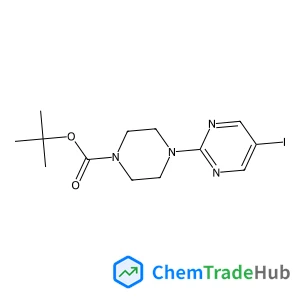
2-Methyl-2-propanyl 4-(5-iodo-2-pyrimidinyl)-1-piperazinecarboxylate
CAS号:
1027616-32-5
分子式:
C13H19IN4O2
![Benzo[b]naphtho[2,1-d]thiophene structure](https://cnstatic.chemtradehub.com/structs/239/239-35-0-ff90.webp "Benzo[b]naphtho[2,1-d]thiophene structure")
推荐供应商





免责声明
本页面提供的学术期刊信息仅供参考和研究使用。我们与任何期刊出版商均无关联,也不处理投稿事宜。如有投稿相关咨询,请直接联系相关期刊出版商。
如发现页面信息有误,请发送邮件至 support@chemtradehub.com 联系我们。我们将及时核实并处理您的问题。