



High chemical recyclability of vinyl lactone acrylic bioplastics
文献信息
发布日期
2020-07-01
DOI
10.1039/D0PY00786B
影响因子
5.582
作者
Reid A. Gilsdorf, Matthew A. Nicki, Eugene Y.-X. Chen
查看原文
摘要
The depolymerization selectivity of poly(methyl methacrylate) (PMMA) under thermolysis and dynamic vacuum is inherently limited by the repeat-unit structure, leaving much (∼47%) of PMMA to fragment and carbonize to char. Here we show that renewable, high-performance alternatives to PMMA with vinyl lactone repeat units, poly(α-methylene-γ-butyrolactone) (PMBL) and poly(γ-methyl-α-methylene-γ-butyrolactone) (PγMMBL), unexpectedly depolymerize much more selectively and recover monomers with considerably higher yield and purity than PMMA (76% pure monomer isolated from PγMMBL) and are also devoid of char formation, leaving the residue as only the oligomers with a total mass balance. To uncover the origin of the unexpected high chemical recyclability of P(M)MBL, this study has ascertained their ceiling temperature (Tc) by density functional theory, trapped and analyzed both primary and tertiary macroradicals generated during the depolymerization, and probed the stability of macroradicals using Lewis acid additives and mixed plastic feeds. The evidence obtained through this study suggests that the much enhanced recyclability of P(M)MBL bioplastics relative to PMMA is not due to their differences in Tc values, but rather the linear ester and cyclic ester-imparted difference in stability and monomer-production roles of primary and tertiary macroradicals generated in the random chain scission processes.
相关文献
A novel paper-based colorimetry device for the determination of the albumin to creatinine ratio
Sudkate Chaiyo, Kurt Kalcher, Amara Apilux, Orawon Chailapakul, Weena Siangproh
2018-10-09
Paper
DOI: 10.1039/C8AN01122B
Direct, uncorrected, molecule-free analysis of 236U from uranium-bearing particles with NAUTILUS: a new kind of mass spectrometer
D. Willingham, E. E. Groopman, K. S. Grabowski, L. Sangely
2018-09-07
Paper
DOI: 10.1039/C8AN01451E
Benzimidazole-containing aramid nanofiber for naked-eye detection of heavy metal ions
Zheng Cheng, Zhenyuan Bai, Yu Dai, Longbo Luo, Xiangyang Liu
2018-09-18
Paper
DOI: 10.1039/C8AN01484A
Infrared imaging of high density protein arrays
Joëlle De Meutter, Julie Vandenameele, André Matagne, Erik Goormaghtigh
2016-11-28
Paper
DOI: 10.1039/C6AN02048H
Development of a selective and highly sensitive fluorescence assay for nucleoside triphosphate diphosphohydrolase1 (NTPDase1, CD39)
Sang-Yong Lee, Xihuan Luo, Vigneshwaran Namasivayam, Jennifer Geiss, Salahuddin Mirza, Julie Pelletier, Holger Stephan, Christa E. Müller
2018-10-02
Paper
DOI: 10.1039/C8AN01108G
Correction: The mechanism and regularity of quenching the effect of bases on fluorophores: the base-quenched probe method
Huihui Mao, Guanghua Luo, Yuxia Zhan, Jun Zhang, Shuang Yao, Yang Yu
2018-10-01
Correction
DOI: 10.1039/C8AN90083C
Dual conical shell illumination for volumetric high-energy X-ray diffraction imaging
Anthony Dicken, Daniel Spence, Keith Rogers, Danae Prokopiou, Paul Evans
2018-09-13
Communication
DOI: 10.1039/C8AN01537F
The effect of common anticoagulants in detection and quantification of malaria parasitemia in human red blood cells by ATR-FTIR spectroscopy
Miguela Martin, David Perez-Guaita, Dean W. Andrew, Bayden R. Wood
2016-11-28
Paper
DOI: 10.1039/C6AN02075E
Estimating and correcting interference fringes in infrared spectra in infrared hyperspectral imaging
Ghazal Azarfar, Ebrahim Aboualizadeh, Nicholas M. Walter, Simona Ratti, Camilla Olivieri, Alessandra Norici, Michael Nasse, Achim Kohler, Mario Giordano
2018-09-03
Paper
DOI: 10.1039/C8AN00093J
您可能还喜欢
化合物问答
(5-氨基吡唑-3-基)乙酸(CAS号:174891-10-2)的物理化学性质是什么?
(5-氨基吡唑-3-基)乙酸是一种无色至白色固体,分子量为174.15 g/mol。它在水中具有较好的溶解性,在有机溶剂中的溶解度较低。该化合物具有较好的反应活...
174891-10-2(3-Amino-1H-pyrazol-...
化合物问答
3-氟-4,5-二氯苯胺(CAS号:35754-38-2)适用哪些法规指南?
3-氟-4,5-二氯苯胺受到多项法规指南的约束,包括但不限于GHS(全球化学品统一分类和标签制度)的危险分类标准、欧盟的REACH法规(注册、评估、授权和限制)...
35754-38-23,4-Dichloro-5-fluor...
化合物问答
什么是(R)-(+)-2,2',6,6'-四甲氧基-4,4'-联(二(3,5-二甲苯基基)膦基)-3,3'-二联吡啶(CAS号:442905-33-1)?
这是一种有机化合物,化学名为(R)-(+)-2,2',6,6'-四甲氧基-4,4'-联(二(3,5-二甲苯基基)膦基)-3,3'-二联吡啶,CAS号为44290...
442905-33-14,4'-Bis[bis(3,5-dim...
化合物问答
1-氨基-2-氰基萘(CAS号:3100-67-2)应用于哪些行业?
1-氨基-2-氰基萘在医药、聚合物、传感器和半导体等行业中有应用。在医药领域,它可用作中间体合成某些药物。在聚合物行业,它可以用于制备具有特定性能的聚合物。此外...
3100-67-21-Amino-2-naphthonit...
化合物问答
如何处理含有1-溴-4-(异丙氧基甲基)苯(CAS号:98446-84-5)的废料?
处理含1-溴-4-(异丙氧基甲基)苯的废料时,首先应确保废液收集在防渗漏的容器中,避免泄露。然后,可以考虑采用化学降解法或物理吸附法进行处理。在特定条件下,可通...
98446-84-51-Bromo-4-(isopropox...
化合物问答
6-Chloro-8-(trifluoromethyl)chroman-4-one(CAS号:1344889-75-3)的主要用途是什么?
6-氯-8-三氟甲基-2,3-二氢-4H-色喃-4-酮主要用于有机合成中的中间体,也可作为研究试剂使用。
1344889-75-36-Chloro-8-(trifluor...
化合物问答
7-乙氧基-2-萘酚(CAS号:57944-44-2)通常如何合成?
7-乙氧基-2-萘酚通常通过N-乙氧基化反应合成,首先将2-萘酚与乙醇钠在乙醇中反应生成7-乙氧基-2-萘酚钠盐,再通过酸化进一步得到7-乙氧基-2-萘酚。该合...
57944-44-27-Ethoxy-2-naphthol
化合物问答
4-(1,1-二氧硫代吗啉)丁醇(CAS号:59801-41-1)适用哪些法规指南?
该化合物需遵循一系列的法规指南,包括但不限于GHS全球统一分类和标签制度,其分类可能包括易燃液体和可能危害水生环境。在欧洲,还需遵循REACH法规,确保物质和混...
59801-41-14-(4-Hydroxybutyl)th...
化合物问答
4-甲氧基苄基叠氮甲酸酯(CAS号:25474-85-5)的物理化学性质是什么?
4-甲氧基苄基叠氮甲酸酯是一种无色液体,具有一定的挥发性。其分子量为198.16,熔点为-69°C,沸点为105°C。该化合物在水中溶解度较低,在有机溶剂如乙醇...
25474-85-54-Methoxybenzyl carb...
化合物问答
如何处理含有4-氯-2-氟嘧啶(CAS号:51422-00-5)的废料?
含有4-氯-2-氟嘧啶的废料应按照危险废物处理。首先,应收集并分类这些废料,避免与其他废物混合。然后,可以采用焚烧处理或者交由专业机构进行处置。在处理过程中,需...
51422-00-54-Chloro-2-fluoropyr...
来源期刊
Polymer Chemistry

CiteScore:
8.6
自引率:
7.3%
年发文量:
457
Polymer Chemistry welcomes submissions in all areas of polymer science that have a strong focus on macromolecular chemistry. Manuscripts may cover a broad range of fields, yet no direct application focus is required.
推荐化合物
![1-{3-[4-Amino-3-(4-phenoxyphenyl)-1H-pyrazolo[3,4-d]pyrimidin-1-yl]-1-piperidinyl}-2,3-dihydroxy-1-propanone structure](https://cnstatic.chemtradehub.com/structs/122/1226872-27-0-e037.webp "1-{3-[4-Amino-3-(4-phenoxyphenyl)-1H-pyrazolo[3,4-d]pyrimidin-1-yl]-1-piperidinyl}-2,3-dihydroxy-1-propanone structure")
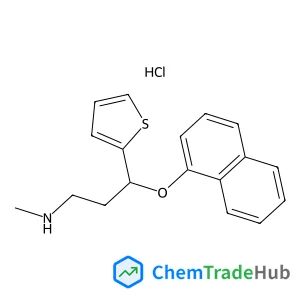
N-Methyl-3-(1-naphthyloxy)-3-(2-thienyl)-1-propanamine hydrochloride (1:1)
CAS号:
1188266-11-6
分子式:
C18H20ClNOS
推荐供应商



免责声明
本页面提供的学术期刊信息仅供参考和研究使用。我们与任何期刊出版商均无关联,也不处理投稿事宜。如有投稿相关咨询,请直接联系相关期刊出版商。
如发现页面信息有误,请发送邮件至 support@chemtradehub.com 联系我们。我们将及时核实并处理您的问题。