



Recent advances in hydride transfer-involved C(sp3)–H activation reactions
文献信息
发布日期
2021-01-07
DOI
10.1039/D0QO01502D
影响因子
5.281
作者
Xiao-De An
查看原文
摘要
The hydride transfer reaction, which is characterized by a redox-neutral and step/atom economic process, has emerged as an enabling platform for C(sp3)–H activation with high efficiency. During the past five years, significant advances have been made in new versions of hydride transfer-enabled C(sp3)–H activation, which mainly include the construction of novel scaffolds for cycles, and the intermolecular methods of both hydride transfer and C(sp3)–H functionalization. Herein, we summarize recent progress according to the reaction types categorized into hydride transfer/intramolecular C(sp3)–H functionalization, hydride transfer/intermolecular C(sp3)–H functionalization, and hydride reduction reactions. Furthermore, unsolved scientific problems as well as future directions in this field are also directly indicated. This review covers the period from 2016 to 2020.
相关文献
Temperature dependence of the NO3 absorption cross-section above 298 K and determination of the equilibrium constant for NO3 + NO2 ↔ N2O5 at atmospherically relevant conditions‡
Michael J. Pilling, Steven S. Brown
2007-09-13
Paper
DOI: 10.1039/B709193A
Kinetic analysis of the ozone processing of an unsaturated organic monolayer as a model of an aerosol surface
Erick González-Labrada, Rolf Schmidt, Christine E. DeWolf
2007-09-20
Paper
DOI: 10.1039/B707890K
Slice imaging of the photodissociation of acetaldehyde at 248 nm. Evidence of a roaming mechanism
L. Rubio-Lago, G. A. Amaral, A. Arregui, J. G. Izquierdo, F. Wang, L. Bañares
2007-10-11
Paper
DOI: 10.1039/B708310F
The colloid structural forces as a tool for particle characterization and control of dispersion stability
Elka S. Basheva, Peter A. Kralchevsky, Krassimir D. Danov, Kavssery P. Ananthapadmanabhan, Alex Lips
2007-07-05
Perspective
DOI: 10.1039/B705758J
Fourth-order coherent Raman spectroscopy in a time domain: applications to buried interfaces
2007-07-05
Perspective
DOI: 10.1039/B704566M
On the photochemistry of IONO2 : absorption cross section (240–370 nm) and photolysis product yields at 248 nm
D. M. Joseph, S. H. Ashworth, J. M. C. Plane
2007-08-30
Paper
DOI: 10.1039/B709465E
Energy level promotion in the correlation from the tunnelling-doubled harmonic oscillator to the bi-rotor: application to internal rotation in molecules
2007-09-20
Paper
DOI: 10.1039/B710691B
Investigation of the interactions between alkanethiol self-assembled monolayers and a liquid overlayer using impedance spectroscopy
Janelle D. S. Newman, G. J. Blanchard
2007-10-17
Paper
DOI: 10.1039/B711212B
您可能还喜欢
化合物问答
4-[4-三氟甲基苯基]恶唑(CAS号:1126636-40-5)通常如何合成?
4-[4-三氟甲基苯基]恶唑通常通过将4-三氟甲基苯酚与异硫氰酸苯酯在有机溶剂中进行酯化反应合成。该反应可在无水条件下,使用适当的催化剂,如四丁基氢氧化铵,以提...
1126636-40-54-(4-(Trifluoromethy...
59729-32-71-[3-(Dimethylamino)...
化合物问答
RockPhos Pd G3(CAS号:2009020-38-4)通常如何合成?
RockPhos Pd G3 通常通过钯催化偶联反应合成,使用配体 (2'-Amino-2-biphenylyl)(methanesulfonato-kappa...
2009020-38-4(2'-Amino-2-biphenyl...
化合物问答
1-哌啶甲酰胺(CAS号:2158-03-4)的市场或研究趋势如何?
1-哌啶甲酰胺作为有机合成中的重要中间体,其市场需求主要受医药、农药、染料等行业推动。近年来,随着新药开发和绿色化学的发展,该化合物的研究趋势集中在开发更高效、...
2158-03-41-Piperidinecarboxam...
化合物问答
2-(二苯基膦基)乙胺(CAS号:4848-43-5)适用哪些法规指南?
2-(二苯基膦基)乙胺适用于多种法规指南,包括但不限于《全球化学品统一分类和标签制度》(GHS),欧盟《化学品注册、评估、授权和限制》法规(REACH),以及美...
4848-43-52-(Diphenylphosphino...
化合物问答
如何储存间苯二甲酸二烯丙酯(CAS号:1087-21-4)?
间苯二甲酸二烯丙酯应储存在阴凉、干燥、通风良好的地方,远离火源和热源。储存容器应密封,避免光照和高温。储存温度应控制在25℃以下,相对湿度应低于80%。避免与其...
1087-21-4Diallyl isophthalate
化合物问答
什么是间甲苯异硫代异氰酸酯(CAS号:621-30-7)?
间甲苯异硫代异氰酸酯是一种有机化合物,分子式为C7H7NO2S,具有刺激性气味。它是一种重要的有机合成中间体,在合成其他化合物时广泛应用。
621-30-71-Isothiocyanato-3-m...
化合物问答
在合成中是否有N-Boc-D-苯丙氨醇(CAS号:106454-69-7)的替代品?
在合成中,可以考虑使用N-Cbz-D-苯丙氨醇或N-Fmoc-D-苯丙氨醇作为替代品。这些化合物同样具有保护氨基的功能,且在合成过程中表现出良好的反应性能。
106454-69-72-Methyl-2-propanyl ...
化合物问答
3-羟甲基-2-氧异丙基吡啶(CAS号:954240-50-7)的主要用途是什么?
3-羟甲基-2-氧异丙基吡啶主要用于有机合成领域,可以作为合成其他药物、农药或精细化学品的中间体。此外,它还可能在实验室研究中作为特定反应的前体或溶剂。
954240-50-7(2-Isopropoxy-3-pyri...
化合物问答
6-氨基-9-甲基嘌呤(CAS号:700-00-5)应用于哪些行业?
6-氨基-9-甲基嘌呤目前主要应用于医药行业,作为某些药物的中间体。此外,它还可能用于聚合物、传感器和半导体的某些领域,作为功能性单体或掺杂剂。
700-00-59-Methyl-9H-purin-6-...
来源期刊
Organic Chemistry Frontiers
CiteScore:
7.8
自引率:
8.7%
年发文量:
724
Organic Chemistry Frontiers publishes high-quality research from across organic chemistry. Emphases are placed on studies that make significant contributions to the field of organic chemistry by reporting either new or significantly improved protocols or methodologies. Topics include, but are not limited to the following: Organic synthesis Development of synthetic methodologies Catalysis Natural products Functional organic materials Supramolecular and macromolecular chemistry Physical and computational organic chemistry
推荐化合物
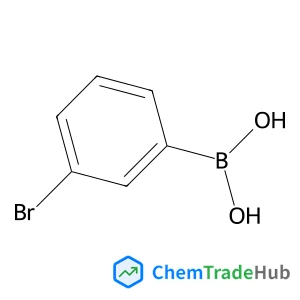
![3-[(4-Nitrobenzyl)oxy]-3-oxopropanoic Acid structure](https://cnstatic.chemtradehub.com/structs/773/77359-11-6-0d04.webp "3-[(4-Nitrobenzyl)oxy]-3-oxopropanoic Acid structure")
推荐供应商





免责声明
本页面提供的学术期刊信息仅供参考和研究使用。我们与任何期刊出版商均无关联,也不处理投稿事宜。如有投稿相关咨询,请直接联系相关期刊出版商。
如发现页面信息有误,请发送邮件至 support@chemtradehub.com 联系我们。我们将及时核实并处理您的问题。