





Catalyst Acquisition by Data Science (CADS): a web-based catalyst informatics platform for discovering catalysts
文献信息
发布日期
2020-04-20
DOI
10.1039/D0RE00098A
影响因子
4.239
作者
Yuzuru Tanaka
查看原文
摘要
An innovative web-based integrated catalyst informatics platform, Catalyst Acquisition by Data Science (CADS), is developed for use towards the discovery and design of catalysts. The platform provides three main functionalities: a repository for data sharing and publishing, an analytic workspace for exploratory visual analysis, and catalyst property prediction tools with pretrained machine learning models. Access to such a platform helps decrease barriers to entry faced by researchers in catalytic chemistry when attempting to apply catalyst informatics towards data by providing analytical and visualization tools that can be simultaneously applied and easily accessed within a central space, thereby helping the advancement of catalyst informatics. The developed platform allows researchers to upload and collect data onto the platform and conduct data analysis using a system of linked workspaces consisting of interactive visualization tools and machine learning tools that simultaneously update according to the researchers' actions in real time. The platform also provides a space for collaboration where researchers can choose to publish their uploaded data and resulting analyses to the platform for collaborations with other users and groups. As an example, CADS is applied towards oxidative coupling of methane (OCM) data where use of the platform tools reveals underlying patterns and trends that are otherwise hidden within the original data. Thus, the proposed platform contributes towards the advancement of catalyst informatics for both specialists and non-specialists.
相关文献
Photocatalysis with atomically thin sheets
Yingying Fan, Jinguang Hu, Hyeon Suk Shin, Damien Voiry, Qingye Lu, Jimmy C. Yu
2023-10-25
Tutorial Review
DOI: 10.1039/D2CS00205A
Chemical technology principles for selective bioconjugation of proteins and antibodies
Preeti Chauhan, Ragendu V., Mohan Kumar, Rajib Molla, Surya Dev Mishra, Sneha Basa, Vishal Rai
2023-12-14
Review Article
DOI: 10.1039/D3CS00715D
Virus-mimicking nanosystems: from design to biomedical applications
Hao-Yang Liu, Xiao Li, Zhi-Gang Wang
2023-11-06
Tutorial Review
DOI: 10.1039/D3CS00138E
3D-hosted lithium metal anodes
Xin He, Kai Zhang, Zhiqiang Zhu, Zhangfa Tong
2023-11-20
Tutorial Review
DOI: 10.1039/D3CS00495C
Pursuing excitonic energy transfer with programmable DNA-based optical breadboards
Divita Mathur, Sebastián A. Díaz, Ryan D. Pensack, Bernard Yurke, Austin Biaggne, Joseph S. Melinger, William B. Knowlton, Igor L. Medintz
2023-10-24
Review Article
DOI: 10.1039/D0CS00936A
Benzoyldiisopropylchlorosilane: a visible light photocleavable alcohol protecting group
Florian Lind, Kirill Markelov, Armido Studer
2023-10-25
Edge Article
DOI: 10.1039/D3SC04975B
Azaphosphinines and their derivatives
J. Nolan McNeill, Jeremy P. Bard, Darren W. Johnson, Michael M. Haley
2023-11-24
Review Article
DOI: 10.1039/D3CS00737E
Unveiling practical considerations for reliable and standardized SERS measurements: lessons from a comprehensive review of oblique angle deposition-fabricated silver nanorod array substrates
Yiping Zhao, Amit Kumar, Yanjun Yang
2023-12-20
Review Article
DOI: 10.1039/D3CS00540B
您可能还喜欢
化合物问答
4-[4-三氟甲基苯基]恶唑(CAS号:1126636-40-5)通常如何合成?
4-[4-三氟甲基苯基]恶唑通常通过将4-三氟甲基苯酚与异硫氰酸苯酯在有机溶剂中进行酯化反应合成。该反应可在无水条件下,使用适当的催化剂,如四丁基氢氧化铵,以提...
1126636-40-54-(4-(Trifluoromethy...
59729-32-71-[3-(Dimethylamino)...
化合物问答
RockPhos Pd G3(CAS号:2009020-38-4)通常如何合成?
RockPhos Pd G3 通常通过钯催化偶联反应合成,使用配体 (2'-Amino-2-biphenylyl)(methanesulfonato-kappa...
2009020-38-4(2'-Amino-2-biphenyl...
化合物问答
1-哌啶甲酰胺(CAS号:2158-03-4)的市场或研究趋势如何?
1-哌啶甲酰胺作为有机合成中的重要中间体,其市场需求主要受医药、农药、染料等行业推动。近年来,随着新药开发和绿色化学的发展,该化合物的研究趋势集中在开发更高效、...
2158-03-41-Piperidinecarboxam...
化合物问答
2-(二苯基膦基)乙胺(CAS号:4848-43-5)适用哪些法规指南?
2-(二苯基膦基)乙胺适用于多种法规指南,包括但不限于《全球化学品统一分类和标签制度》(GHS),欧盟《化学品注册、评估、授权和限制》法规(REACH),以及美...
4848-43-52-(Diphenylphosphino...
化合物问答
如何储存间苯二甲酸二烯丙酯(CAS号:1087-21-4)?
间苯二甲酸二烯丙酯应储存在阴凉、干燥、通风良好的地方,远离火源和热源。储存容器应密封,避免光照和高温。储存温度应控制在25℃以下,相对湿度应低于80%。避免与其...
1087-21-4Diallyl isophthalate
化合物问答
什么是间甲苯异硫代异氰酸酯(CAS号:621-30-7)?
间甲苯异硫代异氰酸酯是一种有机化合物,分子式为C7H7NO2S,具有刺激性气味。它是一种重要的有机合成中间体,在合成其他化合物时广泛应用。
621-30-71-Isothiocyanato-3-m...
化合物问答
在合成中是否有N-Boc-D-苯丙氨醇(CAS号:106454-69-7)的替代品?
在合成中,可以考虑使用N-Cbz-D-苯丙氨醇或N-Fmoc-D-苯丙氨醇作为替代品。这些化合物同样具有保护氨基的功能,且在合成过程中表现出良好的反应性能。
106454-69-72-Methyl-2-propanyl ...
化合物问答
3-羟甲基-2-氧异丙基吡啶(CAS号:954240-50-7)的主要用途是什么?
3-羟甲基-2-氧异丙基吡啶主要用于有机合成领域,可以作为合成其他药物、农药或精细化学品的中间体。此外,它还可能在实验室研究中作为特定反应的前体或溶剂。
954240-50-7(2-Isopropoxy-3-pyri...
化合物问答
6-氨基-9-甲基嘌呤(CAS号:700-00-5)应用于哪些行业?
6-氨基-9-甲基嘌呤目前主要应用于医药行业,作为某些药物的中间体。此外,它还可能用于聚合物、传感器和半导体的某些领域,作为功能性单体或掺杂剂。
700-00-59-Methyl-9H-purin-6-...
来源期刊
Reaction Chemistry & Engineering
CiteScore:
0
自引率:
8.8%
年发文量:
284
Reaction Chemistry & Engineering is an interdisciplinary journal reporting cutting-edge research focused on enhancing the understanding and efficiency of reactions. Reaction engineering leverages the interface where fundamental molecular chemistry meets chemical engineering and technology. Challenges in chemistry can be overcome by the application of new technologies, while engineers may find improved solutions for process development from the latest developments in reaction chemistry. Reaction Chemistry & Engineering is a unique forum for researchers whose interests span the broad areas of chemical engineering and chemical sciences to come together in solving problems of importance to wider society. All papers should be written to be approachable by readers across the engineering and chemical sciences. Papers that consider multiple scales, from the laboratory up to and including plant scale, are particularly encouraged.
推荐化合物
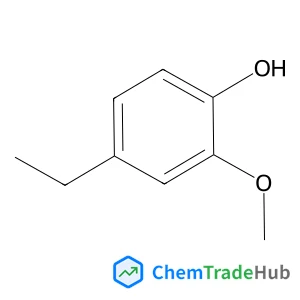
![Bis[(1,2,3,4,5-eta)-1-(diphenylphosphino)cyclopentadienyl]iron structure](https://cnstatic.chemtradehub.com/structs/121/12150-46-8-ecd2.webp "Bis[(1,2,3,4,5-eta)-1-(diphenylphosphino)cyclopentadienyl]iron structure")
推荐供应商





免责声明
本页面提供的学术期刊信息仅供参考和研究使用。我们与任何期刊出版商均无关联,也不处理投稿事宜。如有投稿相关咨询,请直接联系相关期刊出版商。
如发现页面信息有误,请发送邮件至 support@chemtradehub.com 联系我们。我们将及时核实并处理您的问题。