





Unveiling practical considerations for reliable and standardized SERS measurements: lessons from a comprehensive review of oblique angle deposition-fabricated silver nanorod array substrates
文献信息
发布日期
2023-12-20
DOI
10.1039/D3CS00540B
影响因子
54.564
作者
Yiping Zhao, Amit Kumar, Yanjun Yang
查看原文
摘要
Recently, there has been an exponential growth in the number of publications focusing on surface-enhanced Raman scattering (SERS), primarily driven by advancements in nanotechnology and the increasing demand for chemical and biological detection. While many of these publications have focused on the development of new substrates and detection-based applications, there is a noticeable lack of attention given to various practical issues related to SERS measurements and detection. This review aims to fill this gap by utilizing silver nanorod (AgNR) SERS substrates fabricated through the oblique angle deposition method as an illustrative example. The review highlights and addresses a range of practical issues associated with SERS measurements and detection. These include the optimization of SERS substrates in terms of morphology and structural design, considerations for measurement configurations such as polarization and the incident angle of the excitation laser, and exploration of enhancement mechanisms encompassing both intrinsic properties induced by the structure and materials, as well as extrinsic factors arising from wetting/dewetting phenomena and analyte size. The manufacturing and storage aspects of SERS substrates, including scalable fabrication techniques, contamination control, cleaning procedures, and appropriate storage methods, are also discussed. Furthermore, the review delves into device design considerations, such as well arrays, flow cells, and fiber probes, and explores various sample preparation methods such as drop-cast and immersion. Measurement issues, including the effect of excitation laser wavelength and power, as well as the influence of buffer, are thoroughly examined. Additionally, the review discusses spectral analysis techniques, encompassing baseline removal, chemometric analysis, and machine learning approaches. The wide range of AgNR-based applications of SERS, across various fields, is also explored. Throughout the comprehensive review, key lessons learned from collective findings are outlined and analyzed, particularly in the context of detailed SERS measurements and standardization. The review also provides insights into future challenges and perspectives in the field of SERS. It is our hope that this comprehensive review will serve as a valuable reference for researchers seeking to embark on in-depth studies and applications involving their own SERS substrates.
相关文献
“Click-fluors”: triazole-linked saccharide sensors
Wenlei Zhai, Akina Yoshizawa, Hui-Chen Wang, Stephen A. Hodge, Tony D. James, Eric V. Anslyn, John S. Fossey
2016-06-14
Research Article
DOI: 10.1039/C6QO00171H
Pd(ii)-catalyzed β-C–H arylation of O-methyl ketoximes with iodoarenes
Yucheng Mu, Yemin Zhang, Xiaobi Jing, Zhuangzhi Shi
2016-01-21
Research Article
DOI: 10.1039/C5QO00438A
Blue AIE luminogens bearing methyl groups: different linkage position, different number of methyl groups, and different intramolecular conjugation
Jing Huang, Min Yang, Jie Yang, Runli Tang, Shanghui Ye, Qianqian Li, Zhen Li
2015-10-08
Research Article
DOI: 10.1039/C5QO00274E
Equilibrium acidities of cinchona alkaloid organocatalysts bearing 6′-hydrogen bonding donors in DMSO
2015-12-09
Research Article
DOI: 10.1039/C5QO00305A
Synthesis of the 1,2,4-thiadiazole alkaloids polycarpathiamines A and B
Emma K. Davison, Jonathan Sperry
2015-11-30
Research Article
DOI: 10.1039/C5QO00367A
N-Heterocyclic carbene-catalyzed [4 + 2] annulation of α,β-unsaturated carboxylic acids: enantioselective synthesis of dihydropyridinones and spirocyclic oxindolodihydropyridinones
Wen-Qiang Jia, Han-Ming Zhang, Chun-Lin Zhang, Zhong-Hua Gao, Song Ye
2015-11-16
Research Article
DOI: 10.1039/C5QO00301F
A novel zinc based binary catalytic system for CO2 utilization under mild conditions
Willi Desens, Christina Kohrt, Anke Spannenberg, Thomas Werner
2016-01-07
Research Article
DOI: 10.1039/C5QO00356C
Recent advances in transition metal-catalysed hydroacylation of alkenes and alkynes
Avipsa Ghosh, Kirsten F. Johnson, Kevin L. Vickerman, James A. Walker, Jr., Levi M. Stanley
2016-02-11
Highlight
DOI: 10.1039/C6QO00023A
New anthracene-based organic dyes: the flexible position of the anthracene moiety bearing isolation groups in the conjugated bridge and the adjustable cell performance
Huiyang Li, Manman Fang, Ting Xu, Yingqin Hou, Runli Tang, Junnian Chen, Linfeng Liu, Hongwei Han, Tianyou Peng, Qianqian Li, Zhen Li
2015-12-07
Research Article
DOI: 10.1039/C5QO00377F
N-Heterocyclic carbene catalyzed dehydrogenative coupling of enals: synthesis of monobactams
Fangyi Li, Changgui Zhao, Jian Wang
2016-01-07
Research Article
DOI: 10.1039/C5QO00372E
您可能还喜欢
化合物问答
4-[4-三氟甲基苯基]恶唑(CAS号:1126636-40-5)通常如何合成?
4-[4-三氟甲基苯基]恶唑通常通过将4-三氟甲基苯酚与异硫氰酸苯酯在有机溶剂中进行酯化反应合成。该反应可在无水条件下,使用适当的催化剂,如四丁基氢氧化铵,以提...
1126636-40-54-(4-(Trifluoromethy...
59729-32-71-[3-(Dimethylamino)...
化合物问答
RockPhos Pd G3(CAS号:2009020-38-4)通常如何合成?
RockPhos Pd G3 通常通过钯催化偶联反应合成,使用配体 (2'-Amino-2-biphenylyl)(methanesulfonato-kappa...
2009020-38-4(2'-Amino-2-biphenyl...
化合物问答
1-哌啶甲酰胺(CAS号:2158-03-4)的市场或研究趋势如何?
1-哌啶甲酰胺作为有机合成中的重要中间体,其市场需求主要受医药、农药、染料等行业推动。近年来,随着新药开发和绿色化学的发展,该化合物的研究趋势集中在开发更高效、...
2158-03-41-Piperidinecarboxam...
化合物问答
2-(二苯基膦基)乙胺(CAS号:4848-43-5)适用哪些法规指南?
2-(二苯基膦基)乙胺适用于多种法规指南,包括但不限于《全球化学品统一分类和标签制度》(GHS),欧盟《化学品注册、评估、授权和限制》法规(REACH),以及美...
4848-43-52-(Diphenylphosphino...
化合物问答
如何储存间苯二甲酸二烯丙酯(CAS号:1087-21-4)?
间苯二甲酸二烯丙酯应储存在阴凉、干燥、通风良好的地方,远离火源和热源。储存容器应密封,避免光照和高温。储存温度应控制在25℃以下,相对湿度应低于80%。避免与其...
1087-21-4Diallyl isophthalate
化合物问答
什么是间甲苯异硫代异氰酸酯(CAS号:621-30-7)?
间甲苯异硫代异氰酸酯是一种有机化合物,分子式为C7H7NO2S,具有刺激性气味。它是一种重要的有机合成中间体,在合成其他化合物时广泛应用。
621-30-71-Isothiocyanato-3-m...
化合物问答
在合成中是否有N-Boc-D-苯丙氨醇(CAS号:106454-69-7)的替代品?
在合成中,可以考虑使用N-Cbz-D-苯丙氨醇或N-Fmoc-D-苯丙氨醇作为替代品。这些化合物同样具有保护氨基的功能,且在合成过程中表现出良好的反应性能。
106454-69-72-Methyl-2-propanyl ...
化合物问答
3-羟甲基-2-氧异丙基吡啶(CAS号:954240-50-7)的主要用途是什么?
3-羟甲基-2-氧异丙基吡啶主要用于有机合成领域,可以作为合成其他药物、农药或精细化学品的中间体。此外,它还可能在实验室研究中作为特定反应的前体或溶剂。
954240-50-7(2-Isopropoxy-3-pyri...
化合物问答
6-氨基-9-甲基嘌呤(CAS号:700-00-5)应用于哪些行业?
6-氨基-9-甲基嘌呤目前主要应用于医药行业,作为某些药物的中间体。此外,它还可能用于聚合物、传感器和半导体的某些领域,作为功能性单体或掺杂剂。
700-00-59-Methyl-9H-purin-6-...
来源期刊
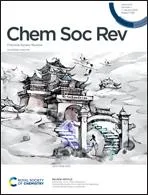
Chemical Society Reviews
CiteScore:
80.8
自引率:
1.2%
年发文量:
250
Chem Soc Rev publishes review articles covering important topics at the forefront of the chemical sciences. Reviews should be of the very highest quality and international impact. We particularly encourage international and multidisciplinary collaborations among our authors. Our scope covers the breadth of the chemical sciences, including interdisciplinary topics where the article has a basis in chemistry. Topics include: Analytical chemistry Biomaterials chemistry Bioorganic/medicinal chemistry Catalysis Chemical Biology Coordination Chemistry Crystal Engineering Energy Sustainable chemistry Green chemistry Inorganic chemistry Inorganic materials Main group chemistry Nanoscience Organic chemistry Organic materials Organometallics Physical chemistry Supramolecular chemistry Synthetic methodology Theoretical and computational chemistry
推荐化合物
![1-(Hexopyranosyloxy)-4a,5-dihydroxy-7-methyl-1,4a,5,6,7,7a-hexahydrocyclopenta[c]pyran-7-yl 3-phenylacrylate structure](https://cnstatic.chemtradehub.com/structs/192/19210-12-9-ecae.webp "1-(Hexopyranosyloxy)-4a,5-dihydroxy-7-methyl-1,4a,5,6,7,7a-hexahydrocyclopenta[c]pyran-7-yl 3-phenylacrylate structure")
推荐供应商




免责声明
本页面提供的学术期刊信息仅供参考和研究使用。我们与任何期刊出版商均无关联,也不处理投稿事宜。如有投稿相关咨询,请直接联系相关期刊出版商。
如发现页面信息有误,请发送邮件至 support@chemtradehub.com 联系我们。我们将及时核实并处理您的问题。