









![(1S,2R,4S)-1,7,7-Trimethylbicyclo[2.2.1]heptan-2-ol structure](https://cnstatic.chemtradehub.com/structs/464/464-45-9-f88b.webp "(1S,2R,4S)-1,7,7-Trimethylbicyclo[2.2.1]heptan-2-ol structure")
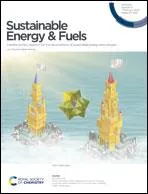
Electrochemical synthesis of titanium nitride nanoparticles onto titanium foil for electrochemical supercapacitors with ultrafast charge/discharge
文献信息
发布日期
2020-03-19
DOI
10.1039/D0SE00049C
影响因子
6.367
作者
Sajid Ali Ansari, Nazmul Abedin Khan, Zubair Hasan, A. A. Shaikh, Farhana K. Ferdousi, Hasi Rani Barai, Nasrin Siraj Lopa, Md. Mahbubur Rahman
查看原文
摘要
An ultrafast electrochemical supercapacitor that can deliver charge at a high rate of >1 V s−1 has great potential to supply instantaneous high power to electronic devices. Herein, a titanium nitride (TiN)-nanoparticle-modified titanium foil electrode is prepared by potentiostatic electrolysis at +5 V in an ammoniacal solution of KCl. Spectroscopic and morphological analyses reveal the formation of crystalline, homogeneous, and pure TiN nanoparticles with an average size of ∼30 nm on the Ti foil. In a three-electrode system, the optimized TiN nanoparticle-based electrode exhibits excellent rate performance and reversibility up to 3 V s−1 within the operational voltage window of 0–1.6 V. It delivers a high specific capacitance of ∼53.66 mF cm−2 at 6.66 mA cm−2 with capacity loss of only ∼3% after 10 000 charge/discharge cycles. A symmetric supercapacitor (SSC) based on the as-prepared optimized TiN nanoparticle-electrode also displays ultrafast charge/discharge characteristics with a specific capacitance of ∼44.10 mF cm−2 at 6.66 mA cm−2. This ultrafast SSC has a low relaxation time constant of ∼2.80 ms and shows excellent capacity retention (95% after 10 000 charge–discharge cycles) with ∼100% coulombic efficiency. These results demonstrate the high electrochemical stability and reversibility of TiN nanoparticles, which are promising for the development of high-performance ultrafast supercapacitors.
相关文献
Theoretical studies on the transport mechanism of 5-fluorouracil through cyclic peptide based nanotubes
Sofie Van Damme, Patrick Bultinck, Venkatesan Subramanian
2012-10-23
Paper
DOI: 10.1039/C2CP42038D
Anchoring sites to the STM tip can explain multiple peaks in single molecule conductance histograms
S. Alexis Paz, Martin E. Zoloff Michoff, Christian F. A. Negre, Jimena A. Olmos-Asar, Marcelo M. Mariscal, Cristián G. Sánchez, Ezequiel P. M. Leiva
2012-11-22
Paper
DOI: 10.1039/C2CP43811A
Access to enhanced differences in Marcus–Hush and Butler–Volmer electron transfer theories by systematic analysis of higher order AC harmonics
Gareth P. Stevenson, Ruth E. Baker, Gareth F. Kennedy, Alan M. Bond, David J. Gavaghan, Kathryn Gillow
2012-11-12
Paper
DOI: 10.1039/C2CP43193A
Enhancement of the hydrogen storage capacity of Mg(AlH4)2 by excess electrons: a DFT study
S. Karthikeyan
2012-11-21
Paper
DOI: 10.1039/C2CP43297H
Hydrogen oxidation at the Pt–BaZr0.1Ce0.7Y0.1Yb0.1O3−δ (BZCYYb) interface
Mingfei Liu, Shi Feng, Wei Liu, Hyeon Cheol Park, Meilin Liu
2013-01-21
Paper
DOI: 10.1039/C3CP44225J
Directed electron transfer in Langmuir–Schäfer layers of porphyrin–fullerene and phthalocyanine–fullerene dyads in inverted organic solar cells
A. Tolkki, K. Kaunisto, A. Efimov, H. Kivistö, L. Storbacka, R. Savikoski, K. Huttunen, S. Lehtimäki, H. Lemmetyinen
2012-01-16
Paper
DOI: 10.1039/C2CP24022J
A new type of low-cost counter electrode catalyst based on platinum nanoparticles loaded onto silicon carbide (Pt/SiC) for dye-sensitized solar cells
Sining Yun, Liang Wang, Chunyu Zhao, Yanxiang Wang, Tingli Ma
2013-02-01
Communication
DOI: 10.1039/C3CP44048F
Photoinduced ultrafast dynamics of the triphenylamine-based organic sensitizer D35 on TiO2, ZrO2 and in acetonitrile
Kawon Oum, Peter W. Lohse, Johannes R. Klein, Oliver Flender, Mirko Scholz, Anders Hagfeldt, Gerrit Boschloo, Thomas Lenzer
2013-02-12
Paper
DOI: 10.1039/C3CP44095H
Symmetrisation schemes for global optimisation of atomic clusters
Mark T. Oakley, Roy L. Johnston, David J. Wales
2013-01-14
Paper
DOI: 10.1039/C3CP44332A
您可能还喜欢
化合物问答
4-((4-甲基哌嗪-1-基)甲基)苯硼酸(CAS号:763120-62-3)的市场或研究趋势如何?
随着有机硼化学的发展,该化合物在催化、药物合成、材料科学等领域展现出潜在的应用价值。近年来,其在药物前体合成中的应用越来越受到关注。市场趋势显示,随着科研投入的...
763120-62-3{4-[(4-Methyl-1-pipe...
化合物问答
如何储存2,4,5-三甲基-1-硝基苯(CAS号:610-91-3)?
2,4,5-三甲基-1-硝基苯应储存在阴凉、干燥且通风良好的地方,避免阳光直射。储存在密封的金属容器中,远离火源和热源。储存温度应控制在25°C以下,湿度不宜过...
610-91-31,2,4-Trimethyl-5-ni...
化合物问答
处理2,5-二碘噻吩(CAS号:625-88-7)时应注意哪些实验室安全事项?
在处理2,5-二碘噻吩时,应穿戴适当的个人防护装备(PPE),包括实验室外套、手套和防护眼镜。在通风橱中进行操作以避免吸入蒸气。如果发生泄漏,应立即疏散人员并使...
625-88-72,5-Diiodothiophene
化合物问答
在合成中是否有6-bromo-3-chloro-1H-indole(CAS号:57916-08-2)的替代品?
在合成6-溴-3-氯-1H-吲哚(CAS号:57916-08-2)时,可以考虑使用一些类似的化合物作为替代品,如6-氯-3-氯-1H-吲哚或3-氯-1H-吲哚,...
57916-08-26-bromo-3-chloro-1H-...
化合物问答
在合成中是否有(R)-(-)-1-(1-萘基)乙基异氰酸酯(CAS号:42340-98-7)的替代品?
可以考虑使用类似结构的化合物,如1-[(1R)-1-(2-氨基乙基)萘-1-基]乙基异氰酸酯作为替代品。此外,还可以寻找其他类型的异氰酸酯衍生物,如苯基异氰酸酯...
42340-98-71-[(1R)-1-Isocyanato...
化合物问答
3-氨基苯甲酰苯胺(CAS号:14315-16-3)适用哪些法规指南?
3-氨基苯甲酰苯胺适用于多项法规指南,包括但不限于GHS(全球化学品统一分类和标签制度)分类为皮肤腐蚀/刺激类别2,以及潜在的皮肤过敏性类别1。在欧盟地区,它受...
14315-16-33-Amino-N-phenylbenz...
化合物问答
β-环柠檬醛-D5(CAS号:26309-95-5)通常如何合成?
β-环柠檬醛-D5可通过不对称合成方法获得。常见的合成路线包括以环己酮为原料,经过选择性氧化、还原、保护基引入等步骤,最终得到目标化合物。该合成过程中通常使用多...
26309-95-5[(2,2-Dimethylpropan...
34915-68-9Bunitrolol
化合物问答
如何处理含有BIO-1211(CAS号:187735-94-0)的废料?
对于含有BIO-1211(CAS号:187735-94-0)的废料,首先应进行分类收集,确保符合环保要求。然后,可以考虑通过焚烧或其他专业处理方法进行处置。在处...
187735-94-0BIO-1211
化合物问答
如何处理含有4-氯-2-氟-3-甲基苯酚(CAS号:1351668-24-0)的废料?
含有该化合物的废液应收集至专用容器中,避免与其他化学品混合。可采用焚烧或送交专业废弃物处理公司处理。处理过程中需遵守当地环保法规,确保不产生二次污染。处理前应进...
1351668-24-04-Chloro-2-fluoro-3-...
来源期刊
推荐化合物
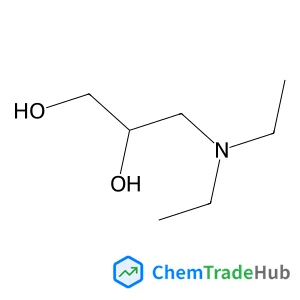
![(4R,5S,6S)-3-({(3S,5S)-5-[(3-Carboxyphenyl)carbamoyl]-3-pyrrolidinyl}sulfanyl)-6-[(1R)-1-hydroxyethyl]-4-methyl-7-oxo-1-azabicyclo[3.2.0]hept-2-ene-2-carboxylic acid structure](https://cnstatic.chemtradehub.com/structs/153/153832-46-3-b2e0.webp "(4R,5S,6S)-3-({(3S,5S)-5-[(3-Carboxyphenyl)carbamoyl]-3-pyrrolidinyl}sulfanyl)-6-[(1R)-1-hydroxyethyl]-4-methyl-7-oxo-1-azabicyclo[3.2.0]hept-2-ene-2-carboxylic acid structure")
![(2S)-{[(9H-Fluoren-9-ylmethoxy)carbonyl]amino}(phenyl)acetic acid structure](https://cnstatic.chemtradehub.com/structs/102/102410-65-1-4aa7.webp "(2S)-{[(9H-Fluoren-9-ylmethoxy)carbonyl]amino}(phenyl)acetic acid structure")
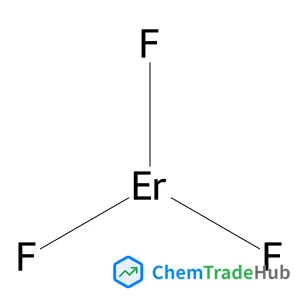
推荐供应商





免责声明
本页面提供的学术期刊信息仅供参考和研究使用。我们与任何期刊出版商均无关联,也不处理投稿事宜。如有投稿相关咨询,请直接联系相关期刊出版商。
如发现页面信息有误,请发送邮件至 support@chemtradehub.com 联系我们。我们将及时核实并处理您的问题。