







![Bis(1,2,2,6,6-pentamethyl-4-piperidinyl) butyl[4-hydroxy-3,5-bis(2-methyl-2-propanyl)benzyl]malonate structure](https://cnstatic.chemtradehub.com/structs/638/63843-89-0-665e.webp "Bis(1,2,2,6,6-pentamethyl-4-piperidinyl) butyl[4-hydroxy-3,5-bis(2-methyl-2-propanyl)benzyl]malonate structure")
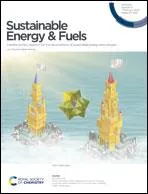
Improving the crystal growth of a Cs0.24FA0.76PbI3−xBrx perovskite in a vapor–solid reaction process using strontium iodide
文献信息
发布日期
2020-03-13
DOI
10.1039/D0SE00088D
影响因子
6.367
作者
Xi Deng, Jingchen Hua, Fuzhi Huang, Yong Peng, Wangnan Li
查看原文
摘要
Preparing organic–inorganic hybrid perovskite films by deploying vacuum-based methods, which are widely used for industrial thin-film deposition, is expected to promote the commercialization of perovskite solar cells. In comparison with solution processes, vacuum-based deposition methods could provide some unique benefits for producing high-quality thin films, such as providing the ability to precisely determine the thickness of the film, producing a pinhole-free morphology, and high reproducibility. However, in the “two-step” method of preparing an organic–inorganic hybrid perovskite, the PbI2 films deposited using thermal evaporation are too dense to react with the organic component, leaving residual PbI2 in the perovskite. To address this issue, we developed a new doping strategy to help the crystal growth of Cs0.24FA0.76PbI3−xBrx perovskites in the vapor–solid reaction process. By introducing a moderate amount of SrI2 into the PbI2 layer, we successfully enhanced the reactivity of PbI2 and improved the crystallinity of these perovskites. As a result, the perovskite solar cell based on such Sr-doped Cs0.24FA0.76PbI3−xBrx films achieved a champion power conversion efficiency (PCE) of 17.66%. The device, without being encapsulated, maintained 95% of its initial PCE in an air atmosphere after 60 days. Moreover, the champion large-area (5 × 5 cm2) solar module exhibited a PCE of 13.92%, indicating the favorable uniformity of the Sr-doped Cs0.24FA0.76PbI3−xBrx film.
相关文献
Interactions in different domains of truxenone supramolecular assembly on Au(111)
Fengyun Chen, Zhenpeng Hu, Yongfei Ji, Aidi Zhao, Bing Wang, Jinlong Yang, J. G. Hou
2012-01-23
Paper
DOI: 10.1039/C2CP23190E
Room temperature ionic liquid as solvent for in situ Pd/H formation: hydrogenation of carbon–carbon double bonds
Benjamin C. M. Martindale, Dzianis Menshykau, Sven Ernst, Richard G. Compton
2012-11-21
Paper
DOI: 10.1039/C2CP43444J
Probing the balance of attraction and repulsion in binary mixtures of dimethyl sulfoxide and n-alcohols
Andrew Ellis, Florian M. Zehentbauer
2012-11-30
Communication
DOI: 10.1039/C2CP42902K
Ultrafast dynamics and single particle spectroscopy of Au–CdSe nanorods
Gabriel Sagarzazu, Kohki Inoue, Masaki Saruyama, Masanori Sakamoto, Toshiharu Teranishi, Sadahiro Masuo, Naoto Tamai
2012-12-07
Paper
DOI: 10.1039/C2CP43458J
Effective reinforcement of electrical conductivity and strength of carbon nanotube fibers by silver-paste-liquid infiltration processing
X. H. Zhong, R. Wang, Y. Y. Wen
2013-01-11
Paper
DOI: 10.1039/C3CP44085K
Plasma electrochemistry: voltammetry in a flame plasma electrolyte
Atif Elahi, Daren J. Caruana
2012-11-20
Paper
DOI: 10.1039/C2CP43431H
Visualization of clusters in polymer electrolyte membranes by electron microscopy
Sergey Yakovlev, Kenneth H. Downing
2012-11-01
Perspective
DOI: 10.1039/C2CP42969A
Hydrogen oxidation at the Pt–BaZr0.1Ce0.7Y0.1Yb0.1O3−δ (BZCYYb) interface
Mingfei Liu, Shi Feng, Wei Liu, Hyeon Cheol Park, Meilin Liu
2013-01-21
Paper
DOI: 10.1039/C3CP44225J
Towards a highly-efficient fuel-cell catalyst: optimization of Pt particle size, supports and surface-oxygen group concentration
Navaneethan Muthuswamy, Jose Luis Gomez de la Fuente, Piotr Ochal, Rajiv Giri, Steinar Raaen, Svein Sunde, Magnus Rønning, De Chen
2013-01-14
Paper
DOI: 10.1039/C3CP43659D
您可能还喜欢
化合物问答
4-((4-甲基哌嗪-1-基)甲基)苯硼酸(CAS号:763120-62-3)的市场或研究趋势如何?
随着有机硼化学的发展,该化合物在催化、药物合成、材料科学等领域展现出潜在的应用价值。近年来,其在药物前体合成中的应用越来越受到关注。市场趋势显示,随着科研投入的...
763120-62-3{4-[(4-Methyl-1-pipe...
化合物问答
如何储存2,4,5-三甲基-1-硝基苯(CAS号:610-91-3)?
2,4,5-三甲基-1-硝基苯应储存在阴凉、干燥且通风良好的地方,避免阳光直射。储存在密封的金属容器中,远离火源和热源。储存温度应控制在25°C以下,湿度不宜过...
610-91-31,2,4-Trimethyl-5-ni...
化合物问答
处理2,5-二碘噻吩(CAS号:625-88-7)时应注意哪些实验室安全事项?
在处理2,5-二碘噻吩时,应穿戴适当的个人防护装备(PPE),包括实验室外套、手套和防护眼镜。在通风橱中进行操作以避免吸入蒸气。如果发生泄漏,应立即疏散人员并使...
625-88-72,5-Diiodothiophene
化合物问答
在合成中是否有6-bromo-3-chloro-1H-indole(CAS号:57916-08-2)的替代品?
在合成6-溴-3-氯-1H-吲哚(CAS号:57916-08-2)时,可以考虑使用一些类似的化合物作为替代品,如6-氯-3-氯-1H-吲哚或3-氯-1H-吲哚,...
57916-08-26-bromo-3-chloro-1H-...
化合物问答
在合成中是否有(R)-(-)-1-(1-萘基)乙基异氰酸酯(CAS号:42340-98-7)的替代品?
可以考虑使用类似结构的化合物,如1-[(1R)-1-(2-氨基乙基)萘-1-基]乙基异氰酸酯作为替代品。此外,还可以寻找其他类型的异氰酸酯衍生物,如苯基异氰酸酯...
42340-98-71-[(1R)-1-Isocyanato...
化合物问答
3-氨基苯甲酰苯胺(CAS号:14315-16-3)适用哪些法规指南?
3-氨基苯甲酰苯胺适用于多项法规指南,包括但不限于GHS(全球化学品统一分类和标签制度)分类为皮肤腐蚀/刺激类别2,以及潜在的皮肤过敏性类别1。在欧盟地区,它受...
14315-16-33-Amino-N-phenylbenz...
化合物问答
β-环柠檬醛-D5(CAS号:26309-95-5)通常如何合成?
β-环柠檬醛-D5可通过不对称合成方法获得。常见的合成路线包括以环己酮为原料,经过选择性氧化、还原、保护基引入等步骤,最终得到目标化合物。该合成过程中通常使用多...
26309-95-5[(2,2-Dimethylpropan...
34915-68-9Bunitrolol
化合物问答
如何处理含有BIO-1211(CAS号:187735-94-0)的废料?
对于含有BIO-1211(CAS号:187735-94-0)的废料,首先应进行分类收集,确保符合环保要求。然后,可以考虑通过焚烧或其他专业处理方法进行处置。在处...
187735-94-0BIO-1211
化合物问答
如何处理含有4-氯-2-氟-3-甲基苯酚(CAS号:1351668-24-0)的废料?
含有该化合物的废液应收集至专用容器中,避免与其他化学品混合。可采用焚烧或送交专业废弃物处理公司处理。处理过程中需遵守当地环保法规,确保不产生二次污染。处理前应进...
1351668-24-04-Chloro-2-fluoro-3-...
来源期刊
推荐化合物
![(2S)-{[(9H-Fluoren-9-ylmethoxy)carbonyl]amino}(phenyl)acetic acid structure](https://cnstatic.chemtradehub.com/structs/102/102410-65-1-4aa7.webp "(2S)-{[(9H-Fluoren-9-ylmethoxy)carbonyl]amino}(phenyl)acetic acid structure")
推荐供应商







免责声明
本页面提供的学术期刊信息仅供参考和研究使用。我们与任何期刊出版商均无关联,也不处理投稿事宜。如有投稿相关咨询,请直接联系相关期刊出版商。
如发现页面信息有误,请发送邮件至 support@chemtradehub.com 联系我们。我们将及时核实并处理您的问题。