



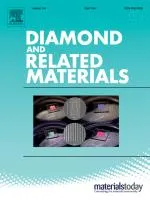

Recent advances in Co-based electrocatalysts for the oxygen reduction reaction
文献信息
发布日期
2020-05-14
DOI
10.1039/D0SE00271B
影响因子
6.367
作者
Zuozhong Liang, Haoquan Zheng, Rui Cao
查看原文
摘要
In recent years, global environmental problems caused by burning fossil fuels have become increasingly serious. Proton exchange membrane fuel cells (PEMFCs) that use highly efficient clean renewable fuels (hydrogen, H2) to generate electricity have received a lot of attention. The main drawback of current PEMFC technology is the high cost caused by the high content of precious metal platinum (Pt) in catalysts for the electrocatalytic oxygen reduction reaction (ORR). Therefore, the development of stable and efficient low Pt content or Pt-free catalysts for the ORR is one of the current research hotspots. Currently, cobalt (Co)-based electrocatalysts for the ORR have attracted extensive attention. This research provides potential to reduce the Pt content or prevent the use of Pt in electrocatalysts, while keeping high activity and stability. This review summarizes recent advances in Co-based electrocatalysts including Co–Pt-based materials, Co,N-doped carbon (Co–N–C) materials, heterometal-doped Co–N–C materials and nonmetal-doped Co–N–C materials. In addition, this review also discusses the structure–activity relationship and the way in which the structural characteristics of electrocatalysts, such as the surface area and accessible active sites, and heteroatom doping affect their ORR activities. We hope that this review could shed some light on the design and development of electrocatalysts that can be industrialized in PEMFCs.
相关文献
Polyesters with main and side chain phosphoesters as structural motives for biocompatible electrospun fibres
Cathal Kearney, Brian Gorey, Débora de Oliveira, José V. de Oliveira, Pedro H. H. de Araújo, Claudia Sayer
2020-02-12
Paper
DOI: 10.1039/D0PY00033G
Photoinduced free radical promoted cationic polymerization 40 years after its discovery
Mehmet Atilla Tasdelen, Jacques Lalevée, Yusuf Yagci
2019-12-30
Perspective
DOI: 10.1039/C9PY01903K
Tuning the mechanical and dynamic properties of imine bond crosslinked elastomeric vitrimers by manipulating the crosslinking degree
Yingjun Liu, Zhenghai Tang, Junlong Chen, Jikang Xiong, Dong Wang, Shu Wang, Siwu Wu, Baochun Guo
2019-12-30
Paper
DOI: 10.1039/C9PY01826C
Curcumin–polymer conjugates with dynamic boronic acid ester linkages for selective killing of cancer cells
Ruihao Pan, Yuan Zeng, Guoqiang Liu, Yen Wei, Yanshuang Xu, Lei Tao
2020-01-03
Paper
DOI: 10.1039/C9PY01596E
Correction: Functionalization of triblock copolymer elastomers by cross-linking the end blocks via trans-N-alkylation-based exchangeable bonds
Mikihiro Hayashi
2020-03-09
Correction
DOI: 10.1039/D0PY90040K
Self-healing magnetic nanocomposites with robust mechanical properties and high magnetic actuation potential prepared from commodity monomers via graft-from approach
Hurik Muradyan, Davoud Mozhdehi, Zhibin Guan
2020-02-04
Communication
DOI: 10.1039/C9PY01700C
Water-soluble conjugated polymeric micelles as a carrier for studying Pt(iv) release and imaging in living cells
Ting Yang, Jilin Liu, Zhiru Hu, Jie Jiang, Fei Yan, Guodong Feng
2020-01-13
Paper
DOI: 10.1039/C9PY01550G
Synthesis of lipase–polymer conjugates by Cu(0)-mediated reversible deactivation radical polymerization: polymerization vs. degradation
2020-01-08
Paper
DOI: 10.1039/C9PY01462D
您可能还喜欢
化合物问答
处理2-异丙基-5-羧基-1,3-二氧六环(CAS号:116193-72-7)时应注意哪些实验室安全事项?
处理2-异丙基-5-羧基-1,3-二氧六环时应注意以下安全事项:1. 戴上防护眼镜和手套,避免直接接触皮肤和眼睛。2. 在通风橱中操作,确保空气流通。3. 防止...
116193-72-72-Isopropyl-1,3-diox...
化合物问答
2-Hydroxy-N,N-dimethyl-2-phenylacetamide(CAS号:2019-71-8)的市场或研究趋势如何?
该化合物在制药和精细化工领域具有一定的应用,特别是在药物合成中作为中间体。随着环保意识的提高,市场对更安全、更环保的化学品的需求增加,因此该化合物的研究趋势倾向...
2019-71-82-Hydroxy-N,N-dimeth...
化合物问答
4-(1H-吡唑-3-基)哌啶(CAS号:278798-08-6)应用于哪些行业?
4-(1H-吡唑-3-基)哌啶在医药领域有潜在应用,可用于合成药物中间体。此外,在聚合物和传感器领域也有一定的应用前景,可以作为功能材料的一部分。
278798-08-64-(1H-Pyrazol-3-yl)p...
化合物问答
什么是三氯噻嗪(CAS号:133-67-5)?
三氯噻嗪是一种化学物质,其英文名称为6-Chloro-3-(dichloromethyl)-3,4-dihydro-2H-1,2,4-benzothiadiaz...
133-67-56-Chloro-3-(dichloro...
化合物问答
阿螺旋霉素(CAS号:467214-20-6)通常如何合成?
阿螺旋霉素的合成通常采用生物发酵技术,首先从特定的链霉菌提取前体物质,然后通过一系列化学修饰步骤,如酰胺化、环化等,最终得到阿螺旋霉素。常用的催化剂包括有机酸等...
467214-20-6Alvespimycin Hydroch...
化合物问答
什么是2-(二甲基氨基)-5-硝基苯甲酸(CAS号:4405-28-1)?
2-(二甲基氨基)-5-硝基苯甲酸是一种化学化合物,其分子式为C9H11N2O4。该化合物具有一定的生物活性和化学性质,常用于医药、农药及研究领域。
4405-28-12-(Dimethylamino)-5-...
化合物问答
1-苯基-1H-吡唑-4-甲酸甲酯(CAS号:7188-96-7)应用于哪些行业?
1-苯基-1H-吡唑-4-甲酸甲酯主要应用于医药行业,用作合成其他药物的中间体。此外,它还可能在聚合物、传感器等领域有应用。
7188-96-7Methyl 1-phenyl-1h-p...
化合物问答
1-(三异丙基甲硅烷基氧基)环丙烷羧酸甲酯(CAS号:83010-83-7)应用于哪些行业?
该化合物主要用于有机合成中间体领域,特别是在医药合成中作为关键中间体。它也可用于聚合物合成和传感器材料制备。由于其特殊的环丙烷结构和甲硅烷基氧基团,它在半导体材...
83010-83-77-Methoxy-8-nitroqui...
215319-47-4Balanophonin, (+)-
化合物问答
如何处理含有对甲苯氧基乙酸肼(CAS号:36304-39-9)的废料?
含有对甲苯氧基乙酸肼的废料应首先通过中和或沉淀等方法进行预处理,以降低其毒性。然后,可以采用焚烧或交由专业废物处理公司进行安全处置。根据当地法规和环境标准,务必...
36304-39-92-(4-Methylphenoxy)a...
来源期刊
推荐化合物
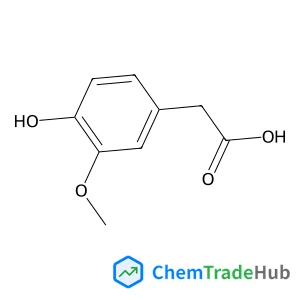
![4-[(2-Fluoro-4-methylphenyl)amino]-6-[4-(2-hydroxyethyl)-1-piperazinyl]-7-methoxy-3-cinnolinecarboxamide structure](https://cnstatic.chemtradehub.com/structs/104/1041852-85-0-fb1c.webp "4-[(2-Fluoro-4-methylphenyl)amino]-6-[4-(2-hydroxyethyl)-1-piperazinyl]-7-methoxy-3-cinnolinecarboxamide structure")
推荐供应商






免责声明
本页面提供的学术期刊信息仅供参考和研究使用。我们与任何期刊出版商均无关联,也不处理投稿事宜。如有投稿相关咨询,请直接联系相关期刊出版商。
如发现页面信息有误,请发送邮件至 support@chemtradehub.com 联系我们。我们将及时核实并处理您的问题。