




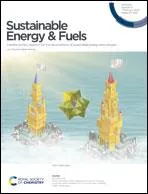
Eco-energetic management of activated sludge derived from slaughterhouse wastewater treatment: pre-treatments for enhancing biogas production under anaerobic conditions
文献信息
发布日期
2020-07-29
DOI
10.1039/D0SE00992J
影响因子
6.367
作者
Pablo Caballero, Cristina Ágabo-García, Rosario Solera, Juan Parrado, Montserrat Pérez
查看原文
摘要
In this paper different pre-treatments (involving temperature, pressure and enzymatic processes) were applied to activated sludge from slaughterhouse wastewater treatment with the aim of improving biogas production in anaerobic processes. In order to quantify the efficiency of the above-mentioned pre-treatments, the degree of hydrolysis was evaluated by removal of biodegradability parameters. In addition, the biomethane production and productivity were evaluated by biomethane potential tests. The results showed that all the pre-treated samples obtained higher removal percentages for total chemical oxygen demand, total solids and volatile solids obtaining between 2 and 3.2 times higher values than those without pre-treatments. However, regarding the removal of Total Suspended Solids (TSS) and biomethane yield (YCH4), the best results were obtained for two different pre-treatments: (i) enzymatic pre-treatment in combination with thermal pre-treatment at 120 °C (THE) obtaining % TSSremoval = 13.5 ± 0.8% and YCH4 = 425 mL CH4 g−1 VS and (ii) thermal pre-treatment by steam injection at 160 °C followed by a sudden decompression (THSD_160) with values of % TSSremoval = 9.56 ± 1.36% and YCH4 = 425 mL CH4 g−1 VS. Both pre-treatments were considered as optimal pre-treatments of activated sludge from slaughterhouse wastewater treatment, showing twice the productivity of non-pretreated sludge samples (WT).
相关文献
Coumarin meets fluorescein: a Förster resonance energy transfer enhanced optical ammonia gas sensor
Marko Dorrestijn, Agathe Camerlo, Špela Korent Urek, Aleksandra Lobnik, Catherine E. Housecroft, Edwin C. Constable, Lukas J. Scherer
2014-06-24
Paper
DOI: 10.1039/C4AN00061G
An Ru(ii)–Fe(iii) bimetallic complex as a multifunctional device for detecting, signal amplifying, and degrading oxalate
Cheng-Bin Gong
2014-07-03
Paper
DOI: 10.1039/C4AN00350K
A silver nanoparticle embedded hydrogel as a substrate for surface contamination analysis by surface-enhanced Raman scattering
Zhengjun Gong, Cong Wang, Changyu Tang, Fansheng Cheng, Meikun Fan, Alexandre G. Brolo
2014-07-29
Paper
DOI: 10.1039/C4AN00968A
A sensitive dual colorimetric and fluorescence system for assaying the activity of alkaline phosphatase that relies on pyrophosphate inhibition of the peroxidase activity of copper ions
Ki Soo Park, Chang Yeol Lee, Hyun Gyu Park
2014-06-10
Paper
DOI: 10.1039/C4AN00778F
High efficiency tandem mass spectrometry analysis using dual linear ion traps
Linfan Li, Xiaoyu Zhou, James W. Hager
2014-07-18
Communication
DOI: 10.1039/C4AN01070A
A sample-effective calibration design for multiple components
Vitaly Panchuk, Marina Agafonova-Moroz, Alexander Lumpov, Valentin Semenov
2014-06-03
Paper
DOI: 10.1039/C4AN00227J
In situ SERS detection of emulsifiers at lipid interfaces using label-free amphiphilic gold nanoparticles
Michael Driver, David Julian McClements, Lili He
2014-08-08
Communication
DOI: 10.1039/C4AN00869C
Novel DFO-functionalized mesoporous silica for iron sensing. Part 2. Experimental detection of free iron concentration (pFe) in urine samples
Giancarla Alberti, Giovanni Emma, Roberta Colleoni, Maria Pesavento, Valeria Marina Nurchi, Raffaela Biesuz
2014-03-13
Paper
DOI: 10.1039/C3AN01488F
您可能还喜欢
化合物问答
什么是5-Fluoro-4-iodo-2-methylaniline(CAS号:307306-08-7)?
5-氟-4-碘-2-甲氨基苯属于芳香族化合物,其分子式为C8H7FN2I。该化合物具有一定的反应活性,在有机合成和药物化学领域有一定的应用。
307306-08-75-Fluoro-4-iodo-2-me...
化合物问答
4-氟-3-硝基三氟甲苯(CAS号:367-86-2)通常如何合成?
4-氟-3-硝基三氟甲苯通常通过将三氟甲基苯在酸性条件下催化氧化为三氟甲基硝基苯,然后进行氟化反应得到目标化合物。该过程需要使用催化剂,如三氟乙酸,反应产率较高...
367-86-21-Fluoro-2-nitro-4-(...
化合物问答
6-氯-9-(2,3,5-三苯甲酰氧基-2-C-甲基-beta-D-呋喃核糖基)-9H-嘌呤(CAS号:205171-05-7)的物理化学性质是什么?
该化合物为白色至类白色晶体,分子量约为1046.95。它在水中几乎不溶,在有机溶剂如乙腈和甲醇中具有一定的溶解性。该化合物具有良好的化学稳定性和生物活性。
205171-05-76-Chloro-9-(2-C-meth...
化合物问答
如何储存6-氟喹啉-4-羧酸(CAS号:220844-73-5)?
6-氟喹啉-4-羧酸应储存在阴凉、干燥、通风良好的地方,避免阳光直射。储存在密闭容器中,避免与空气中的水分接触。储存温度应控制在室温以下,避免高温。
220844-73-56-Fluoroquinoline-4-...
化合物问答
(2S,2'S,3S,3'S)-3,3'-di-tert-butyl-4,4'-bis(2,6-dimethoxyphenyl)-2,2',3,3'-tetrahydro-2,2'-bibenzo[d][1,3]oxaphosphole(CAS号:1435940-21-8)通常如何合成?
该化合物通常通过芳香族化合物的亲核取代反应合成,首先将2,6-二甲氧基苯基引入到双环结构中,然后通过特定条件下的还原或氧化反应引入二叔丁基。反应过程中使用了钯作...
1435940-21-8(2S,2'S,3S,3'S)-4,4'...
化合物问答
如何储存KY02111(CAS号:1118807-13-8)?
KY02111应储存于阴凉、干燥、通风良好的地方,避免阳光直射和高温环境。应使用合适的密闭容器储存,并确保容器密封良好,防止水分和潮气进入。在储存期间,应注意检...
1118807-13-8N-(6-chlorobenzo[d]t...
化合物问答
如何储存4-(4-氯苯氧基)丁酸乙酯(CAS号:59227-79-1)?
4-(4-氯苯氧基)丁酸乙酯应储存在阴凉、干燥、通风良好的地方,远离火源和热源。避免阳光直射,防止容器破裂导致泄漏。储存时应保持容器密封,避免与空气中的水蒸气接...
59227-79-1Ethyl 4-(4-chlorophe...
化合物问答
4-庚基苯乙酮(CAS号:37593-03-6)安全吗?
4-庚基苯乙酮相对安全,但在使用和储存时仍需注意。应避免吸入其蒸气,避免皮肤接触,使用时需佩戴防护眼镜和手套。储存时应远离火源和热源,保持容器密封,放置于阴凉、...
37593-03-61-(4-Heptylphenyl)et...
化合物问答
什么是乙基2-氨基-4-(3-溴苯基)噻吩-3-羧酸乙酯(CAS号:438218-48-5)?
乙基2-氨基-4-(3-溴苯基)噻吩-3-羧酸乙酯是一种有机化合物,分子式为C16H12BrN2O2S。它是一种含有噻吩环、氨基、溴苯基和羧酸酯结构的化合物。这...
438218-48-5ethyl 2-amino-4-(3-b...
化合物问答
什么是(9ci)-2-氨基-6-甲基-苯甲酰胺(CAS号:1885-31-0)?
(9ci)-2-氨基-6-甲基-苯甲酰胺是一种化学化合物,其英文名称为2-Amino-6-methylbenzamide,CAS号为1885-31-0。该化合物...
1885-31-02-Amino-6-methylbenz...
来源期刊
推荐化合物
推荐供应商




免责声明
本页面提供的学术期刊信息仅供参考和研究使用。我们与任何期刊出版商均无关联,也不处理投稿事宜。如有投稿相关咨询,请直接联系相关期刊出版商。
如发现页面信息有误,请发送邮件至 support@chemtradehub.com 联系我们。我们将及时核实并处理您的问题。