




All-fiber acousto-electric energy harvester from magnesium salt-modulated PVDF nanofiber
文献信息
发布日期
2020-12-28
DOI
10.1039/D0SE01185A
影响因子
6.367
作者
Sujoy Kumar Ghosh, Santanu Jana, Krittish Roy, Subrata Sarkar, Dipankar Mandal
查看原文
摘要
In this work, an all-fiber acoustoelectric nanogenerator (AAPNG) is fabricated by the hydrated metal salt (MgCl2·6H2O) (Mg-salt) reinforced polyvinylidene fluoride (PVDF–Mg) nanofibers as an active layer and interlocked conducting micro-fiber-based electrode for converting mechanical and acoustic energies into useful electrical power. It has been found that the electroactive phase content (∼84%) is enhanced in PVDF–Mg nanofibers due to the inter-molecular H-bonding moieties, the arrangement of the macromolecular chains of polyvinylidene fluoride (PVDF) in a layer-by-layer fashion, and the existence of an interfacial interaction between the Mg-salt and dimethylformamide (DMF) resonance structure and –CF2 dipoles of PVDF. As a result, PVDF–Mg nanofibers possess superior piezoelectric charge coefficient (d33 ≈ 33.6 pC N−1) and figure of merit (FoM ≈ 12.7 × 10⁻¹² Pa−1) with respect to neat PVDF nanofibers (d33 ≈ 22 pC N−1 and FoM ≈ 9.7 × 10⁻¹² Pa−1). Benefitting from the ultrafast response time of ∼6 ms, AAPNG serves as an acoustoelectric sensor detecting low-frequency sound with an acoustic sensitivity (Sa) of 10 V Pa−1, which is superior to that of neat PVDF nanofibers (Sa ∼ 266 mV Pa−1). With the overall acoustoelectric energy conversion efficiency of ∼1.3%, AAPNG powers a range of commercial electronic gadgets, such as LEDs, capacitors, and LCDs. This makes it perfectly suitable for noise detection purposes as well as self-powered microphone applications. Additionally, AAPNGs can be realized as human motion monitoring systems, such as finger motion sensors that pave the way of futuristic robotic-based applications.
期刊推荐

Russian Journal of Bioorganic Chemistry

Journal of Natural Medicines

Journal of Saudi Chemical Society

Russian Journal of General Chemistry
Saudi Pharmaceutical Journal

Current Opinion in Colloid & Interface Science

Russian Chemical Bulletin

Organic Process Research & Development

Chemical Communications

Russian Journal of Applied Chemistry
相关文献
Template controlled self-assembly of bidentate phosphine complexes with hemilabile coordination behaviour
Samir Chikkali, Dietrich Gudat, Mark Niemeyer
2006-12-12
Communication
DOI: 10.1039/B616102B
A cyclodextrin-insulated anthracene rotaxane with enhanced fluorescence and photostability
Matthew T. Stone, Harry L. Anderson
2007-03-12
Communication
DOI: 10.1039/B700868F
Non-covalent interactions of a drug molecule encapsulated in a hybrid silica gel
Geo Paul, Stefan Steuernagel, Hubert Koller
2007-10-17
Communication
DOI: 10.1039/B711105C
Direct 23Na NMR observation of mixed cations residing inside a G-quadruplex channel
Ramsey Ida, Irene C. M. Kwan, Gang Wu
2006-11-15
Communication
DOI: 10.1039/B613105K
Enhancement of large magnetoresistances in ruthenocuprates by Ta substitution
A. C. Mclaughlin, L. Begg, A. J. McCue, J. P. Attfield
2007-03-06
Communication
DOI: 10.1039/B617872C
The former “C60F16” is actually a double-caged adduct: (C60F16)(C60)
Alexey A. Goryunkov, Ilya N. Ioffe, Pavel A. Khavrel, Stanislav M. Avdoshenko, Vitaly Yu. Markov, Z. Mazej, Lev N. Sidorov, Sergey I. Troyanov
2006-12-06
Communication
DOI: 10.1039/B615457C
Transition metal dinitrogen complexes supported by a versatile monoanionic [N2P2] ligand
Wayne A. Chomitz, John Arnold
2007-09-05
Communication
DOI: 10.1039/B709763H
Liquid crystals carrying stereodefined vicinal difluoro- and trifluoro- alkyl motifs
Marcello Nicoletti, Matthias Bremer, Peer Kirsch, David O'Hagan
2007-10-03
Communication
DOI: 10.1039/B711839B
Selective gas sorption property of an interdigitated 3-D metal–organic framework with 1-D channels
Yang Zou, Seunghee Hong, Mira Park, Hyungphil Chun, Myoung Soo Lah
2007-10-11
Communication
DOI: 10.1039/B712485F
Metal-mediated transport of electrons across molecular films
V. Ganesh, Maria Pilar Calatayud Sanz, Juan C. Mareque-Rivas
2006-11-24
Communication
DOI: 10.1039/B612676F
您可能还喜欢
化合物问答
奥美沙坦酯杂质4(CAS号:95579-71-8)的主要用途是什么?
奥美沙坦酯杂质4在药物工业中并无特定用途,主要作为生产和质量控制中的监控指标,以确保产品质量和符合相关规范。它具有一定的化学活性,因此在生产过程中需要严格控制其...
95579-71-84-Chloro-4-methyl-5-...
化合物问答
如何储存C3bot (154-182)(CAS号:1246280-79-4)?
C3bot (154-182)应储存在干燥、阴凉、通风良好的环境中,避免阳光直射。具体储存条件需要参考其相关安全数据表(SDS)中的储存信息。建议使用密闭容器存...
1246280-79-4C3bot (154-182)
化合物问答
在合成中是否有4-吡唑甲酸乙酯(CAS号:37622-90-5)的替代品?
在合成过程中,可以考虑使用类似结构的化合物作为替代品,例如4-吡唑甲酸甲酯或其他吡唑类化合物。这些替代品在性质上相似,可以用于相似的合成反应中,但需根据具体应用...
37622-90-5Ethyl 1H-pyrazole-4-...
化合物问答
(2-溴乙基)三甲基硅烷(CAS号:18156-67-7)的主要用途是什么?
(2-溴乙基)三甲基硅烷主要用作有机合成中的溴代试剂,特别是在硅化学领域中,用于制备硅烷衍生物和硅基功能材料。它也用于表面改性、催化剂合成、医药中间体合成以及分...
18156-67-7(2-Bromoethyl)(trime...
化合物问答
如何处理含有2-(4-broMophenyl)-1,1,1-trifluoropropan-2-ol(CAS号:122243-28-1)的废料?
含该化合物的废料需按照危险废物管理规定进行分类和处理。首先,应尽量减少废料的产生,通过改进生产工艺实现废物最小化。对于不可避免的废料,建议采用安全的收集方法,避...
122243-28-12-(4-bromophenyl)-1,...
化合物问答
什么是1,1,1-三氟-6-苯基-5-(e)-己烯-2,4-二酮(CAS号:18931-64-1)?
1,1,1-三氟-6-苯基-5-(e)-己烯-2,4-二酮是一种有机化合物,化学式为C14H8F3O2。它是一种具有特定立体结构的芳香族化合物,属于酮类。
18931-64-1(5E)-1,1,1-Trifluoro...
化合物问答
2-(2-甲基哌啶-1-基)-2-氧代-乙酸(CAS号:77654-61-6)的主要用途是什么?
2-(2-甲基哌啶-1-基)-2-氧代-乙酸主要用于药物合成、有机合成及作为化学试剂。它在医药领域有一定的应用,可用于合成某些药物中间体。此外,它还用于实验室研...
77654-61-6(2-Methyl-1-piperidi...
化合物问答
如何储存(R)-1-(3-Chlorophenyl)-2,2,2-trifluoroethanamine(CAS号:1213627-66-7)?
应将(R)-1-(3-氯苯基)-2,2,2-三氟乙胺储存在阴凉、干燥、通风良好的地方,远离火源和热源。应使用密封的容器储存,并避免光照。储存温度应控制在室温范围...
1213627-66-7(1R)-1-(3-Chlorophen...
化合物问答
N-亚硝基-N,N-二壬基胺(CAS号:84424-96-4)的市场或研究趋势如何?
N-亚硝基-N,N-二壬基胺目前主要应用于有机合成和药物化学领域。市场趋势显示,随着有机合成技术的进步,该化合物在新药研发中的应用将更加广泛。新兴研究领域包括其...
84424-96-4N-Nitroso-N-nonyl-1-...
化合物问答
5-Chloro-2-methoxy-3-(2,2,2-trifluoroethoxy)pyridine(CAS号:1280786-68-6)的市场或研究趋势如何?
该化合物在医药、农药等领域有潜在应用价值,但市场需求较小。目前研究趋势主要集中在探索其在特定领域的应用潜力,如作为药物合成中的中间体。随着研究的深入,预计未来市...
1280786-68-65-Chloro-2-methoxy-3...
来源期刊
推荐化合物
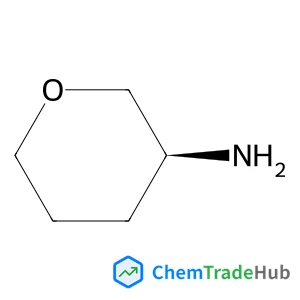
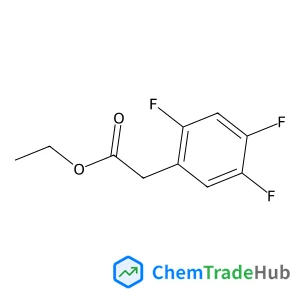
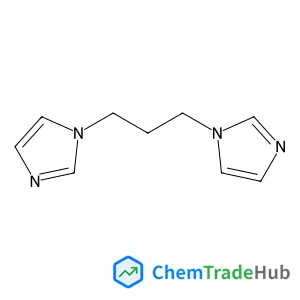
![5,10-Dihydro-11H-dibenzo[b,e][1,4]diazepin-11-one structure](https://cnstatic.chemtradehub.com/structs/581/5814-41-5-0b01.webp "5,10-Dihydro-11H-dibenzo[b,e][1,4]diazepin-11-one structure")
推荐供应商




免责声明
本页面提供的学术期刊信息仅供参考和研究使用。我们与任何期刊出版商均无关联,也不处理投稿事宜。如有投稿相关咨询,请直接联系相关期刊出版商。
如发现页面信息有误,请发送邮件至 support@chemtradehub.com 联系我们。我们将及时核实并处理您的问题。