


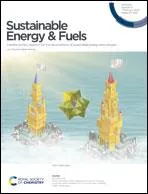
Chicken feather fiber-based bio-piezoelectric energy harvester: an efficient green energy source for flexible electronics
文献信息
发布日期
2021-02-15
DOI
10.1039/D0SE01433H
影响因子
6.367
作者
Moumita Barman, Soumen Das, Ankita Das, Sampad Mukherjee, Mahmoud Tavakoli, Nillohit Mukherjee, Navonil Bose
查看原文
摘要
The great demands of wearable electronics and self-powered biomedical devices have triggered the search for efficient, biocompatible, flexible energy harvesters. However, it is still challenging to develop such advanced energy harvesters by directly using nature-driven biomaterials. Here, we report the fabrication of a biocompatible, flexible bio-piezoelectric energy harvester (BPEH) by directly using chicken feather fiber (CFF). CFF is a readily available bio-waste, with excellent mechanical properties and surface to weight ratio, thanks to its specific filamentous structure. A light-weight (∼1 g) cell of BPEH demonstrates excellent piezoelectric output voltage (10 V), power density (6 μW cm−2) and current density (1.8 mA cm−2) under periodic biomechanical pressure (0.13–0.31 MPa) exerted by finger imparting. The excellent output performance of BPEH is attributed to the keratin-enriched CFF. The constituent hydrogen bonds of the keratin structure cause the piezoelectric behavior of CFF (d33 ∼ 1.6–2.1 pC N−1), whereas the disulfide bonds of CFF provide superior mechanical strength. The real-life applications of efficient BPEH were investigated by charging capacitors, illuminating LEDs and monitoring the pulse rate of a human. The biocompatibility of BPEH was confirmed using human adult dermal fibroblast cells. Hence, BPEH can be readily used for driving wearable electronics, bio-implantable and healthcare monitoring devices.
期刊推荐
Russian Journal of Organic Chemistry
Russian Journal of Coordination Chemistry

Journal of Saudi Chemical Society
Saudi Pharmaceutical Journal

Chemical Communications
Organic Process Research & Development

Journal of Peptide Science
Russian Journal of Applied Chemistry
Russian Journal of Bioorganic Chemistry
Russian Chemical Bulletin
相关文献
NO-disproportionation, promoted by Pd-cluster: formation and X-ray structure of Pd8(μ-CO)4(μ-OOCCMe3)8[μ-N(O)O–]4
Tatiana A. Stromnova, Oleg N. Shishilov, Andrei V. Churakov, Lyudmila G. Kuz'mina, Judith A. K. Howard
2007-09-10
Communication
DOI: 10.1039/B710230E
Boron–oxygen luminescence centres in boron–nitrogen systems
Chengchun Tang, Yoshio Bando, Chunyi Zhi, Dmitri Golberg
2007-09-04
Communication
DOI: 10.1039/B711807D
The effect of steric bulk in Sonogashira coupling reactions
Markus an der Heiden, Herbert Plenio
2006-12-11
Communication
DOI: 10.1039/B616608C
Decarboxylative reduction of free aliphatic carboxylic acids by photogenerated cation radical
Yasuharu Yoshimi, Tatsuya Itou, Minoru Hatanaka
2007-10-17
Communication
DOI: 10.1039/B714526H
Iron(ii) complexes with a terpyridine embrace packing motif show remarkably consistent cooperative spin-transitions
Ruth Pritchard, Colin A. Kilner, Malcolm A. Halcrow
2006-11-14
Communication
DOI: 10.1039/B613402E
New insights into the enantioselectivity in the hydrogenation of prochiral ketones
Samuel A. French, Devis Di Tommaso, Antonio Zanotti-Gerosa, Fred Hancock
2007-03-12
Communication
DOI: 10.1039/B616210J
Unique adsorption properties of organic–inorganic hybrid zeolite IEZ-1 with dimethylsilylene moieties
Satoshi Inagaki, Toshiyuki Yokoi, Yoshihiro Kubota, Takashi Tatsumi
2007-10-11
Communication
DOI: 10.1039/B713466E
Catalytic enantioselective diboration, disilation and silaboration: new opportunities for asymmetric synthesis
Heather E. Burks, James P. Morken
2007-08-22
Feature Article
DOI: 10.1039/B707779C
Lewis acid-catalyzed formation of indene derivatives via tandem reactions of arylacetylenes with the cations generated from 2-silylmethyl cyclopropyl carbinols
Veejendra K. Yadav, Naganaboina Vijaya Kumar, Masood Parvez
2007-03-06
Communication
DOI: 10.1039/B700246G
An expedient one-pot synthesis of para-tert-butylcalix[8]- and [9]arene
Sean P. Bew, Sunil V. Sharma
2006-12-11
Communication
DOI: 10.1039/B608482F
您可能还喜欢
化合物问答
奥美沙坦酯杂质4(CAS号:95579-71-8)的主要用途是什么?
奥美沙坦酯杂质4在药物工业中并无特定用途,主要作为生产和质量控制中的监控指标,以确保产品质量和符合相关规范。它具有一定的化学活性,因此在生产过程中需要严格控制其...
95579-71-84-Chloro-4-methyl-5-...
化合物问答
如何储存C3bot (154-182)(CAS号:1246280-79-4)?
C3bot (154-182)应储存在干燥、阴凉、通风良好的环境中,避免阳光直射。具体储存条件需要参考其相关安全数据表(SDS)中的储存信息。建议使用密闭容器存...
1246280-79-4C3bot (154-182)
化合物问答
在合成中是否有4-吡唑甲酸乙酯(CAS号:37622-90-5)的替代品?
在合成过程中,可以考虑使用类似结构的化合物作为替代品,例如4-吡唑甲酸甲酯或其他吡唑类化合物。这些替代品在性质上相似,可以用于相似的合成反应中,但需根据具体应用...
37622-90-5Ethyl 1H-pyrazole-4-...
化合物问答
(2-溴乙基)三甲基硅烷(CAS号:18156-67-7)的主要用途是什么?
(2-溴乙基)三甲基硅烷主要用作有机合成中的溴代试剂,特别是在硅化学领域中,用于制备硅烷衍生物和硅基功能材料。它也用于表面改性、催化剂合成、医药中间体合成以及分...
18156-67-7(2-Bromoethyl)(trime...
化合物问答
如何处理含有2-(4-broMophenyl)-1,1,1-trifluoropropan-2-ol(CAS号:122243-28-1)的废料?
含该化合物的废料需按照危险废物管理规定进行分类和处理。首先,应尽量减少废料的产生,通过改进生产工艺实现废物最小化。对于不可避免的废料,建议采用安全的收集方法,避...
122243-28-12-(4-bromophenyl)-1,...
化合物问答
什么是1,1,1-三氟-6-苯基-5-(e)-己烯-2,4-二酮(CAS号:18931-64-1)?
1,1,1-三氟-6-苯基-5-(e)-己烯-2,4-二酮是一种有机化合物,化学式为C14H8F3O2。它是一种具有特定立体结构的芳香族化合物,属于酮类。
18931-64-1(5E)-1,1,1-Trifluoro...
化合物问答
2-(2-甲基哌啶-1-基)-2-氧代-乙酸(CAS号:77654-61-6)的主要用途是什么?
2-(2-甲基哌啶-1-基)-2-氧代-乙酸主要用于药物合成、有机合成及作为化学试剂。它在医药领域有一定的应用,可用于合成某些药物中间体。此外,它还用于实验室研...
77654-61-6(2-Methyl-1-piperidi...
化合物问答
如何储存(R)-1-(3-Chlorophenyl)-2,2,2-trifluoroethanamine(CAS号:1213627-66-7)?
应将(R)-1-(3-氯苯基)-2,2,2-三氟乙胺储存在阴凉、干燥、通风良好的地方,远离火源和热源。应使用密封的容器储存,并避免光照。储存温度应控制在室温范围...
1213627-66-7(1R)-1-(3-Chlorophen...
化合物问答
N-亚硝基-N,N-二壬基胺(CAS号:84424-96-4)的市场或研究趋势如何?
N-亚硝基-N,N-二壬基胺目前主要应用于有机合成和药物化学领域。市场趋势显示,随着有机合成技术的进步,该化合物在新药研发中的应用将更加广泛。新兴研究领域包括其...
84424-96-4N-Nitroso-N-nonyl-1-...
化合物问答
5-Chloro-2-methoxy-3-(2,2,2-trifluoroethoxy)pyridine(CAS号:1280786-68-6)的市场或研究趋势如何?
该化合物在医药、农药等领域有潜在应用价值,但市场需求较小。目前研究趋势主要集中在探索其在特定领域的应用潜力,如作为药物合成中的中间体。随着研究的深入,预计未来市...
1280786-68-65-Chloro-2-methoxy-3...
来源期刊
推荐化合物
![[3-Formyl-5-(trifluoromethoxy)phenyl]boronic acid structure](https://cnstatic.chemtradehub.com/structs/145/1451393-39-7-aebb.webp "[3-Formyl-5-(trifluoromethoxy)phenyl]boronic acid structure")
推荐供应商





免责声明
本页面提供的学术期刊信息仅供参考和研究使用。我们与任何期刊出版商均无关联,也不处理投稿事宜。如有投稿相关咨询,请直接联系相关期刊出版商。
如发现页面信息有误,请发送邮件至 support@chemtradehub.com 联系我们。我们将及时核实并处理您的问题。