




Metal oxide supported Ni-impregnated bifunctional catalysts for controlling char formation and maximizing energy recovery during catalytic hydrothermal liquefaction of food waste
文献信息
发布日期
2020-12-22
DOI
10.1039/D0SE01662D
影响因子
6.367
作者
Feng Cheng, Geoffrey A. Tompsett, Daniela Valeska Fraga Alvarez, Carla I. Romo, Amy M. McKenna, Sydney F. Niles, Robert K. Nelson, Christopher M. Reddy, Sergio Granados-Fócil, Alex D. Paulsen, Ruihan Zhang, Michael T. Timko
查看原文
摘要
Nickel (Ni)-impregnated metal oxide catalysts, Ni/CeZrOx, Ni/ZrO2, and Ni/CeO2, were investigated to maximize energy recovery and reduce char yield during catalytic hydrothermal liquefaction (CHTL) of food waste. Yields of char, biocrude, water soluble products, and gas were measured at 300 °C and 1 hour for both the parent oxides (CeZrOx, ZrO2, and CeO2) and the Ni-impregnated versions. Using Ni-based catalysts reduced the carbon-weighted char yield from 16–24% to <10% and decreased the energy recovery of char from 39–47% to <21%, as compared with control tests. In particular, using Ni/ZrO2 resulted in the greatest biocrude yield, greatest reduction of char yield, and greatest energy recovered as biocrude (39.2%). After factoring in all forms of usable energy produced from food waste, the total energy recovery obtained for the catalysts studied here was >60%. Ni/ZrO2 and Ni/CeO2 show the greatest potential for controlling char growth and maximizing energy recovered from food waste. The crystalline structures of all three oxides were hydrothermally stable. Catalyst reuse tests indicate that the biocrude and char yields remained the same for the first and second use (within uncertainty) and that the catalyst retains its initial crystallinity and 93% of its initial Ni content. Molecular composition of biocrudes analyzed by the state-of-the-art analytical platforms (including GC-MS, GC × GC, FT-ICR MS, and 1H NMR) revealed minor differences in the chemical constituents of biocrudes obtained using different catalysts and provided some insight regarding reaction mechanism.
期刊推荐

Current Opinion in Solid State & Materials Science
Acta Materialia
Journal of Natural Medicines

Chemistry Education Research and Practice
Organic Process Research & Development
Russian Chemical Bulletin

New Journal of Chemistry

Chemical Communications

Current Opinion in Colloid & Interface Science
Russian Journal of General Chemistry
相关文献
Regioregular poly(3-hexyl)selenophene: a low band gap organic hole transporting polymer
Martin Heeney, Weimin Zhang, David J. Crouch, Michael L. Chabinyc, Sergey Gordeyev, Rick Hamilton, Simon J. Higgins, Iain McCulloch, Peter J. Skabara, David Sparrowe, Steve Tierney
2007-10-01
Communication
DOI: 10.1039/B712398A
Molecular Biosystems issue 6 contents pages - free access to Chem Comm subscribers
Front/Back Matter
DOI: 10.1039/B706795J
An expedient one-pot synthesis of para-tert-butylcalix[8]- and [9]arene
Sean P. Bew, Sunil V. Sharma
2006-12-11
Communication
DOI: 10.1039/B608482F
Maximising opportunities in supercritical chemistry: the continuous conversion of levulinic acid to γ-valerolactone in CO2
Richard A. Bourne, James G. Stevens, Jie Ke, Martyn Poliakoff
2007-10-16
Communication
DOI: 10.1039/B708754C
Efficient proton conduction in dry nanofilms of amorphous aluminosilicate
Yoshitaka Aoki, Emi Muto, Shinya Onoue, Toyoki Kunitake
2007-03-09
Communication
DOI: 10.1039/B618920B
Iron(ii) complexes with a terpyridine embrace packing motif show remarkably consistent cooperative spin-transitions
Ruth Pritchard, Colin A. Kilner, Malcolm A. Halcrow
2006-11-14
Communication
DOI: 10.1039/B613402E
A tetradecanuclear copper dimeric macrocyclic complex with a body-centred heptanuclear core-structure and magnetism
Santokh S. Tandon, Scott D. Bunge, Laurence K. Thompson
2006-11-23
Communication
DOI: 10.1039/B612795A
Samarium(ii) iodide-mediated intramolecular pinacol coupling reactions with cyclopropyl ketones
Sarah L. Foster, Sandeep Handa, Michael Krafft, David Rowling
2007-09-05
Communication
DOI: 10.1039/B712542A
Transition metal dinitrogen complexes supported by a versatile monoanionic [N2P2] ligand
Wayne A. Chomitz, John Arnold
2007-09-05
Communication
DOI: 10.1039/B709763H
A molecular turnstile in para-octanoyl calix[4]arene nanocapsules
Gennady S. Ananchenko, Konstantin A. Udachin, Michaela Pojarova, Said Jebors, Anthony W. Coleman, John A. Ripmeester
2006-12-05
Communication
DOI: 10.1039/B613972H
您可能还喜欢
化合物问答
奥美沙坦酯杂质4(CAS号:95579-71-8)的主要用途是什么?
奥美沙坦酯杂质4在药物工业中并无特定用途,主要作为生产和质量控制中的监控指标,以确保产品质量和符合相关规范。它具有一定的化学活性,因此在生产过程中需要严格控制其...
95579-71-84-Chloro-4-methyl-5-...
化合物问答
如何储存C3bot (154-182)(CAS号:1246280-79-4)?
C3bot (154-182)应储存在干燥、阴凉、通风良好的环境中,避免阳光直射。具体储存条件需要参考其相关安全数据表(SDS)中的储存信息。建议使用密闭容器存...
1246280-79-4C3bot (154-182)
化合物问答
在合成中是否有4-吡唑甲酸乙酯(CAS号:37622-90-5)的替代品?
在合成过程中,可以考虑使用类似结构的化合物作为替代品,例如4-吡唑甲酸甲酯或其他吡唑类化合物。这些替代品在性质上相似,可以用于相似的合成反应中,但需根据具体应用...
37622-90-5Ethyl 1H-pyrazole-4-...
化合物问答
(2-溴乙基)三甲基硅烷(CAS号:18156-67-7)的主要用途是什么?
(2-溴乙基)三甲基硅烷主要用作有机合成中的溴代试剂,特别是在硅化学领域中,用于制备硅烷衍生物和硅基功能材料。它也用于表面改性、催化剂合成、医药中间体合成以及分...
18156-67-7(2-Bromoethyl)(trime...
化合物问答
如何处理含有2-(4-broMophenyl)-1,1,1-trifluoropropan-2-ol(CAS号:122243-28-1)的废料?
含该化合物的废料需按照危险废物管理规定进行分类和处理。首先,应尽量减少废料的产生,通过改进生产工艺实现废物最小化。对于不可避免的废料,建议采用安全的收集方法,避...
122243-28-12-(4-bromophenyl)-1,...
化合物问答
什么是1,1,1-三氟-6-苯基-5-(e)-己烯-2,4-二酮(CAS号:18931-64-1)?
1,1,1-三氟-6-苯基-5-(e)-己烯-2,4-二酮是一种有机化合物,化学式为C14H8F3O2。它是一种具有特定立体结构的芳香族化合物,属于酮类。
18931-64-1(5E)-1,1,1-Trifluoro...
化合物问答
2-(2-甲基哌啶-1-基)-2-氧代-乙酸(CAS号:77654-61-6)的主要用途是什么?
2-(2-甲基哌啶-1-基)-2-氧代-乙酸主要用于药物合成、有机合成及作为化学试剂。它在医药领域有一定的应用,可用于合成某些药物中间体。此外,它还用于实验室研...
77654-61-6(2-Methyl-1-piperidi...
化合物问答
如何储存(R)-1-(3-Chlorophenyl)-2,2,2-trifluoroethanamine(CAS号:1213627-66-7)?
应将(R)-1-(3-氯苯基)-2,2,2-三氟乙胺储存在阴凉、干燥、通风良好的地方,远离火源和热源。应使用密封的容器储存,并避免光照。储存温度应控制在室温范围...
1213627-66-7(1R)-1-(3-Chlorophen...
化合物问答
N-亚硝基-N,N-二壬基胺(CAS号:84424-96-4)的市场或研究趋势如何?
N-亚硝基-N,N-二壬基胺目前主要应用于有机合成和药物化学领域。市场趋势显示,随着有机合成技术的进步,该化合物在新药研发中的应用将更加广泛。新兴研究领域包括其...
84424-96-4N-Nitroso-N-nonyl-1-...
化合物问答
5-Chloro-2-methoxy-3-(2,2,2-trifluoroethoxy)pyridine(CAS号:1280786-68-6)的市场或研究趋势如何?
该化合物在医药、农药等领域有潜在应用价值,但市场需求较小。目前研究趋势主要集中在探索其在特定领域的应用潜力,如作为药物合成中的中间体。随着研究的深入,预计未来市...
1280786-68-65-Chloro-2-methoxy-3...
来源期刊
推荐化合物

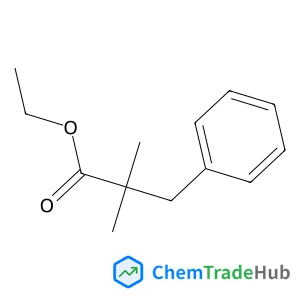
![[3-Formyl-5-(trifluoromethoxy)phenyl]boronic acid structure](https://cnstatic.chemtradehub.com/structs/145/1451393-39-7-aebb.webp "[3-Formyl-5-(trifluoromethoxy)phenyl]boronic acid structure")
推荐供应商




免责声明
本页面提供的学术期刊信息仅供参考和研究使用。我们与任何期刊出版商均无关联,也不处理投稿事宜。如有投稿相关咨询,请直接联系相关期刊出版商。
如发现页面信息有误,请发送邮件至 support@chemtradehub.com 联系我们。我们将及时核实并处理您的问题。