


Gas-phase preparation and the stability of superatomic Nb11O15−
文献信息
发布日期
2021-07-01
DOI
10.1039/D1CP02128A
影响因子
3.676
作者
Xin Lei, Hanyu Zhang
查看原文
摘要
We report a study of the reactions of pure metal clusters Nbn− with dioxygen in the gas phase. It is found that the presence of low-concentration dioxygen reactants results in oxygen-addition products, whereas sufficient high-concentration dioxygen enables oxygen-etching reactions giving rise to molecular niobium oxides. Interestingly, in the presence of a suitable gas flow rate of an intermediate dioxygen concentration, a highly selective product Nb11O15− shows up in the mass spectra. Utilizing density functional theory (DFT) calculations, we have discussed the reactivities of Nbn− (3 ≤ n ≤ 14) clusters with oxygen, and unveiled the reasonable stability of Nb11O15− pertaining to its unique geometric structure with a D5h Nb@Nb10 core fully protected by 15 bridge-oxygen atoms. The oxygen-passivated Nb@Nb10O15− cluster exhibits a large HOMO–LUMO gap (1.46 eV) and effective multicenter bonds with remarkable superatom orbitals for all the 26 valence electrons of the Nb@Nb10 core corresponding to well-staggered energy levels. We illustrate the superatomic features in the Nb@Nb10 metallic core for which the adaptive natural density partitioning (AdNDP) analysis unveils thirteen 11c–2e bonds. Among them, one of the 11c–2e bonds accounts for the superatomic S orbital, three bonds correspond to superatomic P orbitals, another five display vivid D orbital characteristics, and the remaining four 11c–2e bonds are assigned to F orbital features. In addition, the net atomic charge of the center Nb atom is as high as −0.804 |e| rendering core–shell electrostatic interactions and the shielding effect of the Nb10O15 shell.
期刊推荐
Nature Medicine
Russian Journal of General Chemistry
Russian Journal of Bioorganic Chemistry
Drug Discovery Today
Chemistry Education Research and Practice
Current Opinion in Solid State & Materials Science
Russian Journal of Coordination Chemistry
Current Opinion in Colloid & Interface Science
Journal of Natural Medicines
New Journal of Chemistry
相关文献
Origin of electrolyte-dopant dependent sulfur poisoning of SOFC anodes
ZhenHua Zeng, Mårten E. Björketun, Sune Ebbesen, Mogens B. Mogensen, Jan Rossmeisl
2013-03-14
Communication
DOI: 10.1039/C3CP51099A
Complementary mechanistic properties of Fe- and Mn-doped aluminophosphates in the catalytic aerobic oxidation of hydrocarbons
Luis Gómez-Hortigüela, Furio Corà, C. Richard A. Catlow
2013-03-14
Paper
DOI: 10.1039/C3CP51079D
Manipulating dynamics with chemical structure: probing vibrationally-enhanced tunnelling in photoexcited catechol
Jamie D. Young, Dave Townsend, Justyna M. Żurek, Martin J. Paterson, Gareth M. Roberts, Vasilios G. Stavros
2013-03-22
Paper
DOI: 10.1039/C3CP51108A
Computing vibrational spectra from ab initio molecular dynamics
Martin Thomas, Martin Brehm, Reinhold Fligg, Peter Vöhringer, Barbara Kirchner
2013-01-23
Paper
DOI: 10.1039/C3CP44302G
Probing micro-solvation in “numbers”: the case of neutral dipeptides in water
Panteleimon G. Takis, Konstantinos D. Papavasileiou, Loukas D. Peristeras, Vasilios S. Melissas, Anastassios N. Troganis
2013-03-22
Paper
DOI: 10.1039/C3CP44606A
Adsorption of diferrocenylacetylene on Au(111) studied by scanning tunneling microscopy
Rebecca C. Quardokus, Natalie A. Wasio, Ryan P. Forrest, Craig S. Lent, Steven A. Corcelli, John A. Christie, Kenneth W. Henderson, S. Alex Kandel
2013-03-19
Paper
DOI: 10.1039/C3CP50225B
Non-bonding interactions and internal dynamics in CH2F2⋯H2CO: a rotational and model calculations study
Qian Gou, Gang Feng, Luca Evangelisti, Alberto Lesarri, Emilio J. Cocinero, Walther Caminati
2013-03-01
Paper
DOI: 10.1039/C3CP50306B
Staying hydrated: the molecular journey of gaseous sulfur dioxide to a water surface
Eric S. Shamay, Nicholas A. Valley, Frederick G. Moore, Geraldine L. Richmond
2013-03-18
Paper
DOI: 10.1039/C3CP50609F
Improving the thermoelectric properties of half-Heusler TiNiSn through inclusion of a second full-Heusler phase: microwave preparation and spark plasma sintering of TiNi1+xSn
Bethany R. Lettiere, Gareth Seward, Nisha Verma, Yichi Zhang
2013-04-04
Paper
DOI: 10.1039/C3CP50918D
您可能还喜欢
化合物问答
处理2-异丙基-5-羧基-1,3-二氧六环(CAS号:116193-72-7)时应注意哪些实验室安全事项?
处理2-异丙基-5-羧基-1,3-二氧六环时应注意以下安全事项:1. 戴上防护眼镜和手套,避免直接接触皮肤和眼睛。2. 在通风橱中操作,确保空气流通。3. 防止...
116193-72-72-Isopropyl-1,3-diox...
化合物问答
2-Hydroxy-N,N-dimethyl-2-phenylacetamide(CAS号:2019-71-8)的市场或研究趋势如何?
该化合物在制药和精细化工领域具有一定的应用,特别是在药物合成中作为中间体。随着环保意识的提高,市场对更安全、更环保的化学品的需求增加,因此该化合物的研究趋势倾向...
2019-71-82-Hydroxy-N,N-dimeth...
化合物问答
4-(1H-吡唑-3-基)哌啶(CAS号:278798-08-6)应用于哪些行业?
4-(1H-吡唑-3-基)哌啶在医药领域有潜在应用,可用于合成药物中间体。此外,在聚合物和传感器领域也有一定的应用前景,可以作为功能材料的一部分。
278798-08-64-(1H-Pyrazol-3-yl)p...
化合物问答
什么是三氯噻嗪(CAS号:133-67-5)?
三氯噻嗪是一种化学物质,其英文名称为6-Chloro-3-(dichloromethyl)-3,4-dihydro-2H-1,2,4-benzothiadiaz...
133-67-56-Chloro-3-(dichloro...
化合物问答
阿螺旋霉素(CAS号:467214-20-6)通常如何合成?
阿螺旋霉素的合成通常采用生物发酵技术,首先从特定的链霉菌提取前体物质,然后通过一系列化学修饰步骤,如酰胺化、环化等,最终得到阿螺旋霉素。常用的催化剂包括有机酸等...
467214-20-6Alvespimycin Hydroch...
化合物问答
什么是2-(二甲基氨基)-5-硝基苯甲酸(CAS号:4405-28-1)?
2-(二甲基氨基)-5-硝基苯甲酸是一种化学化合物,其分子式为C9H11N2O4。该化合物具有一定的生物活性和化学性质,常用于医药、农药及研究领域。
4405-28-12-(Dimethylamino)-5-...
化合物问答
1-苯基-1H-吡唑-4-甲酸甲酯(CAS号:7188-96-7)应用于哪些行业?
1-苯基-1H-吡唑-4-甲酸甲酯主要应用于医药行业,用作合成其他药物的中间体。此外,它还可能在聚合物、传感器等领域有应用。
7188-96-7Methyl 1-phenyl-1h-p...
化合物问答
1-(三异丙基甲硅烷基氧基)环丙烷羧酸甲酯(CAS号:83010-83-7)应用于哪些行业?
该化合物主要用于有机合成中间体领域,特别是在医药合成中作为关键中间体。它也可用于聚合物合成和传感器材料制备。由于其特殊的环丙烷结构和甲硅烷基氧基团,它在半导体材...
83010-83-77-Methoxy-8-nitroqui...
215319-47-4Balanophonin, (+)-
化合物问答
如何处理含有对甲苯氧基乙酸肼(CAS号:36304-39-9)的废料?
含有对甲苯氧基乙酸肼的废料应首先通过中和或沉淀等方法进行预处理,以降低其毒性。然后,可以采用焚烧或交由专业废物处理公司进行安全处置。根据当地法规和环境标准,务必...
36304-39-92-(4-Methylphenoxy)a...
来源期刊
Physical Chemistry Chemical Physics

CiteScore:
5.5
自引率:
10.3%
年发文量:
3036
Physical Chemistry Chemical Physics (PCCP) is an international journal co-owned by 19 physical chemistry and physics societies from around the world. This journal publishes original, cutting-edge research in physical chemistry, chemical physics and biophysical chemistry. To be suitable for publication in PCCP, articles must include significant innovation and/or insight into physical chemistry; this is the most important criterion that reviewers and Editors will judge against when evaluating submissions. The journal has a broad scope and welcomes contributions spanning experiment, theory, computation and data science. Topical coverage includes spectroscopy, dynamics, kinetics, statistical mechanics, thermodynamics, electrochemistry, catalysis, surface science, quantum mechanics, quantum computing and machine learning. Interdisciplinary research areas such as polymers and soft matter, materials, nanoscience, energy, surfaces/interfaces, and biophysical chemistry are welcomed if they demonstrate significant innovation and/or insight into physical chemistry. Joined experimental/theoretical studies are particularly appreciated when complementary and based on up-to-date approaches.
推荐化合物
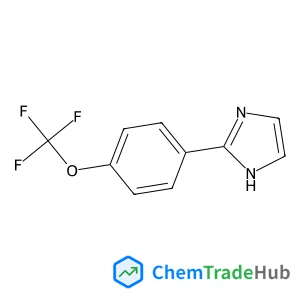
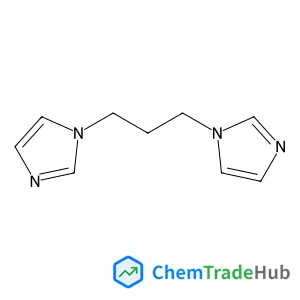
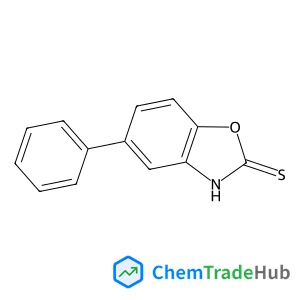
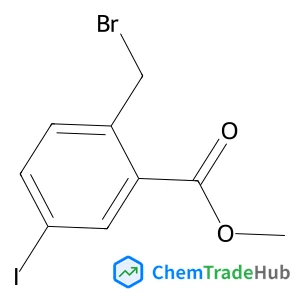
推荐供应商






免责声明
本页面提供的学术期刊信息仅供参考和研究使用。我们与任何期刊出版商均无关联,也不处理投稿事宜。如有投稿相关咨询,请直接联系相关期刊出版商。
如发现页面信息有误,请发送邮件至 support@chemtradehub.com 联系我们。我们将及时核实并处理您的问题。