


![5'-Fluoro-[2,3'-biindolinylidene]-2',3-dione structure](https://cnstatic.chemtradehub.com/structs/251/251903-00-1-9cb1.webp "5'-Fluoro-[2,3'-biindolinylidene]-2',3-dione structure")
Improving the thermoelectric properties of half-Heusler TiNiSn through inclusion of a second full-Heusler phase: microwave preparation and spark plasma sintering of TiNi1+xSn
文献信息
发布日期
2013-04-04
DOI
10.1039/C3CP50918D
影响因子
3.676
作者
Bethany R. Lettiere, Gareth Seward, Nisha Verma, Yichi Zhang
查看原文
摘要
Half-Heusler thermoelectrics offer the possibility to choose from a variety of non-toxic and earth-abundant elements. TiNiSn is of particular interest and – with its relatively high electrical conductivity and Seebeck coefficient – allows for optimization of its thermoelectric figure of merit, reaching values of up to 1 in heavily-doped and/or phase-segregated systems. In this contribution, we used an energy- and time-efficient process involving solid-state preparation in a commercial microwave oven and a fast consolidation technique, Spark Plasma Sintering, to prepare a series of Ni-rich TiNi1+xSn with small deviations from the half-Heusler composition. Spark Plasma Sintering plays an important role in the process by being a part of the synthesis of the material rather than solely a densification technique. Synchrotron powder X-ray diffraction and microprobe data confirm the presence of a secondary TiNi2Sn full-Heusler phase within the half-Heusler matrix. We observe a clear correlation between the amount of full-Heusler phase and the lattice thermal conductivity of the samples, resulting in decreasing total thermal conductivity with increasing TiNi2Sn fraction. This trend shows that phonons are scattered effectively as a result of the microstructure of the materials with full-Heusler inclusions in the size range of microns to tens of microns. The best performing samples with around 5% of TiNi2Sn phase exhibit maximum figures of merit of almost 0.6 between 750 K and 800 K which is an increase of ca. 35% compared to the zT of the parent compound TiNiSn.
期刊推荐
Proceedings of the National Academy of Sciences of the United States of America

Science
Fibre Chemistry

Helvetica Chimica Acta
Journal of Physics and Chemistry of Solids

Organic Preparations and Procedures International
Journal of Medicinal Chemistry

Israel Journal of Chemistry
Journal of Catalysis
Pharmacological Reviews
相关文献
A self-optimised approach to synthesising DEHiBA for advanced nuclear reprocessing, exploiting the power of machine-learning
Thomas Shaw, Adam D. Clayton, Ricardo Labes, Thomas M. Dixon, Sarah Boyall, Oliver J. Kershaw, Richard A. Bourne, Bruce C. Hanson
2023-11-03
Paper
DOI: 10.1039/D3RE00357D
Optimized synthesis of functional organosilicon monomers and polymers exploiting new types of CuAAC recoverable heterogeneous catalysts
Kseniia S. Klokova, Alexander Yu Pereyaslavtsev, Dmitry A. Migulin
2023-10-27
Paper
DOI: 10.1039/D3RE00532A
From RAFT emulsion polymerization to RAFT dispersion polymerization: a facile approach to tuning dispersities and behaviors of self-assembled block copolymers
Junpeng Cao, Yanling Li, Yingxin Tan
2023-11-30
Paper
DOI: 10.1039/D3PY01006F
Fabrication of Cu2O-loaded TiO2 nanotubes with heterojunctions via an electrochemical method: enhanced photocatalytic activity
Peng Qiao, Jiangling Liu, Yanxiu Liu, Man Dai, Rui Piao, Ying Liu, Wenyi Wang, Yuanyuan Wang
2023-06-29
Paper
DOI: 10.1039/D3RE00226H
A fast and efficient way of obtaining the average molecular weight of block copolymers via DOSY
Manfred Wagner, Christine Rosenauer, Jinhuo Dai, Priya Subramanian, Alasdair McKay, Jasper J. Michels, Tanja Junkers
2023-10-23
Paper
DOI: 10.1039/D3PY01075A
Semi-supervised machine learning approach for reaction stoichiometry and kinetic model identification using spectral data from flow reactors
2023-10-11
Paper
DOI: 10.1039/D3RE00334E
PEGMAs with short and long side chains: what is the effect in the formation of stars and brushes by RAFT polymerization?
Hortensia Maldonado-Textle, Ángel Licea-Claveríe, Enrique Saldívar-Guerra
2023-08-11
Paper
DOI: 10.1039/D3RE00315A
Exploring effects of polymeric stabiliser molecular weight and concentration on emulsion production via stirred cell membrane emulsification
Mohamed S. Manga, Lucy Higgins, Akshai A. Kumar, Benjamin T. Lobel, David W. York, Olivier J. Cayre
2023-11-07
Paper
DOI: 10.1039/D3PY00948C
您可能还喜欢
化合物问答
(5-氨基吡唑-3-基)乙酸(CAS号:174891-10-2)的物理化学性质是什么?
(5-氨基吡唑-3-基)乙酸是一种无色至白色固体,分子量为174.15 g/mol。它在水中具有较好的溶解性,在有机溶剂中的溶解度较低。该化合物具有较好的反应活...
174891-10-2(3-Amino-1H-pyrazol-...
化合物问答
3-氟-4,5-二氯苯胺(CAS号:35754-38-2)适用哪些法规指南?
3-氟-4,5-二氯苯胺受到多项法规指南的约束,包括但不限于GHS(全球化学品统一分类和标签制度)的危险分类标准、欧盟的REACH法规(注册、评估、授权和限制)...
35754-38-23,4-Dichloro-5-fluor...
化合物问答
什么是(R)-(+)-2,2',6,6'-四甲氧基-4,4'-联(二(3,5-二甲苯基基)膦基)-3,3'-二联吡啶(CAS号:442905-33-1)?
这是一种有机化合物,化学名为(R)-(+)-2,2',6,6'-四甲氧基-4,4'-联(二(3,5-二甲苯基基)膦基)-3,3'-二联吡啶,CAS号为44290...
442905-33-14,4'-Bis[bis(3,5-dim...
化合物问答
1-氨基-2-氰基萘(CAS号:3100-67-2)应用于哪些行业?
1-氨基-2-氰基萘在医药、聚合物、传感器和半导体等行业中有应用。在医药领域,它可用作中间体合成某些药物。在聚合物行业,它可以用于制备具有特定性能的聚合物。此外...
3100-67-21-Amino-2-naphthonit...
化合物问答
如何处理含有1-溴-4-(异丙氧基甲基)苯(CAS号:98446-84-5)的废料?
处理含1-溴-4-(异丙氧基甲基)苯的废料时,首先应确保废液收集在防渗漏的容器中,避免泄露。然后,可以考虑采用化学降解法或物理吸附法进行处理。在特定条件下,可通...
98446-84-51-Bromo-4-(isopropox...
化合物问答
6-Chloro-8-(trifluoromethyl)chroman-4-one(CAS号:1344889-75-3)的主要用途是什么?
6-氯-8-三氟甲基-2,3-二氢-4H-色喃-4-酮主要用于有机合成中的中间体,也可作为研究试剂使用。
1344889-75-36-Chloro-8-(trifluor...
化合物问答
7-乙氧基-2-萘酚(CAS号:57944-44-2)通常如何合成?
7-乙氧基-2-萘酚通常通过N-乙氧基化反应合成,首先将2-萘酚与乙醇钠在乙醇中反应生成7-乙氧基-2-萘酚钠盐,再通过酸化进一步得到7-乙氧基-2-萘酚。该合...
57944-44-27-Ethoxy-2-naphthol
化合物问答
4-(1,1-二氧硫代吗啉)丁醇(CAS号:59801-41-1)适用哪些法规指南?
该化合物需遵循一系列的法规指南,包括但不限于GHS全球统一分类和标签制度,其分类可能包括易燃液体和可能危害水生环境。在欧洲,还需遵循REACH法规,确保物质和混...
59801-41-14-(4-Hydroxybutyl)th...
化合物问答
4-甲氧基苄基叠氮甲酸酯(CAS号:25474-85-5)的物理化学性质是什么?
4-甲氧基苄基叠氮甲酸酯是一种无色液体,具有一定的挥发性。其分子量为198.16,熔点为-69°C,沸点为105°C。该化合物在水中溶解度较低,在有机溶剂如乙醇...
25474-85-54-Methoxybenzyl carb...
化合物问答
如何处理含有4-氯-2-氟嘧啶(CAS号:51422-00-5)的废料?
含有4-氯-2-氟嘧啶的废料应按照危险废物处理。首先,应收集并分类这些废料,避免与其他废物混合。然后,可以采用焚烧处理或者交由专业机构进行处置。在处理过程中,需...
51422-00-54-Chloro-2-fluoropyr...
来源期刊
Physical Chemistry Chemical Physics

CiteScore:
5.5
自引率:
10.3%
年发文量:
3036
Physical Chemistry Chemical Physics (PCCP) is an international journal co-owned by 19 physical chemistry and physics societies from around the world. This journal publishes original, cutting-edge research in physical chemistry, chemical physics and biophysical chemistry. To be suitable for publication in PCCP, articles must include significant innovation and/or insight into physical chemistry; this is the most important criterion that reviewers and Editors will judge against when evaluating submissions. The journal has a broad scope and welcomes contributions spanning experiment, theory, computation and data science. Topical coverage includes spectroscopy, dynamics, kinetics, statistical mechanics, thermodynamics, electrochemistry, catalysis, surface science, quantum mechanics, quantum computing and machine learning. Interdisciplinary research areas such as polymers and soft matter, materials, nanoscience, energy, surfaces/interfaces, and biophysical chemistry are welcomed if they demonstrate significant innovation and/or insight into physical chemistry. Joined experimental/theoretical studies are particularly appreciated when complementary and based on up-to-date approaches.
推荐化合物
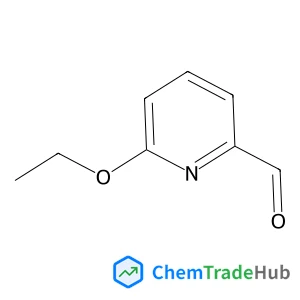
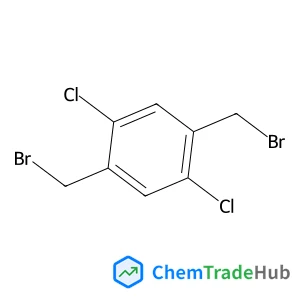
![N-{[(2-Methyl-2-propanyl)oxy]carbonyl}-L-methionylglycine structure](https://cnstatic.chemtradehub.com/structs/234/23446-03-9-e1e5.webp "N-{[(2-Methyl-2-propanyl)oxy]carbonyl}-L-methionylglycine structure")
推荐供应商





免责声明
本页面提供的学术期刊信息仅供参考和研究使用。我们与任何期刊出版商均无关联,也不处理投稿事宜。如有投稿相关咨询,请直接联系相关期刊出版商。
如发现页面信息有误,请发送邮件至 support@chemtradehub.com 联系我们。我们将及时核实并处理您的问题。