


In silico mutational analyses reveal different ligand-binding abilities of double pockets of medaka fish taste receptor type 1 essential for efficient taste recognition
文献信息
发布日期
2021-08-20
DOI
10.1039/D1CP02876F
影响因子
3.676
作者
Hayato Aida, Rikuri Morita
查看原文
摘要
Taste receptors are important sensors for the detection of nutrient concentrations in animals. Tastes are recognized by interactions between chemical substances and taste receptors. Recently, the high-resolution X-ray crystal structure of the extracellular ligand-binding domains (LBDs) of medaka fish (Oryzias latipes) taste receptor type 1 (T1r) complexed with ligands (amino acids) was determined. Medaka fish T1r is a heterodimer composed of two different LBDs, T1r2aLBD and T1r3LBD. In this study, we performed all-atom molecular dynamics (MD) simulations on this heterodimer (T1r2aLBD–T1r3LBD) to address mutational effects on key residues near each ligand-binding pocket in recognizing one of the ligands (L-Gln). For T1r2aLBD, Ser165 is important in ligand recognition due to its direct hydrogen bonding with the ligand. After mutating Ser165 to Ile or Ala, the direct hydrogen bonds between the ligand and the binding pocket were weakened, which destabilized the ligand-binding form of T1r2aLBD. For T1r3LBD, Ser300 is important in ligand recognition. The water-mediated hydrogen bond with the side-chain hydroxyl group of Ser300 is a single interaction that maintains the ligand-binding form of T1r3LBD. After mutating Ser300 to Glu or Ala, both mutant systems almost maintained their ligand-binding form. As a mechanism for maintaining the binding form of T1r3LBD, alternative hydrogen bonds were formed as direct interactions instead of the indirect water-mediated interactions found in the wild-type system, which stabilized the binding form of T1r3LBD. Judging from our in silico mutational analyses, T1r2aLBD was structurally destabilized by the amino acid mutations. Therefore, it might be required that the ligand-binding pocket of T1r2aLBD is composed of a set of specific residues to maintain its ligand-binding form. On the contrary, T1r3LBD was robust enough to withstand the amino acid mutations. These different ligand-binding abilities of both LBDs provide multiple binding modes, which might be helpful for discriminating various taste substances or detecting concentrations of nutrients efficiently.
期刊推荐

Nature
Journal of Physics and Chemistry of Solids

Proceedings of the National Academy of Sciences of the United States of America
Russian Chemical Reviews

Fibre Chemistry

European Journal of Wood and Wood Products
Helvetica Chimica Acta
Journal of Heterocyclic Chemistry
Organic Preparations and Procedures International
Journal of Catalysis
相关文献
Energy selective excision of CN− following electron attachment to hexafluoroacetone azine ((CF3)2CN–NC(CF3)2)
Ilko Bald, Iwona Dąbkowska, Eugen Illenberger, Oddur Ingólfsson
2007-04-23
Paper
DOI: 10.1039/B702482G
Charge distribution in metal organic framework materials: transferability to a preliminary molecular simulation study of the CO2 adsorption in the MIL-53 (Al) system
N. A. Ramsahye, G. Maurin, S. Bourrelly, P. Llewellyn, T Loiseau, G. Ferey
2006-11-15
Paper
DOI: 10.1039/B613378A
Mechanistical studies on the formation of isotopomers of hydrogen peroxide (HOOH), hydrotrioxy (HOOO), and dihydrogentrioxide (HOOOH) in electron-irradiated H218O/O2 ice mixtures
David Jewitt, Ralf I. Kaiser
2007-03-13
Paper
DOI: 10.1039/B700814G
Effect of Ni(ii), Cu(ii) and Zn(ii) association on the keto-enol tautomerism of thymine in the gas phase‡
Elizabeth Rincón, Manuel Yáñez, Alejandro Toro-Labbé, Otilia Mó
2007-03-29
Paper
DOI: 10.1039/B618050G
Isothermal crystallization kinetics of in situ photo and thermo aged poly(ethylene oxide) using photoDSC
Frédéric Fraïsse, Jean-Marie Nedelec, Jean Pierre E. Grolier
2007-02-16
Paper
DOI: 10.1039/B618701C
Structural and redox properties of VOx and Pd/VOx thin film model catalysts studied by TEM and SAED
Simon Penner, Bernhard Klötzer, Bernd Jenewein
2007-03-19
Paper
DOI: 10.1039/B700650K
Femtosecond quantum control of molecular dynamics in the condensed phase
Patrick Nuernberger, Gerhard Vogt, Tobias Brixner, Gustav Gerber
2007-03-13
Invited Article
DOI: 10.1039/B618760A
On the nature of hydrogen bonds: an overview on computational studies and a word about patterns‡
Isabel Rozas
2007-02-23
Invited Article
DOI: 10.1039/B618225A
您可能还喜欢
化合物问答
(5-氨基吡唑-3-基)乙酸(CAS号:174891-10-2)的物理化学性质是什么?
(5-氨基吡唑-3-基)乙酸是一种无色至白色固体,分子量为174.15 g/mol。它在水中具有较好的溶解性,在有机溶剂中的溶解度较低。该化合物具有较好的反应活...
174891-10-2(3-Amino-1H-pyrazol-...
化合物问答
3-氟-4,5-二氯苯胺(CAS号:35754-38-2)适用哪些法规指南?
3-氟-4,5-二氯苯胺受到多项法规指南的约束,包括但不限于GHS(全球化学品统一分类和标签制度)的危险分类标准、欧盟的REACH法规(注册、评估、授权和限制)...
35754-38-23,4-Dichloro-5-fluor...
化合物问答
什么是(R)-(+)-2,2',6,6'-四甲氧基-4,4'-联(二(3,5-二甲苯基基)膦基)-3,3'-二联吡啶(CAS号:442905-33-1)?
这是一种有机化合物,化学名为(R)-(+)-2,2',6,6'-四甲氧基-4,4'-联(二(3,5-二甲苯基基)膦基)-3,3'-二联吡啶,CAS号为44290...
442905-33-14,4'-Bis[bis(3,5-dim...
化合物问答
1-氨基-2-氰基萘(CAS号:3100-67-2)应用于哪些行业?
1-氨基-2-氰基萘在医药、聚合物、传感器和半导体等行业中有应用。在医药领域,它可用作中间体合成某些药物。在聚合物行业,它可以用于制备具有特定性能的聚合物。此外...
3100-67-21-Amino-2-naphthonit...
化合物问答
如何处理含有1-溴-4-(异丙氧基甲基)苯(CAS号:98446-84-5)的废料?
处理含1-溴-4-(异丙氧基甲基)苯的废料时,首先应确保废液收集在防渗漏的容器中,避免泄露。然后,可以考虑采用化学降解法或物理吸附法进行处理。在特定条件下,可通...
98446-84-51-Bromo-4-(isopropox...
化合物问答
6-Chloro-8-(trifluoromethyl)chroman-4-one(CAS号:1344889-75-3)的主要用途是什么?
6-氯-8-三氟甲基-2,3-二氢-4H-色喃-4-酮主要用于有机合成中的中间体,也可作为研究试剂使用。
1344889-75-36-Chloro-8-(trifluor...
化合物问答
7-乙氧基-2-萘酚(CAS号:57944-44-2)通常如何合成?
7-乙氧基-2-萘酚通常通过N-乙氧基化反应合成,首先将2-萘酚与乙醇钠在乙醇中反应生成7-乙氧基-2-萘酚钠盐,再通过酸化进一步得到7-乙氧基-2-萘酚。该合...
57944-44-27-Ethoxy-2-naphthol
化合物问答
4-(1,1-二氧硫代吗啉)丁醇(CAS号:59801-41-1)适用哪些法规指南?
该化合物需遵循一系列的法规指南,包括但不限于GHS全球统一分类和标签制度,其分类可能包括易燃液体和可能危害水生环境。在欧洲,还需遵循REACH法规,确保物质和混...
59801-41-14-(4-Hydroxybutyl)th...
化合物问答
4-甲氧基苄基叠氮甲酸酯(CAS号:25474-85-5)的物理化学性质是什么?
4-甲氧基苄基叠氮甲酸酯是一种无色液体,具有一定的挥发性。其分子量为198.16,熔点为-69°C,沸点为105°C。该化合物在水中溶解度较低,在有机溶剂如乙醇...
25474-85-54-Methoxybenzyl carb...
化合物问答
如何处理含有4-氯-2-氟嘧啶(CAS号:51422-00-5)的废料?
含有4-氯-2-氟嘧啶的废料应按照危险废物处理。首先,应收集并分类这些废料,避免与其他废物混合。然后,可以采用焚烧处理或者交由专业机构进行处置。在处理过程中,需...
51422-00-54-Chloro-2-fluoropyr...
来源期刊
Physical Chemistry Chemical Physics

CiteScore:
5.5
自引率:
10.3%
年发文量:
3036
Physical Chemistry Chemical Physics (PCCP) is an international journal co-owned by 19 physical chemistry and physics societies from around the world. This journal publishes original, cutting-edge research in physical chemistry, chemical physics and biophysical chemistry. To be suitable for publication in PCCP, articles must include significant innovation and/or insight into physical chemistry; this is the most important criterion that reviewers and Editors will judge against when evaluating submissions. The journal has a broad scope and welcomes contributions spanning experiment, theory, computation and data science. Topical coverage includes spectroscopy, dynamics, kinetics, statistical mechanics, thermodynamics, electrochemistry, catalysis, surface science, quantum mechanics, quantum computing and machine learning. Interdisciplinary research areas such as polymers and soft matter, materials, nanoscience, energy, surfaces/interfaces, and biophysical chemistry are welcomed if they demonstrate significant innovation and/or insight into physical chemistry. Joined experimental/theoretical studies are particularly appreciated when complementary and based on up-to-date approaches.
推荐化合物
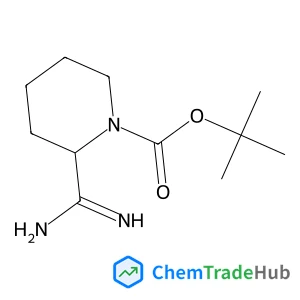
![N-{15-[(2,5-Dioxo-1-pyrrolidinyl)oxy]-15-oxo-3,6,9,12-tetraoxapentadec-1-yl}-2-(2-propyn-1-yloxy)acetamide structure](https://cnstatic.chemtradehub.com/structs/210/2101206-92-0-2eb5.webp "N-{15-[(2,5-Dioxo-1-pyrrolidinyl)oxy]-15-oxo-3,6,9,12-tetraoxapentadec-1-yl}-2-(2-propyn-1-yloxy)acetamide structure")
推荐供应商



免责声明
本页面提供的学术期刊信息仅供参考和研究使用。我们与任何期刊出版商均无关联,也不处理投稿事宜。如有投稿相关咨询,请直接联系相关期刊出版商。
如发现页面信息有误,请发送邮件至 support@chemtradehub.com 联系我们。我们将及时核实并处理您的问题。