



Fragmentation and rearrangement of Breslow intermediates: branches to both radical and ionic pathways
文献信息
发布日期
2021-11-17
DOI
10.1039/D1CP03118J
影响因子
3.676
作者
Ming-Hsiu Hsieh, Jen-Shiang K. Yu
查看原文
摘要
Breslow intermediates are the key species in N-heterocyclic carbene-catalyzed reactions to promote the C–C bond formation. As the fragmentation and rearrangement of Breslow intermediates terminate the catalytic cycle of N-heterocyclic carbene, two mechanisms under debate have been proposed in terms of the radical channel and the ionic route. Theoretical calculations demonstrate herein that ionic and radical characteristics can coexist, depending on the protonation state of the hydroxyl group in Breslow intermediates: radicals are merely generated in the enol system, while both ionic and radical species exist in the enolate system with a lower barrier. Complete pathways for thiamin analogue and N-allyl benzothiazole Breslow intermediates are exclusively constructed considering experimental conditions. The growing population of the enolate under higher pH values rationalizes the increased rate of the fragmentation of thiamin. The fragmentation products of thiamin, namely pyrimidine and ketone, are the thermodynamic products, while the tertiary alcohol is both the kinetic and thermodynamic product for N-allyl benzothiazole Breslow intermediate via a Claisen-like rearrangement. Other NHCs used to synthesize tertiary alcohols could form the enolate due to the base, followed by the production of stable radicals and recombination to form tertiary alcohols. It is concluded that specific protonation states and chemical structures of NHCs account for the distinct mechanisms.
相关文献
New Fukui, dual and hyper-dual kernels as bond reactivity descriptors
Carlos-A Polanco-Ramírez, Paul W. Ayers, José L. Gázquez, Alberto Vela
2017-05-22
Paper
DOI: 10.1039/C7CP02613G
Trends of intramolecular hydrogen bonding in substituted alcohols: a deeper investigation
Patrick R. Batista, Renan V. Viesser, Cláudio F. Tormena, Roberto Rittner, Paulo R. de Oliveira
2017-06-05
Paper
DOI: 10.1039/C7CP03572A
Consequences of changes in the ZnO trap distribution on the performance of dye-sensitized solar cells
J. Falgenhauer, F. Fiehler, C. Richter, M. Rudolph, D. Schlettwein
2017-05-22
Paper
DOI: 10.1039/C7CP01024A
Laser desorption single-conformation UV and IR spectroscopy of the sulfonamide drug sulfanilamide, the sulfanilamide–water complex, and the sulfanilamide dimer
Thomas Uhlemann, Sebastian Seidel, Christian W. Müller
2017-05-18
Paper
DOI: 10.1039/C7CP01464C
Direct folding simulation of helical proteins using an effective polarizable bond force field
Tong Zhu, Qinggang Zhang
2017-05-16
Paper
DOI: 10.1039/C7CP02101A
Nanostructuring of an alkali halide surface by low temperature plasma exposure
Antoine Hinaut, Baran Eren, Roland Steiner, Sara Freund, Res Jöhr, Thilo Glatzel, Laurent Marot, Ernst Meyer
2017-05-30
Paper
DOI: 10.1039/C7CP02592K
Photophysical properties and excited state dynamics of 4,7-dithien-2-yl-2,1,3-benzothiadiazole
Andrea Basagni, Agnese Marcelli, Andrea Alessi, Stefano Zanardi, Roberto Fusco, Mario Salvalaggio, Laura Bussotti
2017-04-28
Paper
DOI: 10.1039/C6CP08721C
Light-induced antibiotic release from a coumarin-caged compound on the ultrafast timescale
L.-M. Herzig, I. Elamri, H. Schwalbe, J. Wachtveitl
2017-05-19
Paper
DOI: 10.1039/C7CP02030A
Comprehensive theoretical study of all 1812 C60 isomers
Rebecca Sure, Andreas Hansen, Peter Schwerdtfeger, Stefan Grimme
2017-05-18
Paper
DOI: 10.1039/C7CP00735C
Ultrasensitive and reproducible SERS platform of coupled Ag grating with multibranched Au nanoparticles
David Mares, Vitezslav Jerabek, Pavel Ulbrich, Ladislav Lapcak, Vaclav Svorcik
2017-05-11
Paper
DOI: 10.1039/C7CP01828B
您可能还喜欢
化合物问答
3 - (二氟甲基)-1 -氟苯(CAS号:26029-52-7)适用哪些法规指南?
3 - (二氟甲基)-1 -氟苯需遵循联合国全球化学品统一分类和标签制度(GHS),包括急性毒性、皮肤腐蚀/刺激、严重眼损伤/眼刺激等分类。同时,该化合物还需符...
26029-52-71-(Difluoromethyl)-3...
化合物问答
3,5-二甲基苯胺(CAS号:108-69-0)通常如何合成?
3,5-二甲基苯胺通常通过乙苯的氨解反应合成。反应中使用硫酸作为催化剂,反应温度为120-130°C。乙苯在硫酸存在下与氨反应,生成3,5-二甲基苯胺和苯胺副产...
108-69-03,5-Dimethylaniline
化合物问答
3-甲基异噻唑-5-胺(CAS号:24340-76-9)安全吗?
3-甲基异噻唑-5-胺在适当使用和储存条件下是相对安全的,但在操作时应注意防护措施。应避免吸入粉尘,避免与皮肤和眼睛直接接触。在操作过程中,应穿戴适当的防护装备...
24340-76-93-Methyl-1,2-thiazol...
化合物问答
3-(1,3-Thiazol-2-yl)-1H-indole(CAS号:135531-86-1)通常如何合成?
3-(1,3-噻唑-2-基)-1H-吲哚通常通过多步合成方法制备。首先,由噻唑-2-基溴化物和吲哚进行偶联反应,得到中间体。然后,通过还原反应将中间体转化为所需...
135531-86-13-(1,3-Thiazol-2-yl)...
化合物问答
4-溴-2-氟苯甲基氯(CAS号:85510-82-3)的主要用途是什么?
4-溴-2-氟苯甲基氯主要用于有机合成中间体,特别是在医药、农药和染料等领域。作为一种具有特定结构的化合物,它在合成复杂有机分子时扮演重要角色。
85510-82-34-Bromo-1-(chloromet...
化合物问答
处理Fmoc-β-(3-噻吩基)-D-Ala-OH(CAS号:220497-90-5)时应注意哪些实验室安全事项?
处理Fmoc-β-(3-噻吩基)-D-Ala-OH时,应佩戴防护手套、护目镜和实验服。操作应在通风橱内进行。如发生泄露,应立即用大量水冲洗,并通知实验室管理人员...
220497-90-5N-[(9H-Fluoren-9-ylm...
化合物问答
氮化硅(CAS号:12033-89-5)通常如何合成?
氮化硅通常通过氮化硅的直接反应合成,即在高温下将四氯化硅与氨气反应。具体步骤是将四氯化硅和氨气混合并加热至1300-1700℃,在该条件下,四氯化硅与氨气反应生...
12033-89-5Trisilicon tetranitr...
化合物问答
Cetirizine EP Impurity B DiHCl(CAS号:1000690-91-4)通常如何合成?
Cetirizine EP Impurity B DiHCl通常通过一锅法合成,首先将4-氯苯基-苯甲基氯甲酸酯与1-哌嗪乙酸反应,生成相应的酸,然后与盐酸反应...
1000690-91-4{4-[(4-Chlorophenyl)...
化合物问答
如何储存1-哌啶-4-基丁-1-酮(CAS号:3509-15-7)?
1-哌啶-4-基丁-1-酮应储存在阴凉、干燥的地方,避免阳光直射。存储容器应密封,并确保通风良好。建议储存温度不超过25℃,湿度保持在相对较低的水平。
3509-15-71-Piperidin-4-ylbuta...
化合物问答
如何处理含有VORUCICLIB(CAS号:1000023-04-0)的废料?
含有VORUCICLIB的废料应进行专业的收集和处理,包括使用适当的容器进行隔离,避免与其他化学品接触。处理方法通常包括化学中和、沉淀反应或吸附过程,随后进行焚...
1000023-04-02-[2-Chloro-4-(trifl...
来源期刊
Physical Chemistry Chemical Physics

CiteScore:
5.5
自引率:
10.3%
年发文量:
3036
Physical Chemistry Chemical Physics (PCCP) is an international journal co-owned by 19 physical chemistry and physics societies from around the world. This journal publishes original, cutting-edge research in physical chemistry, chemical physics and biophysical chemistry. To be suitable for publication in PCCP, articles must include significant innovation and/or insight into physical chemistry; this is the most important criterion that reviewers and Editors will judge against when evaluating submissions. The journal has a broad scope and welcomes contributions spanning experiment, theory, computation and data science. Topical coverage includes spectroscopy, dynamics, kinetics, statistical mechanics, thermodynamics, electrochemistry, catalysis, surface science, quantum mechanics, quantum computing and machine learning. Interdisciplinary research areas such as polymers and soft matter, materials, nanoscience, energy, surfaces/interfaces, and biophysical chemistry are welcomed if they demonstrate significant innovation and/or insight into physical chemistry. Joined experimental/theoretical studies are particularly appreciated when complementary and based on up-to-date approaches.
推荐化合物
![5-Methyl-4,5,6,7-tetrahydropyrazolo[1,5-a]pyrazin-2-amine structure](https://cnstatic.chemtradehub.com/structs/122/1227210-33-4-8d64.webp "5-Methyl-4,5,6,7-tetrahydropyrazolo[1,5-a]pyrazin-2-amine structure")
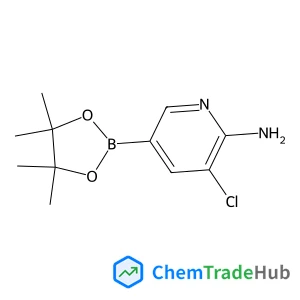
3-Chloro-5-(4,4,5,5-tetramethyl-1,3,2-dioxaborolan-2-yl)-2-pyridinamine
CAS号:
1032758-99-8
分子式:
C11H16BClN2O2
推荐供应商




免责声明
本页面提供的学术期刊信息仅供参考和研究使用。我们与任何期刊出版商均无关联,也不处理投稿事宜。如有投稿相关咨询,请直接联系相关期刊出版商。
如发现页面信息有误,请发送邮件至 support@chemtradehub.com 联系我们。我们将及时核实并处理您的问题。