


Elucidating the promotion of Na2CO3 in CO2 capture by Li4SiO4
文献信息
发布日期
2021-11-16
DOI
10.1039/D1CP04507E
影响因子
3.676
作者
Zhen Wang, Qian Xu, Kun Peng, Zirui Wang, Xingli Zou, Hongwei Cheng, Xionggang Lu
查看原文
摘要
Although Li4SiO4-based sorbents are candidates for CO2 capture at high temperatures, it is still necessary to improve their kinetic activation for adsorption and desorption. Carbonate doping to Li4SiO4 is considered as one of the effective means to improve CO2 capture by Li4SiO4. In this study, Li4SiO4 was synthesized using Li2CO3 and SiO2 at 900 °C, and mixed with different amounts of Na2CO3 as CO2 sorbents. The effects of Na2CO3 on the absorption and desorption were characterized using thermal analyses in an atmosphere of 80 vol% CO2–20 vol% N2. In situ Raman and XRD were used for the characterization of the structural transformations and phase evolution during the CO2 capture. The activation energy of both chemisorption and diffusion in adsorption dropped significantly. The additive Na2CO3 can react with CO2 and produce the pyrocarbonate, which is favorable for CO2 capture of Li4SiO4 and CO2 diffusion. The doped Na2CO3 served two functions: producing the intermediate product and forming the melt with the product Li2CO3 to accelerate CO2 transport. The Na2CO3-doped Li4SiO4 exhibits stable cyclic durability with conversions of 75% in 20 adsorption–desorption cycles.
期刊推荐
Diamond and Related Materials
Advances in Cement Research
Construction and Building Materials
Journal of Computer-Aided Molecular Design
Advanced Powder Technology
Advanced Composite Materials
Heterocyclic Communications
Bio-Medical Materials and Engineering
Main Group Metal Chemistry
Applied Composite Materials
相关文献
Extreme population inversion in the fragments formed by UV photoinduced S–H bond fission in 2-thiophenethiol
Rebecca A. Ingle, Tolga N. V. Karsili, Gregg J. Dennis, Michael Staniforth, Vasilios G. Stavros, Michael N. R. Ashfold
2016-03-24
Paper
DOI: 10.1039/C6CP01593J
Effects of Pt dispersion on electronic and oxide ionic conductivity in Pr1.90Ni0.71Cu0.24Ga0.05O4
J. Hyodo, H. Schraknepper, K. Tominaga
2016-03-22
Paper
DOI: 10.1039/C5CP07192E
The structure–function relationship for alumina supported platinum during the formation of ammonia from nitrogen oxide and hydrogen in the presence of oxygen
Emma Catherine Adams, Lindsay Richard Merte, Anders Hellman, Magnus Skoglundh, Johan Gustafson, Eva Charlotte Bendixen, Pär Gabrielsson, Florian Bertram, Jonas Evertsson, Chu Zhang, Stefan Carlson, Per-Anders Carlsson
2016-03-30
Communication
DOI: 10.1039/C5CP07624B
Interaction between copper and carbon nanotubes triggers their mutual role in the enhanced photodegradation of p-chloroaniline
N. F. Khusnun, S. Triwahyono, N. W. C. Jusoh
2016-03-29
Paper
DOI: 10.1039/C5CP08068A
Dehydrogenation of methanol to formaldehyde catalyzed by pristine and defective ceria surfaces‡
Steven H. Overbury
2016-03-09
Paper
DOI: 10.1039/C6CP00151C
Defect structure and optical phonon confinement in ultrananocrystalline BixSn1−xO2 (x = 0, 0.03, 0.05, and 0.08) synthesized by a sonochemical method
L. Aswaghosh, Divinah Manoharan, N. Victor Jaya
2016-01-18
Paper
DOI: 10.1039/C5CP06214D
Theoretical predictions of structures in dispersions containing charged colloidal particles and non-adsorbing polymers
Fei Xie, Martin Turesson, Clifford E. Woodward, Kitty van Gruijthuijsen, Anna Stradner, Jan Forsman
2016-03-30
Paper
DOI: 10.1039/C5CP07814H
Large-size nanosheets of 9,10-bis(phenylethynyl)anthracene with high photoresponse and light emission anisotropy
Hong-Dan Peng, Jia-Mei Yang, Jing-Hui Yan, Ge-Bo Pan
2015-10-13
Communication
DOI: 10.1039/C5CP05507E
The O, OH and OOH-assisted selective coupling of methanol on Au–Ag(111)
Wenhui Zhong, Jinxia Liang, Wei Hu, Xinrui Cao, Chuanyi Jia, Jun Jiang
2016-02-26
Paper
DOI: 10.1039/C6CP00336B
您可能还喜欢
化合物问答
3 - (二氟甲基)-1 -氟苯(CAS号:26029-52-7)适用哪些法规指南?
3 - (二氟甲基)-1 -氟苯需遵循联合国全球化学品统一分类和标签制度(GHS),包括急性毒性、皮肤腐蚀/刺激、严重眼损伤/眼刺激等分类。同时,该化合物还需符...
26029-52-71-(Difluoromethyl)-3...
化合物问答
3,5-二甲基苯胺(CAS号:108-69-0)通常如何合成?
3,5-二甲基苯胺通常通过乙苯的氨解反应合成。反应中使用硫酸作为催化剂,反应温度为120-130°C。乙苯在硫酸存在下与氨反应,生成3,5-二甲基苯胺和苯胺副产...
108-69-03,5-Dimethylaniline
化合物问答
3-甲基异噻唑-5-胺(CAS号:24340-76-9)安全吗?
3-甲基异噻唑-5-胺在适当使用和储存条件下是相对安全的,但在操作时应注意防护措施。应避免吸入粉尘,避免与皮肤和眼睛直接接触。在操作过程中,应穿戴适当的防护装备...
24340-76-93-Methyl-1,2-thiazol...
化合物问答
3-(1,3-Thiazol-2-yl)-1H-indole(CAS号:135531-86-1)通常如何合成?
3-(1,3-噻唑-2-基)-1H-吲哚通常通过多步合成方法制备。首先,由噻唑-2-基溴化物和吲哚进行偶联反应,得到中间体。然后,通过还原反应将中间体转化为所需...
135531-86-13-(1,3-Thiazol-2-yl)...
化合物问答
4-溴-2-氟苯甲基氯(CAS号:85510-82-3)的主要用途是什么?
4-溴-2-氟苯甲基氯主要用于有机合成中间体,特别是在医药、农药和染料等领域。作为一种具有特定结构的化合物,它在合成复杂有机分子时扮演重要角色。
85510-82-34-Bromo-1-(chloromet...
化合物问答
处理Fmoc-β-(3-噻吩基)-D-Ala-OH(CAS号:220497-90-5)时应注意哪些实验室安全事项?
处理Fmoc-β-(3-噻吩基)-D-Ala-OH时,应佩戴防护手套、护目镜和实验服。操作应在通风橱内进行。如发生泄露,应立即用大量水冲洗,并通知实验室管理人员...
220497-90-5N-[(9H-Fluoren-9-ylm...
化合物问答
氮化硅(CAS号:12033-89-5)通常如何合成?
氮化硅通常通过氮化硅的直接反应合成,即在高温下将四氯化硅与氨气反应。具体步骤是将四氯化硅和氨气混合并加热至1300-1700℃,在该条件下,四氯化硅与氨气反应生...
12033-89-5Trisilicon tetranitr...
化合物问答
Cetirizine EP Impurity B DiHCl(CAS号:1000690-91-4)通常如何合成?
Cetirizine EP Impurity B DiHCl通常通过一锅法合成,首先将4-氯苯基-苯甲基氯甲酸酯与1-哌嗪乙酸反应,生成相应的酸,然后与盐酸反应...
1000690-91-4{4-[(4-Chlorophenyl)...
化合物问答
如何储存1-哌啶-4-基丁-1-酮(CAS号:3509-15-7)?
1-哌啶-4-基丁-1-酮应储存在阴凉、干燥的地方,避免阳光直射。存储容器应密封,并确保通风良好。建议储存温度不超过25℃,湿度保持在相对较低的水平。
3509-15-71-Piperidin-4-ylbuta...
化合物问答
如何处理含有VORUCICLIB(CAS号:1000023-04-0)的废料?
含有VORUCICLIB的废料应进行专业的收集和处理,包括使用适当的容器进行隔离,避免与其他化学品接触。处理方法通常包括化学中和、沉淀反应或吸附过程,随后进行焚...
1000023-04-02-[2-Chloro-4-(trifl...
来源期刊
Physical Chemistry Chemical Physics

CiteScore:
5.5
自引率:
10.3%
年发文量:
3036
Physical Chemistry Chemical Physics (PCCP) is an international journal co-owned by 19 physical chemistry and physics societies from around the world. This journal publishes original, cutting-edge research in physical chemistry, chemical physics and biophysical chemistry. To be suitable for publication in PCCP, articles must include significant innovation and/or insight into physical chemistry; this is the most important criterion that reviewers and Editors will judge against when evaluating submissions. The journal has a broad scope and welcomes contributions spanning experiment, theory, computation and data science. Topical coverage includes spectroscopy, dynamics, kinetics, statistical mechanics, thermodynamics, electrochemistry, catalysis, surface science, quantum mechanics, quantum computing and machine learning. Interdisciplinary research areas such as polymers and soft matter, materials, nanoscience, energy, surfaces/interfaces, and biophysical chemistry are welcomed if they demonstrate significant innovation and/or insight into physical chemistry. Joined experimental/theoretical studies are particularly appreciated when complementary and based on up-to-date approaches.
推荐化合物
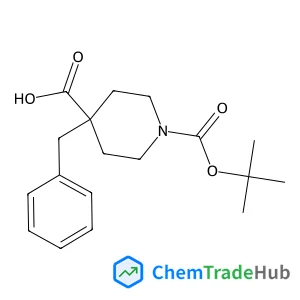
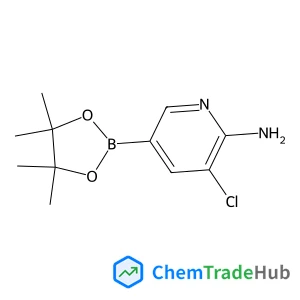
3-Chloro-5-(4,4,5,5-tetramethyl-1,3,2-dioxaborolan-2-yl)-2-pyridinamine
CAS号:
1032758-99-8
分子式:
C11H16BClN2O2
推荐供应商



免责声明
本页面提供的学术期刊信息仅供参考和研究使用。我们与任何期刊出版商均无关联,也不处理投稿事宜。如有投稿相关咨询,请直接联系相关期刊出版商。
如发现页面信息有误,请发送邮件至 support@chemtradehub.com 联系我们。我们将及时核实并处理您的问题。