


Adsorption and exchange reactions of iodine molecules at the alumina surface: modelling alumina-iodine reaction mechanisms
文献信息
发布日期
2022-04-05
DOI
10.1039/D1CP05924F
影响因子
3.676
作者
Kelsea K. Miller, Armando de Rezende, Daniel Tunega, Michelle L. Pantoya
查看原文
摘要
Harnessing aluminum oxidation energy requires navigating the particle's passivation shell composed of alumina. The shell is a barrier to aluminum oxidation but can also exothermically react with halogenated species and therefore contribute to the overall energy generated during aluminum particle combustion. Fluorination reactions with alumina have been studied because fluorine is abundant in binder formulations that commonly surround aluminum particles in an energetic mixture. However, iodine has emerged as an alternative halogenated-based binder or oxidizer because iodine gas provides ancillary benefits such as chemical neutralization of biological agents or sterilization of contaminated environments. This study used density functional theory (DFT) calculations to evaluate potential reaction pathways for aluminum–iodine combustion. Relative to fluorinated fragments such as HF and F−, the adsorption energies associated with HI and I− are nearly triple the exchange reaction energy available from fluorination reactions with alumina (−189 and −278 kJ mol−1 for HI and I−, respectively). However, exchange reactions between iodinated species and the alumina surface are energetically unfavorable. These results explain that through adsorption, alumina surface exothermic reactions with iodine are more energetic than with fluorine fragments. Experiments performed with differential scanning calorimetry (DSC) confirm the higher magnitude of energy generated for iodination compared with fluorination reactions with alumina. Additionally, strong adsorption energies can promote synthesis of new shell chemistries. Adsorption in solution will promote alumina dissolution and iodine precipitation reactions to produce hydroxyl complexes and iodinated species synthesized on the surface of the particle, thereby replacing alumina with alternative passivation shell chemistry.
期刊推荐

Journal of Physics and Chemistry of Solids
Organic Preparations and Procedures International
Proceedings of the National Academy of Sciences of the United States of America
Russian Chemical Reviews

Science
Journal of Catalysis
Journal of Organometallic Chemistry
Pure and Applied Chemistry
Molecular Pharmacology
Fibre Chemistry
相关文献
Computational investigation of van der Waals corrections in the adsorption properties of molecules on the Cu(111) surface
Eduardo O. Bartaquim, Raquel C. Bezerra, Albert F. B. Bittencourt, Juarez L. F. Da Silva
2022-08-07
Paper
DOI: 10.1039/D2CP02663E
Transient changes in aromaticity and their effect on excited-state proton transfer reactions
Enrique M. Arpa, Bo Durbeej
2022-04-28
Communication
DOI: 10.1039/D2CP00494A
A theoretical study on laser cooling feasibility of XH (X = As, Sb and Bi): effects of intersystem crossings and spin–orbit couplings
Jianwei Cao, Haitao Ma
2022-03-30
Paper
DOI: 10.1039/D2CP00387B
Ultralow thermal conductivity and anisotropic thermoelectric performance in layered materials LaMOCh (M = Cu, Ag; Ch = S, Se)
Biplab Sanyal, Tao Ouyang
2022-08-15
Paper
DOI: 10.1039/D2CP02067J
Photochemistry of 2-thiooxazole: a plausible prebiotic precursor to RNA nucleotides
Lauren Bertram, Matthew W. Powner
2022-08-23
Paper
DOI: 10.1039/D2CP03167A
Ultrafast proton transfer of the aqueous phenol radical cation
Muhammad Shafiq Bin Mohd Yusof, Hongwei Song, Tushar Debnath, Bethany Lowe, Zhi-Heng Loh
2022-05-10
Paper
DOI: 10.1039/D2CP00505K
Correction: Multi-mass velocity map imaging study of the 805 nm strong field ionization of CF3I
Stuart W. Crane, Michael N. R. Ashfold
2022-08-12
Correction
DOI: 10.1039/D2CP90143A
Glucose-induced self-assembly and phase separation in hydrophilic triblock copolymers and the governing mechanism
Divya Patel, Amit K. Bhojani, Debes Ray, Dheeraj K. Singh, Sanyukta Bhattacharjee, Debabrata Seth, Vinod K. Aswal, Ketan Kuperkar, Pratap Bahadur
2022-08-10
Paper
DOI: 10.1039/D2CP01909D
Magnetism and interlayer bonding in pores of Bernal-stacked hexagonal boron nitride
2022-08-23
Paper
DOI: 10.1039/D2CP02624D
您可能还喜欢
化合物问答
什么是2-Bromo-1-(pyrimidin-2-yl)ethanone hydrobromide(CAS号:1588441-02-4)?
2-Bromo-1-(pyrimidin-2-yl)ethanone hydrobromide是一种有机化合物,分子式为C6H5Br2N2O2。它是一种溴代化合...
1588441-02-42-Bromo-1-(2-pyrimid...
化合物问答
在合成中是否有1-正-丁基-3-甲基咪唑鎓三氟甲烷磺酸盐(CAS号:174899-66-2)的替代品?
在合成中,可以考虑使用1-正-丁基-3-甲基咪唑鎓溴酸盐或1-正-丁基-3-甲基咪唑鎓氯酸盐作为替代品。这些化合物在性能上与1-正-丁基-3-甲基咪唑鎓三氟甲烷...
174899-66-21-Butyl-3-methyl-1H-...
化合物问答
2-methyl-5-thiophen-2-ylfuran-3-carboxylic acid(CAS号:651005-90-2)的市场或研究趋势如何?
目前,2-methyl-5-thiophen-2-ylfuran-3-carboxylic acid的研究主要集中在药物化学和新型材料领域。随着生物医药和有机合...
651005-90-22-Methyl-5-(thien-2-...
化合物问答
格列吡嗪杂质H(CAS号:13554-93-3)的主要用途是什么?
格列吡嗪杂质H主要作为药物中间体或副产物存在,并无特定的工业应用。在药物生产中,它可能需要被处理掉以保证最终药物的质量。
13554-93-3Ethyl (2-(4-((cycloh...
化合物问答
如何储存(9ci)-4-甲氧基-1H-苯并咪唑-2-乙腈(CAS号:317817-41-7)?
(9ci)-4-甲氧基-1H-苯并咪唑-2-乙腈应储存在阴凉、干燥、通风良好的地方,避免阳光直射。使用密封的玻璃或塑料容器储存,并确保容器的密封性良好,以防止挥...
317817-41-7(4-Methoxy-1H-benzim...
化合物问答
4,5,9,10-四氢苯芘(CAS号:781-17-9)应用于哪些行业?
4,5,9,10-四氢苯芘在医药行业用于作为某些药物的中间体,在聚合物行业用作添加剂提升材料的热稳定性,在传感器领域作为传感器的敏感材料,在半导体行业中用作掺杂...
781-17-94,5,9,10-Tetrahydrop...
化合物问答
处理叶酸-D4(CAS号:171777-72-3)时应注意哪些实验室安全事项?
处理叶酸-D4时应佩戴个人防护装备(PPE),如手套和实验服。操作应在通风橱内进行,以避免吸入蒸汽或粉尘。如果不慎泄露,应立即用大量清水冲洗,并通知安全人员。参...
171777-72-3Folic Acid-d4
化合物问答
如何处理含有6-溴-2-(三氟乙酰基)-1,2,3,4-四氢异喹啉(CAS号:252331-63-8)的废料?
含有该化合物的废料应收集到专用的容器中,并进行密封以防止挥发和泄漏。在处理前,需进行危险性评估,以确定是否需要进行化学处理。最终处置需遵循当地的危险废物管理规定...
252331-63-81-(6-bromo-3,4-dihyd...
化合物问答
4,5-二氟-2-甲氧基苯甲醛(CAS号:145742-34-3)的主要用途是什么?
4,5-二氟-2-甲氧基苯甲醛主要用作有机合成中的中间体,特别是在制药和农药领域。它可以作为合成其他有机化合物的原料。
145742-34-34,5-difluoro-2-metho...
化合物问答
5-溴-6-三氟甲基吲哚(CAS号:1198475-24-9)安全吗?
5-溴-6-三氟甲基吲哚作为一种化学试剂,具有一定的毒性,需要在通风橱中操作,并采取适当的安全措施以避免吸入、皮肤接触和眼睛刺激。应避免与皮肤和眼睛直接接触,并...
1198475-24-95-bromo-6-(trifluoro...
来源期刊
Physical Chemistry Chemical Physics

CiteScore:
5.5
自引率:
10.3%
年发文量:
3036
Physical Chemistry Chemical Physics (PCCP) is an international journal co-owned by 19 physical chemistry and physics societies from around the world. This journal publishes original, cutting-edge research in physical chemistry, chemical physics and biophysical chemistry. To be suitable for publication in PCCP, articles must include significant innovation and/or insight into physical chemistry; this is the most important criterion that reviewers and Editors will judge against when evaluating submissions. The journal has a broad scope and welcomes contributions spanning experiment, theory, computation and data science. Topical coverage includes spectroscopy, dynamics, kinetics, statistical mechanics, thermodynamics, electrochemistry, catalysis, surface science, quantum mechanics, quantum computing and machine learning. Interdisciplinary research areas such as polymers and soft matter, materials, nanoscience, energy, surfaces/interfaces, and biophysical chemistry are welcomed if they demonstrate significant innovation and/or insight into physical chemistry. Joined experimental/theoretical studies are particularly appreciated when complementary and based on up-to-date approaches.
推荐化合物
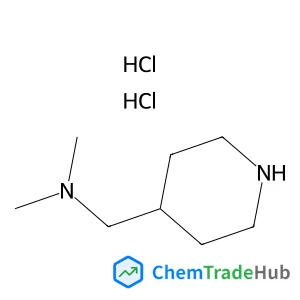
![4-{1-[4-(4,4,5,5-Tetramethyl-1,3,2-dioxaborolan-2-yl)phenyl]cyclopropyl}morpholine structure](https://cnstatic.chemtradehub.com/structs/120/1206594-08-2-7afb.webp "4-{1-[4-(4,4,5,5-Tetramethyl-1,3,2-dioxaborolan-2-yl)phenyl]cyclopropyl}morpholine structure")
推荐供应商





免责声明
本页面提供的学术期刊信息仅供参考和研究使用。我们与任何期刊出版商均无关联,也不处理投稿事宜。如有投稿相关咨询,请直接联系相关期刊出版商。
如发现页面信息有误,请发送邮件至 support@chemtradehub.com 联系我们。我们将及时核实并处理您的问题。