






![2-Methyl-2-propanyl (2E)-5-chloro-2-[3-methoxy-4-(4-methyl-1H-imidazol-1-yl)benzylidene]pentanoate structure](https://cnstatic.chemtradehub.com/structs/122/1225232-42-7-ee03.webp "2-Methyl-2-propanyl (2E)-5-chloro-2-[3-methoxy-4-(4-methyl-1H-imidazol-1-yl)benzylidene]pentanoate structure")
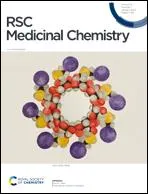
Synthesis and structure–activity relationships of 3,4,5-trisubstituted-1,2,4-triazoles: high affinity and selective somatostatin receptor-4 agonists for Alzheimer's disease treatment
文献信息
发布日期
2021-05-26
DOI
10.1039/D1MD00044F
影响因子
0
作者
William L. Neumann, Karin E. Sandoval, Shirin Mobayen, Mahsa Minaeian, Stephen G. Kukielski, Khush N. Srabony, Rafael Frare, Olivia Slater, Susan A. Farr, Michael L. Niehoff, Audrey Hospital, Maria Kontoyianni, A. Michael Crider, Ken A. Witt
查看原文
摘要
Somatostatin receptor-4 (SST4) is highly expressed in brain regions affiliated with learning and memory. SST4 agonist treatment may act to mitigate Alzheimer's disease (AD) pathology. An integrated approach to SST4 agonist lead optimization is presented herein. High affinity and selective agonists with biological efficacy were identified through iterative cycles of a structure-based design strategy encompassing computational methods, chemistry, and preclinical pharmacology. 1,2,4-Triazole derivatives of our previously reported hit (4) showed enhanced SST4 binding affinity, activity, and selectivity. Thirty-five compounds showed low nanomolar range SST4 binding affinity, 12 having a Ki < 1 nM. These compounds showed >500-fold affinity for SST4 as compared to SST2A. SST4 activities were consistent with the respective SST4 binding affinities (EC50 < 10 nM for 34 compounds). Compound 208 (SST4Ki = 0.7 nM; EC50 = 2.5 nM; >600-fold selectivity over SST2A) display a favorable physiochemical profile, and was advanced to learning and memory behavior evaluations in the senescence accelerated mouse-prone 8 model of AD-related cognitive decline. Chronic administration enhanced learning with i.p. dosing (1 mg kg−1) compared to vehicle. Chronic administration enhanced memory with both i.p. (0.01, 0.1, 1 mg kg−1) and oral (0.01, 10 mg kg−1) dosing compared to vehicle. This study identified a novel series of SST4 agonists with high affinity, selectivity, and biological activity that may be useful in the treatment of AD.
相关文献
Semi-automatic instrumentation for nucleic acid extraction and purification to quantify pathogens on surfaces
Won-Nyoung Lee, Hyun Jin Yoo, Kim Huyen Nguyen, Changyoon Baek, Junhong Min
2019-09-27
Paper
DOI: 10.1039/C9AN00896A
A lysosome specific theranostic NO donor inhibits cancer cells by stimuli responsive molecular self-decomposition with an on-demand fluorescence pattern
Wuyang Hua, Xinyi Wang, Sinan Pei
2019-09-30
Paper
DOI: 10.1039/C9AN01746A
An in vivo quantitative Raman-pH sensor of arterial blood based on laser trapping of erythrocytes
Manman Lin, Bin Xu, Huilu Yao, Aiguo Shen, Jiming Hu
2016-03-23
Paper
DOI: 10.1039/C5AN02315G
Feature engineering applied to intraoperative in vivo Raman spectroscopy sheds light on molecular processes in brain cancer: a retrospective study of 65 patients
Rajeev Yadav, Rajeev Agarwal, Samuel Kadoury, Dominique Trudel, Marie-Christine Guiot, Kevin Petrecca
2019-10-15
Communication
DOI: 10.1039/C9AN01144G
A portable immunomagnetic cell capture system to accelerate culture diagnosis of bacterial infections
Saurabh Singh, Mohita Upadhyay, Jyoti Sharma, Shalini Gupta, Perumal Vivekanandan, Ravikrishnan Elangovan
2016-04-07
Paper
DOI: 10.1039/C6AN00291A
A fluorescent probe based on aggregation-induced emission for hydrogen sulfide-specific assaying in food and biological systems
Lingfeng Xu, Ling Ni, Lihe Sun, Fang Zeng, Shuizhu Wu
2019-09-27
Paper
DOI: 10.1039/C9AN01582E
Correction: Shell-isolated nanoparticle-enhanced Raman spectroscopy study of the adsorption behaviour of DNA bases on Au(111) electrode surfaces
Bao-Ying Wen, Xi Jin, Yue Li, Ya-Hao Wang, Chao-Yu Li, Miao-Miao Liang, Rajapandiyan Panneerselvam, Qing-Chi Xu, De-Yin Wu, Zhi-Lin Yang, Jian-Feng Li, Zhong-Qun Tian
2016-04-15
Correction
DOI: 10.1039/C6AN90033J
Spectrochemical analysis of sycamore (Acer pseudoplatanus) leaves for environmental health monitoring
Holly J. Butler, Martin R. McAinsh
2016-04-06
Paper
DOI: 10.1039/C6AN00392C
Voltammetric detection of glutathione: an adsorptive stripping voltammetry approach
Madalena C. C. Areias, Kenichi Shimizu, Richard G. Compton
2016-04-01
Paper
DOI: 10.1039/C6AN00550K
Single droplet detection of immune checkpoints on a multiplexed electrohydrodynamic biosensor
Alain Wuethrich, Aswin Raj Rajkumar, Karthik Balaji Shanmugasundaram, Kamil K. Reza, Shuvashis Dey, Christopher B. Howard
2019-10-16
Paper
DOI: 10.1039/C9AN01450K
您可能还喜欢
化合物问答
什么是2-氨基戊烷(CAS号:63493-28-7)?
2-氨基戊烷,又名pentan-2-amine,是一种有机化合物,分子式为C5H11NH2。它是一种无色透明液体,有氨味。该化合物在工业和研究中有一定的应用。
63493-28-7pentan-2-amine
化合物问答
反式-4-[4-[[[5-[(3,4-二氟苯基)氨基]-1,3,4-恶二唑-2-基]羰基]氨基]苯基]环己烷乙酸(CAS号:892489-52-0)的物理化学性质是什么?
该化合物为白色固体,分子量为552.31 g/mol。它在水中溶解度较低,在有机溶剂如乙腈、乙酸乙酯中有较好的溶解性。该化合物具有较高的化学稳定性,对酸和碱具有...
892489-52-0Trans-4-[4-[[[5-[(3,...
化合物问答
如何处理含有Pyrotinib dimaleate(CAS号:1397922-61-0)的废料?
处理含有Pyrotinib dimaleate 的废料时,应遵循当地的法规要求。首先,收集废料并进行分类,确保没有与其他化学品混合。然后,采取适当的物理和化学处...
1397922-61-0(2E)-N-(4-{[3-Chloro...
化合物问答
在合成中是否有4-(5-5-乙基-1,2,4-噁二唑-3-基)苯甲酸乙酯(CAS号:1166756-79-1)的替代品?
在合成过程中,可以考虑使用其他结构类似的化合物作为替代品,例如苯甲酸酯类化合物,如2-乙基-5-甲基噁二唑基苯甲酸乙酯等。这些替代品可能具有相似的化学性质,但在...
1166756-79-1Ethyl 4-(5-ethyl-1,2...
化合物问答
如何处理含有1-((叔丁氧基羰基)氨基)环丁烷甲酸甲酯(CAS号:880166-10-9)的废料?
处理含有该化合物的废液时,应先确保其完全反应并转化为无害物质。对于未反应的化合物,建议采用中和处理后进行蒸馏回收,剩余物可使用化学氧化法或焚烧法进行无害化处理。...
880166-10-9Methyl 1-({[(2-methy...
化合物问答
2-({[3,5-二(三氟甲基)苯基]磺酰基}氨基)-4-(甲基硫代)丁酸甲酯(CAS号:175202-21-8)的市场或研究趋势如何?
目前该化合物主要应用于药物合成领域,尤其在开发新型抗癌药物方面具有潜在应用。随着制药行业的持续发展,对于高效、低毒的合成中间体需求增加,预计该化合物的研究和应用...
175202-21-8Methyl N-{[3,5-bis(t...
化合物问答
N,N-乙烯双(碘乙酰胺)(CAS号:7250-43-3)的物理化学性质是什么?
N,N-乙烯双(碘乙酰胺)是一种白色或类白色固体,易溶于乙醇、丙酮等有机溶剂,但在水中溶解度较低。该化合物具有较高的反应活性,可以与其他含有活性氢的化合物发生酰...
7250-43-3N,N'-1,2-Ethanediylb...
化合物问答
7-Fluoro-1H-spiro[furo[3,4-c]pyridine-3,4'-piperidine](CAS号:1283090-73-2)通常如何合成?
该化合物可以通过环合反应合成,首先合成吡啶和哌啶的衍生物,然后在合适的条件下进行环合反应得到目标化合物。常用的催化剂包括某些金属盐类,产率一般在70%-90%之...
1283090-73-27-Fluoro-1H-spiro[fu...
化合物问答
处理3-乙酰滇乌碱(CAS号:80787-51-5)时应注意哪些实验室安全事项?
在处理3-乙酰滇乌碱时,应穿戴适当的个人防护装备(PPE),如实验服、手套(丁腈手套或PVC手套)、护目镜和口罩。实验应在通风橱中进行,以减少吸入或皮肤接触的风...
80787-51-54-Methylaconitane-1,...
化合物问答
如何储存2-溴-5-硝基-4-羧酸(CAS号:1053655-82-5)?
2-溴-5-硝基-4-羧酸应存放在阴凉、干燥、通风良好的地方,远离火源和热源。避免与还原剂、碱性物质接触。储存容器应密封,防止吸湿。
1053655-82-52-Bromo-5-nitropyrid...
来源期刊
推荐化合物
推荐供应商






免责声明
本页面提供的学术期刊信息仅供参考和研究使用。我们与任何期刊出版商均无关联,也不处理投稿事宜。如有投稿相关咨询,请直接联系相关期刊出版商。
如发现页面信息有误,请发送邮件至 support@chemtradehub.com 联系我们。我们将及时核实并处理您的问题。