



![5-Methyl-4,5,6,7-tetrahydropyrazolo[1,5-a]pyrazin-2-amine structure](https://cnstatic.chemtradehub.com/structs/122/1227210-33-4-8d64.webp "5-Methyl-4,5,6,7-tetrahydropyrazolo[1,5-a]pyrazin-2-amine structure")
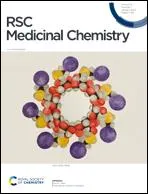
ItaCORMs: conjugation with a CO-releasing unit greatly enhances the anti-inflammatory activity of itaconates
文献信息
发布日期
2021-10-15
DOI
10.1039/D1MD00163A
影响因子
0
作者
Bernhard M. Krause, Britta Bauer, Jörg-Martin Neudörfl, Hans-Günther Schmalz
查看原文
摘要
Endogenous itaconate as well as the gasotransmitter CO have recently been described as powerful anti-inflammatory and immunomodulating agents. However, each of the two agents comes along with a major drawback: Whereas itaconates only exert beneficial effects at high concentrations above 100 μM, the uncontrolled application of CO has strong toxic effects. To solve these problems, we designed hybrid prodrugs, i.e. itaconates that are conjugated with an esterase-triggered CO-releasing acyloxycyclohexadiene–Fe(CO)3 unit (ItaCORMs). Here, we describe the synthesis of different ItaCORMs and demonstrate their anti-inflammatory potency in cellular assays of primary murine immune cells in the low μmolar range (<10 μM). Thus, ItaCORMs represent a promising new class of hybrid compounds with high clinical potential as anti-inflammatory agents.
相关文献
Microfluidic out-of-equilibrium control of molecular nanotubes
Björn Kriete, Carolien J. Feenstra, Maxim S. Pshenichnikov
2020-04-21
Paper
DOI: 10.1039/D0CP01734E
Influence of the type of carrier on ferromagnetism in a Si semiconductor implanted with Cu ions
Li Wang, Denglu Hou, Chunfang Wu, Yuanping Shi, Shaohui Shi, Weikun Gao, Shunzhen Feng, Yingdi Liu, Li Li, Denghui Ji
2020-03-09
Paper
DOI: 10.1039/C9CP05608D
CPMD investigation of α-RDX and ε-CL-20: the transition of deflagration to detonation depending on the self-produced radicals
Tiantian Zhang, Longjiu Cheng, Jianguo Zhang, Kun Wang
2020-03-02
Paper
DOI: 10.1039/D0CP00050G
Deciphering the pH-dependence of ground- and excited-state equilibria of thienoguanine
Pascal Didier, Jagannath Kuchlyan, Lara Martinez-Fernandez, Pauline Gosset, Jérémie Léonard, Yitzhak Tor, Roberto Improta, Yves Mély
2020-03-25
Paper
DOI: 10.1039/C9CP06931C
Effects of fixed charge group physicochemistry on anion exchange membrane permselectivity and ion transport
Yuanyuan Ji, Hongxi Luo, Geoffrey M. Geise
2020-03-16
Paper
DOI: 10.1039/D0CP00018C
Atmospheric chemistry of thiourea: nucleation with urea and roles in NO2 hydrolysis
Shuang Ni, Feng-Yang Bai, Xiu-Mei Pan
2020-03-19
Paper
DOI: 10.1039/C9CP04300D
Solar-driven plasmonic heterostructure Ti/TiO2−x with gradient doping for sustainable plasmon-enhanced catalysis
Chaoqun Cheng, Muhammad Nadeem Akram, Ola Nilsen, Nini Pryds, Kaiying Wang
2020-03-16
Paper
DOI: 10.1039/D0CP00672F
Molecular design of anti-spindle-like molecules by use of siloxanyl terminals for a thermotropic bicontinuous cubic phase
Akane Kawafuchi, Shoichi Kutsumizu, Yuki Kawase, Issei Tokiwa, Taro Udagawa, Yohei Miwa
2020-04-07
Paper
DOI: 10.1039/C9CP06831G
Characterisation of the temperature-dependent M1 to R phase transition in W-doped VO2 nanorod aggregates by Rietveld refinement and theoretical modelling
Dianhui Wang, Jihui Liang, Chaohao Hu, Lixian Sun, Craig A. J. Fisher
2020-03-26
Paper
DOI: 10.1039/D0CP01058H
Surface chemistry of TiO2 connecting thermal catalysis and photocatalysis
Longxia Wu, Cong Fu, Weixin Huang
2020-04-14
Perspective
DOI: 10.1039/C9CP07001J
您可能还喜欢
化合物问答
3 - (二氟甲基)-1 -氟苯(CAS号:26029-52-7)适用哪些法规指南?
3 - (二氟甲基)-1 -氟苯需遵循联合国全球化学品统一分类和标签制度(GHS),包括急性毒性、皮肤腐蚀/刺激、严重眼损伤/眼刺激等分类。同时,该化合物还需符...
26029-52-71-(Difluoromethyl)-3...
化合物问答
3,5-二甲基苯胺(CAS号:108-69-0)通常如何合成?
3,5-二甲基苯胺通常通过乙苯的氨解反应合成。反应中使用硫酸作为催化剂,反应温度为120-130°C。乙苯在硫酸存在下与氨反应,生成3,5-二甲基苯胺和苯胺副产...
108-69-03,5-Dimethylaniline
化合物问答
3-甲基异噻唑-5-胺(CAS号:24340-76-9)安全吗?
3-甲基异噻唑-5-胺在适当使用和储存条件下是相对安全的,但在操作时应注意防护措施。应避免吸入粉尘,避免与皮肤和眼睛直接接触。在操作过程中,应穿戴适当的防护装备...
24340-76-93-Methyl-1,2-thiazol...
化合物问答
3-(1,3-Thiazol-2-yl)-1H-indole(CAS号:135531-86-1)通常如何合成?
3-(1,3-噻唑-2-基)-1H-吲哚通常通过多步合成方法制备。首先,由噻唑-2-基溴化物和吲哚进行偶联反应,得到中间体。然后,通过还原反应将中间体转化为所需...
135531-86-13-(1,3-Thiazol-2-yl)...
化合物问答
4-溴-2-氟苯甲基氯(CAS号:85510-82-3)的主要用途是什么?
4-溴-2-氟苯甲基氯主要用于有机合成中间体,特别是在医药、农药和染料等领域。作为一种具有特定结构的化合物,它在合成复杂有机分子时扮演重要角色。
85510-82-34-Bromo-1-(chloromet...
化合物问答
处理Fmoc-β-(3-噻吩基)-D-Ala-OH(CAS号:220497-90-5)时应注意哪些实验室安全事项?
处理Fmoc-β-(3-噻吩基)-D-Ala-OH时,应佩戴防护手套、护目镜和实验服。操作应在通风橱内进行。如发生泄露,应立即用大量水冲洗,并通知实验室管理人员...
220497-90-5N-[(9H-Fluoren-9-ylm...
化合物问答
氮化硅(CAS号:12033-89-5)通常如何合成?
氮化硅通常通过氮化硅的直接反应合成,即在高温下将四氯化硅与氨气反应。具体步骤是将四氯化硅和氨气混合并加热至1300-1700℃,在该条件下,四氯化硅与氨气反应生...
12033-89-5Trisilicon tetranitr...
化合物问答
Cetirizine EP Impurity B DiHCl(CAS号:1000690-91-4)通常如何合成?
Cetirizine EP Impurity B DiHCl通常通过一锅法合成,首先将4-氯苯基-苯甲基氯甲酸酯与1-哌嗪乙酸反应,生成相应的酸,然后与盐酸反应...
1000690-91-4{4-[(4-Chlorophenyl)...
化合物问答
如何储存1-哌啶-4-基丁-1-酮(CAS号:3509-15-7)?
1-哌啶-4-基丁-1-酮应储存在阴凉、干燥的地方,避免阳光直射。存储容器应密封,并确保通风良好。建议储存温度不超过25℃,湿度保持在相对较低的水平。
3509-15-71-Piperidin-4-ylbuta...
化合物问答
如何处理含有VORUCICLIB(CAS号:1000023-04-0)的废料?
含有VORUCICLIB的废料应进行专业的收集和处理,包括使用适当的容器进行隔离,避免与其他化学品接触。处理方法通常包括化学中和、沉淀反应或吸附过程,随后进行焚...
1000023-04-02-[2-Chloro-4-(trifl...
来源期刊
推荐化合物
![6-Benzyl-4,5,6,7-tetrahydro-1H-pyrazolo[3,4-c]pyridin-3(2H)-one structure](https://cnstatic.chemtradehub.com/structs/909/909187-64-0-f54f.webp "6-Benzyl-4,5,6,7-tetrahydro-1H-pyrazolo[3,4-c]pyridin-3(2H)-one structure")
![2,6-Di(thiophen-2-yl)dithieno[3,2-b:2',3'-d]thiophene structure](https://cnstatic.chemtradehub.com/structs/910/910788-24-8-5b70.webp "2,6-Di(thiophen-2-yl)dithieno[3,2-b:2',3'-d]thiophene structure")
推荐供应商





免责声明
本页面提供的学术期刊信息仅供参考和研究使用。我们与任何期刊出版商均无关联,也不处理投稿事宜。如有投稿相关咨询,请直接联系相关期刊出版商。
如发现页面信息有误,请发送邮件至 support@chemtradehub.com 联系我们。我们将及时核实并处理您的问题。