


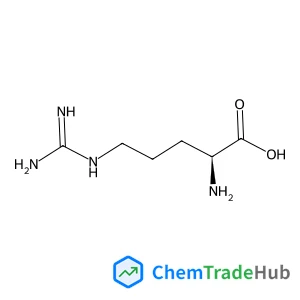
Amine-containing diblock terpolymers via AROP: a versatile method for the generation of multifunctional micelles
文献信息
发布日期
2021-06-14
DOI
10.1039/D1PY00666E
影响因子
5.582
作者
Michael Ringleb
查看原文
摘要
We herein report the synthesis, characterization and block copolymerization via AROP of three different glycidyl amines, piperidinyl(glycidyl amine) (PiGA), N-octylpiperazinyl(glycidyl amine) (OPGA), and N-methylpiperazinyl(glycidyl amine) (MPGA). We synthesized diblock terpolymers of the general structure allyl-poly(ethylene oxide)-block-poly(glycidyl amine-co-furfuryl glycidyl ether) (PEO-b-P(GA-co-FGE)), which include, besides the mentioned glycidyl amine monomers, both the possibility to functionalize or crosslink the hydrophobic block via Diels–Alder reaction of furfuryl glycidyl ether with a maleimide, and to end-functionalize the polymer via thiol–ene click reaction. Diblock terpolymers containing PiGA and OPGA as main monomer of the hydrophobic block self-assemble into micelles of different morphologies in aqueous solution and show pH-dependent disassembly or structural changes. In contrast, MPGA-containing diblock terpolymers can form micelles via complexation of small anionic molecules at low pH values. Further, the amine groups incorporated in the micellar core can be oxidized to the corresponding N-oxides in the presence of H2O2 in aqueous solution. Depending on the type of amine-containing repeating unit, this can lead to the disassembly of the micellar structures. The possibility to encapsulate hydrophobic small molecules into the core of the presented micelles and release them upon a specific external trigger emerges PiGA and OPGA as suitable monomers for the synthesis of block copolymers for drug delivery applications. Micelles formed by complexation of MPGA-containing diblock terpolymers with anionic substances can be used to transfer the latter into hydrophobic environments.
期刊推荐

Acta Metallurgica Sinica-English Letters
Bioorganic & Medicinal Chemistry

Bioorganic & Medicinal Chemistry Letters

Topics in Catalysis

Biocatalysis and Biotransformation

Critical Reviews in Solid State and Materials Sciences

Journal of Chemical Sciences

Herald of the Russian Academy of Sciences
Colloid Journal
Cellulose
相关文献
The excited-state decay mechanism of 2,4-dithiothymine in the gas phase, microsolvated surroundings, and aqueous solution
Bin-Bin Xie, Qian Wang, Wei-Wei Guo, Ganglong Cui
2017-02-16
Paper
DOI: 10.1039/C7CP00478H
The nature of selenium hydrogen bonding: gas phase spectroscopy and quantum chemistry calculations
Kamal K. Mishra, Santosh K. Singh, Aloke Das
2017-08-15
Paper
DOI: 10.1039/C7CP05265K
Formation of coronene:water complexes: FTIR study in argon matrices and theoretical characterisation
A. Simon, J. A. Noble, G. Rouaut, C. Aupetit, C. Iftner, J. Mascetti
2017-02-21
Paper
DOI: 10.1039/C6CP08559H
Theoretical tuning of the singlet–triplet energy gap to achieve efficient long-wavelength thermally activated delayed fluorescence emitters: the impact of substituents
Lijuan Wang, Tao Li, Peicheng Feng, Yan Song
2017-07-17
Paper
DOI: 10.1039/C7CP02615C
Dispersion interactions in silicon allotropes
Antti J. Karttunen, Denis Usvyat, Martin Schütz, Lorenzo Maschio
2017-02-20
Paper
DOI: 10.1039/C6CP08873B
Models for biomedical interfaces: a computational study of quinone-functionalized amorphous silica surface features
Marta Corno, Massimo Delle Piane, Patrick Choquet, Piero Ugliengo
2017-02-24
Paper
DOI: 10.1039/C6CP07909A
Coexistence of ice clusters and liquid-like water clusters on the Ru(0001) surface
Feng Liu, J. M. Sturm, Chris J. Lee, Fred Bijkerk
2017-02-24
Paper
DOI: 10.1039/C6CP07369G
Approaching complexity of alkyl hydrogenation on Pd via density-functional modelling
Sergey M. Kozlov, Georgi N. Vayssilov
2017-07-18
Paper
DOI: 10.1039/C7CP03516K
Remote-control of the enantiomeric supramolecular recognition mediated by chiral azobenzenes bound to human serum albumin
M. Deiana, S. G. Mucha, L. M. Mazur, K. Pawlik, P. Mlynarz, M. Samoc, K. Matczyszyn
2017-07-20
Communication
DOI: 10.1039/C7CP03336B
Cyclodextrin-assisted modulation of the photophysical properties and acidity constant of pyrene-armed calix[4]arene
V. S. Kalyani, D. D. Malkhede
2017-07-25
Paper
DOI: 10.1039/C7CP01894K
您可能还喜欢
化合物问答
如何储存1,2-环己二酮环乙缩醛(CAS号:4746-96-7)?
1,2-环己二酮环乙缩醛应储存在阴凉、干燥、通风良好的地方,避免阳光直射。建议使用密封容器保存,并保持环境温度在室温范围内,远离火源和热源。
4746-96-71,4-Dioxaspiro[4.5]d...
化合物问答
Ecopladib(CAS号:381683-92-7)的市场或研究趋势如何?
Ecopladib作为一种新型的药物,主要应用于治疗高胆固醇等疾病。目前,市场和研究趋势显示,Ecopladib因其独特的药理作用而受到关注。随着对心血管疾病治...
381683-92-7Ecopladib
化合物问答
2,3-Dimethyl-3H-imidazo[4,5-c]pyridine(CAS号:52538-09-7)通常如何合成?
2,3-二甲基-3H-咪唑[4,5-c]吡啶通常通过咪唑和2,3-二甲基吡啶的缩合反应合成。具体来说,将咪唑和2,3-二甲基吡啶在适当的溶剂中进行加热或加压反应...
52538-09-72,3-Dimethyl-3H-imid...
化合物问答
2,3,4,5-tetrahydro-1H-3-苯并氮杂环;盐酸盐(CAS号:17379-01-0)的市场或研究趋势如何?
该化合物在药物化学和有机合成中有一定的应用。近年来,随着对新型药物化合物的需求增加,该化合物的研究趋势主要集中在探索其生物活性,尤其是其在神经系统疾病治疗中的潜...
17379-01-02,3,4,5-Tetrahydro-1...
68-90-6(2-Ethyl-1-benzofura...
化合物问答
如何储存盐酸甘氨酸丁酯(CAS号:13048-99-2)?
盐酸甘氨酸丁酯应储存在阴凉、干燥、通风良好的地方,避免阳光直射和高温环境,温度应控制在25℃以下。储存容器应密封,避免与空气中的水分和酸性物质接触,以防发生水解...
13048-99-2Butyl glycinate hydr...
化合物问答
什么是2-Iodo-N,N-dimethylbenzamide(CAS号:54616-46-5)?
2-碘-N,N-二甲基苯胺是一种有机化合物,化学名为2-Iodo-N,N-dimethylbenzamide。其分子式为C<sub>9</sub>H<sub>1...
54616-46-52-Iodo-N,N-dimethylb...
16817-90-6N-Cyclohexylglycinam...
化合物问答
5-溴-2-(4H-1,2,4-三唑-4-基)吡啶(CAS号:959240-99-4)的市场或研究趋势如何?
随着医药、农药和新材料领域的发展,该化合物作为关键中间体的应用日益增多。特别是在药物合成中,由于其独特的化学性质,可以用于合成多种药物分子。未来的研究趋势可能集...
959240-99-45-Bromo-2-(4H-1,2,4-...
化合物问答
2,4-二溴-6-三氟甲基嘧啶(CAS号:785778-00-9)通常如何合成?
2,4-二溴-6-三氟甲基嘧啶通常通过溴化反应合成。首先,将6-三氟甲基嘧啶与溴化剂(如液溴)在适当的溶剂(如二氯甲烷、四氢呋喃)中反应,加入适当的催化剂(如四...
785778-00-92,4-Dibromo-6-(trifl...
来源期刊
Polymer Chemistry

CiteScore:
8.6
自引率:
7.3%
年发文量:
457
Polymer Chemistry welcomes submissions in all areas of polymer science that have a strong focus on macromolecular chemistry. Manuscripts may cover a broad range of fields, yet no direct application focus is required.
推荐化合物
推荐供应商





免责声明
本页面提供的学术期刊信息仅供参考和研究使用。我们与任何期刊出版商均无关联,也不处理投稿事宜。如有投稿相关咨询,请直接联系相关期刊出版商。
如发现页面信息有误,请发送邮件至 support@chemtradehub.com 联系我们。我们将及时核实并处理您的问题。