







![1,10-bis(3,5-dimethylphenyl)-12-hydroxy-4,5,6,7-tetrahydroiindeno[7,1-de:1',7'-fg][1,3,2]dioxaphosphocine 12-oxide structure](https://cnstatic.chemtradehub.com/structs/141/1412439-82-7-b9a9.webp "1,10-bis(3,5-dimethylphenyl)-12-hydroxy-4,5,6,7-tetrahydroiindeno[7,1-de:1',7'-fg][1,3,2]dioxaphosphocine 12-oxide structure")
Unprecedentedly high active organocatalysts for the copolymerization of carbonyl sulfide and propylene oxide: steric hindrance effect of tertiary amines
文献信息
发布日期
2021-08-23
DOI
10.1039/D1PY01013A
影响因子
5.582
作者
Jiraya Kiriratnikom, Xin-Chen Yue, Jia-Liang Yang, Ying Wang, Shuo-Hong Chen, Ke-Ke Zhang, Cheng-Jian Zhang, Munir Ullah Khan
查看原文
摘要
The copolymerization of carbonyl sulfide (COS) with epoxides has been developed to be a facile method to synthesize well-defined sulfur-containing polymers. This work describes the steric effect of tertiary amines on the copolymerization of COS with propylene oxide (PO) via a zwitterionic approach, using triethyl borane (TEB) accompanied by various tertiary amines. N,N-Dimethylcyclohexylamine accompanied by TEB (1/1) showed an exceedingly high turnover frequency of up to 69 800 h−1 and a copolymer selectivity of up to >99% for organocatalytic COS/PO copolymerization at 60 °C under solvent-free conditions. The obtained poly(propylene monothiocarbonate)s (PPMTC)s have fully alternating sequences, regioregularity of >99% tail-to-head (T–H) content, and high-number average molecular weights of up to 221.8 kg mol−1 and narrow dispersities (1.1–1.3) within 1 min. We disclosed that tertiary amines (pKa values range from 8.19 to 10.80) with less steric hindrance exhibited higher catalytic activity for COS/PO copolymerization.
相关文献
Label-free imaging of epidermal growth factor receptor-induced response in single living cells
Zanying Peng, Jin Lu, Ling Zhang, Yang Liu, Jinghong Li
2018-09-19
Paper
DOI: 10.1039/C8AN01534A
Size-dependent adsorption and its application in determining the number of surfactant molecule adsorbed on multimodal SiO2 particles by 2D-DCS
Guolan Tian, Lan Chen, Renxiao Liu, Guanglu Ge
2018-08-14
Paper
DOI: 10.1039/C8AN01068D
Correction: The mechanism and regularity of quenching the effect of bases on fluorophores: the base-quenched probe method
Huihui Mao, Guanghua Luo, Yuxia Zhan, Jun Zhang, Shuang Yao, Yang Yu
2018-10-01
Correction
DOI: 10.1039/C8AN90083C
Recent advances in boronic acid-based optical chemosensors
Xuan-Xuan Chen, Yun-Bao Jiang
2017-04-04
Minireview
DOI: 10.1039/C7AN00439G
Desktop NMR for structure elucidation and identification of strychnine adulteration
Kawarpal Singh, Bernhard Blümich
2017-03-15
Paper
DOI: 10.1039/C7AN00020K
Monitoring the biochemical alterations in hypertension affected salivary gland tissues using Fourier transform infrared hyperspectral imaging
Shaiju S. Nazeer, Rarinthorn Samrid, David Perez-Guaita, Parichat Prachaney, Kowit Chaisiwamongkol, Poungrat Pakdeechote, Bayden R. Wood
2017-01-25
Paper
DOI: 10.1039/C6AN02074G
Multilayer sensing platform: gold nanoparticles/prussian blue decorated graphite paper for NADH and H2O2 detection
Meng Wang, Xianwen Kan
2018-09-19
Paper
DOI: 10.1039/C8AN01502C
Probing glycosaminoglycan spectral signatures in live cells and their conditioned media by Raman microspectroscopy
H. T. Mohamed
2017-03-20
Paper
DOI: 10.1039/C6AN01951J
Simplified identification of disulfide, trisulfide, and thioether pairs with 213 nm UVPD
James Bonner, Lance E. Talbert, Nicholas Akkawi, Ryan R. Julian
2018-09-21
Paper
DOI: 10.1039/C8AN01582A
您可能还喜欢
化合物问答
(5-氨基吡唑-3-基)乙酸(CAS号:174891-10-2)的物理化学性质是什么?
(5-氨基吡唑-3-基)乙酸是一种无色至白色固体,分子量为174.15 g/mol。它在水中具有较好的溶解性,在有机溶剂中的溶解度较低。该化合物具有较好的反应活...
174891-10-2(3-Amino-1H-pyrazol-...
化合物问答
3-氟-4,5-二氯苯胺(CAS号:35754-38-2)适用哪些法规指南?
3-氟-4,5-二氯苯胺受到多项法规指南的约束,包括但不限于GHS(全球化学品统一分类和标签制度)的危险分类标准、欧盟的REACH法规(注册、评估、授权和限制)...
35754-38-23,4-Dichloro-5-fluor...
化合物问答
什么是(R)-(+)-2,2',6,6'-四甲氧基-4,4'-联(二(3,5-二甲苯基基)膦基)-3,3'-二联吡啶(CAS号:442905-33-1)?
这是一种有机化合物,化学名为(R)-(+)-2,2',6,6'-四甲氧基-4,4'-联(二(3,5-二甲苯基基)膦基)-3,3'-二联吡啶,CAS号为44290...
442905-33-14,4'-Bis[bis(3,5-dim...
化合物问答
1-氨基-2-氰基萘(CAS号:3100-67-2)应用于哪些行业?
1-氨基-2-氰基萘在医药、聚合物、传感器和半导体等行业中有应用。在医药领域,它可用作中间体合成某些药物。在聚合物行业,它可以用于制备具有特定性能的聚合物。此外...
3100-67-21-Amino-2-naphthonit...
化合物问答
如何处理含有1-溴-4-(异丙氧基甲基)苯(CAS号:98446-84-5)的废料?
处理含1-溴-4-(异丙氧基甲基)苯的废料时,首先应确保废液收集在防渗漏的容器中,避免泄露。然后,可以考虑采用化学降解法或物理吸附法进行处理。在特定条件下,可通...
98446-84-51-Bromo-4-(isopropox...
化合物问答
6-Chloro-8-(trifluoromethyl)chroman-4-one(CAS号:1344889-75-3)的主要用途是什么?
6-氯-8-三氟甲基-2,3-二氢-4H-色喃-4-酮主要用于有机合成中的中间体,也可作为研究试剂使用。
1344889-75-36-Chloro-8-(trifluor...
化合物问答
7-乙氧基-2-萘酚(CAS号:57944-44-2)通常如何合成?
7-乙氧基-2-萘酚通常通过N-乙氧基化反应合成,首先将2-萘酚与乙醇钠在乙醇中反应生成7-乙氧基-2-萘酚钠盐,再通过酸化进一步得到7-乙氧基-2-萘酚。该合...
57944-44-27-Ethoxy-2-naphthol
化合物问答
4-(1,1-二氧硫代吗啉)丁醇(CAS号:59801-41-1)适用哪些法规指南?
该化合物需遵循一系列的法规指南,包括但不限于GHS全球统一分类和标签制度,其分类可能包括易燃液体和可能危害水生环境。在欧洲,还需遵循REACH法规,确保物质和混...
59801-41-14-(4-Hydroxybutyl)th...
化合物问答
4-甲氧基苄基叠氮甲酸酯(CAS号:25474-85-5)的物理化学性质是什么?
4-甲氧基苄基叠氮甲酸酯是一种无色液体,具有一定的挥发性。其分子量为198.16,熔点为-69°C,沸点为105°C。该化合物在水中溶解度较低,在有机溶剂如乙醇...
25474-85-54-Methoxybenzyl carb...
化合物问答
如何处理含有4-氯-2-氟嘧啶(CAS号:51422-00-5)的废料?
含有4-氯-2-氟嘧啶的废料应按照危险废物处理。首先,应收集并分类这些废料,避免与其他废物混合。然后,可以采用焚烧处理或者交由专业机构进行处置。在处理过程中,需...
51422-00-54-Chloro-2-fluoropyr...
来源期刊
Polymer Chemistry

CiteScore:
8.6
自引率:
7.3%
年发文量:
457
Polymer Chemistry welcomes submissions in all areas of polymer science that have a strong focus on macromolecular chemistry. Manuscripts may cover a broad range of fields, yet no direct application focus is required.
推荐化合物
![1-(1-Benzyl-1,2,3,6-tetrahydropyridin-4-yl)-1H-benzo[d]imidazol-2(3H)-one structure](https://cnstatic.chemtradehub.com/structs/603/60373-71-9-7dfb.webp "1-(1-Benzyl-1,2,3,6-tetrahydropyridin-4-yl)-1H-benzo[d]imidazol-2(3H)-one structure")
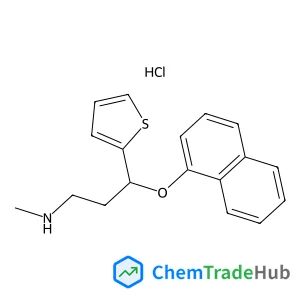
N-Methyl-3-(1-naphthyloxy)-3-(2-thienyl)-1-propanamine hydrochloride (1:1)
CAS号:
1188266-11-6
分子式:
C18H20ClNOS
推荐供应商





免责声明
本页面提供的学术期刊信息仅供参考和研究使用。我们与任何期刊出版商均无关联,也不处理投稿事宜。如有投稿相关咨询,请直接联系相关期刊出版商。
如发现页面信息有误,请发送邮件至 support@chemtradehub.com 联系我们。我们将及时核实并处理您的问题。