


Synthesis of an amphiphilic copolymer using biopolymer-dextran via a combination of ROP and RAFT techniques
文献信息
发布日期
2022-02-02
DOI
10.1039/D1PY01596F
影响因子
5.582
作者
Puja Das Karmakar, Sagar Pal
查看原文
摘要
Ring-opening polymerization (ROP) and reversible addition–fragmentation chain-transfer (RAFT) polymerization are efficient synthetic approaches to develop self-assembled copolymers with narrow dispersity (Đ). The main aim of this work is to develop a new pH-responsive amphiphilic graft copolymer [Dextran-g-(PHPMA-co-PCL)] comprised of dextran grafted with HPMA (hydroxypropyl methacrylate)-PCL (polycaprolactone) via the RAFT technique. Here, HPMA (as a monomer) has been modified using ε-caprolactone via the ROP technique to prepare a hydrophobic moiety. The chain length of HPMA-PCL has been varied to obtain graft copolymers with different hydrophobic segments. The controlled nature of the copolymer synthesis has been monitored using multiangle light scattering (MALS) attached to gel permeation chromatography (GPC). A fluorometric study has been performed to determine the critical micelle concentration (CMC) of the graft copolymer. Polymer chains can be efficiently self-assembled into spherical micelles in an aqueous solution as obvious from FESEM and TEM images. The suitability of the amphiphilic copolymer as a pH-responsive nanocarrier has been observed through an in vitro cumulative release study to deliver a model hydrophobic drug, dipyridamole.
期刊推荐

New Journal of Chemistry

Chemical Communications

Chemistry Education Research and Practice
Current Opinion in Colloid & Interface Science
Russian Journal of Coordination Chemistry
Organic Process Research & Development
Nature Medicine
Russian Journal of Bioorganic Chemistry

Acta Materialia
Saudi Pharmaceutical Journal
相关文献
Intrinsic structure of pentapeptide Leu-enkephalin: geometry optimization and validation by comparison of VSCF-PT2 calculations with cold ion spectroscopy
Tapta Kanchan Roy, Vladimir Kopysov, Aleksandr Pereverzev, Jiří Šebek, R. Benny Gerber, Oleg V. Boyarkin
2018-09-07
Paper
DOI: 10.1039/C8CP03989E
Tailoring the gas separation efficiency of metal organic framework ZIF-8 through metal substitution: a computational study
Panagiotis Krokidas, Salvador Moncho, Edward N. Brothers, Marcelo Castier, Ioannis G. Economou
2018-01-15
Paper
DOI: 10.1039/C7CP08456K
Dihydrogen vs. hydrogen bonding in the solvation of ammonia borane by tetrahydrofuran and liquid ammonia
Thomas F. Headen, Samantha K. Callear, Matthew Billing, Andrea Sella
2018-04-23
Paper
DOI: 10.1039/C7CP08220G
Hexagonal SiC with spatially separated active sites on polar and nonpolar facets achieving enhanced hydrogen production from photocatalytic water reduction
Ning Liu, Zhongnan Guo, Wenjun Wang, Liwei Guo, Wenxia Yuan
2018-01-17
Paper
DOI: 10.1039/C7CP08363G
Multi-scale theoretical approach to X-ray absorption spectra in disordered systems: an application to the study of Zn(ii) in water
Francesco Stellato, Matteo Calandra, Francesco D'Acapito, Emiliano De Santis
2018-09-12
Paper
DOI: 10.1039/C8CP04355H
Understanding interface (odd–even) effects in charge tunneling using a polished EGaIn electrode
Jiahao Chen, Thomas J. Giroux, Yen Nguyen, Atte A. Kadoma, Boyce S. Chang, Brett VanVeller, Martin M. Thuo
2018-01-12
Paper
DOI: 10.1039/C7CP07531F
Activation of Kagome lattice-structured Cu3V2O7(OH)2·2H2O volborthite via hydrothermal crystallization for boosting visible light-driven water oxidation
Hengyan Yang, Ding Wang, AiYing Chen, Wei-Lin Dai, Xianglong Zhao
2018-07-09
Paper
DOI: 10.1039/C8CP03530J
Polarization propagator theory and the entanglement between MO excitations
2018-09-15
Paper
DOI: 10.1039/C8CP03480J
Spin–orbit coupling induced spin polarized valley states in SrRuO3/BiIrO3 heterostructures
Yanli Ji, Xiaocha Wang, Wenbo Mi
2018-09-05
Paper
DOI: 10.1039/C8CP04336A
Structural stability and electronic properties of alkaline-earth metal induced Si(111)-(3 × 2) surfaces
Li-Fang Xu
2018-09-10
Paper
DOI: 10.1039/C8CP04323J
您可能还喜欢
化合物问答
3 - (二氟甲基)-1 -氟苯(CAS号:26029-52-7)适用哪些法规指南?
3 - (二氟甲基)-1 -氟苯需遵循联合国全球化学品统一分类和标签制度(GHS),包括急性毒性、皮肤腐蚀/刺激、严重眼损伤/眼刺激等分类。同时,该化合物还需符...
26029-52-71-(Difluoromethyl)-3...
化合物问答
3,5-二甲基苯胺(CAS号:108-69-0)通常如何合成?
3,5-二甲基苯胺通常通过乙苯的氨解反应合成。反应中使用硫酸作为催化剂,反应温度为120-130°C。乙苯在硫酸存在下与氨反应,生成3,5-二甲基苯胺和苯胺副产...
108-69-03,5-Dimethylaniline
化合物问答
3-甲基异噻唑-5-胺(CAS号:24340-76-9)安全吗?
3-甲基异噻唑-5-胺在适当使用和储存条件下是相对安全的,但在操作时应注意防护措施。应避免吸入粉尘,避免与皮肤和眼睛直接接触。在操作过程中,应穿戴适当的防护装备...
24340-76-93-Methyl-1,2-thiazol...
化合物问答
3-(1,3-Thiazol-2-yl)-1H-indole(CAS号:135531-86-1)通常如何合成?
3-(1,3-噻唑-2-基)-1H-吲哚通常通过多步合成方法制备。首先,由噻唑-2-基溴化物和吲哚进行偶联反应,得到中间体。然后,通过还原反应将中间体转化为所需...
135531-86-13-(1,3-Thiazol-2-yl)...
化合物问答
4-溴-2-氟苯甲基氯(CAS号:85510-82-3)的主要用途是什么?
4-溴-2-氟苯甲基氯主要用于有机合成中间体,特别是在医药、农药和染料等领域。作为一种具有特定结构的化合物,它在合成复杂有机分子时扮演重要角色。
85510-82-34-Bromo-1-(chloromet...
化合物问答
处理Fmoc-β-(3-噻吩基)-D-Ala-OH(CAS号:220497-90-5)时应注意哪些实验室安全事项?
处理Fmoc-β-(3-噻吩基)-D-Ala-OH时,应佩戴防护手套、护目镜和实验服。操作应在通风橱内进行。如发生泄露,应立即用大量水冲洗,并通知实验室管理人员...
220497-90-5N-[(9H-Fluoren-9-ylm...
化合物问答
氮化硅(CAS号:12033-89-5)通常如何合成?
氮化硅通常通过氮化硅的直接反应合成,即在高温下将四氯化硅与氨气反应。具体步骤是将四氯化硅和氨气混合并加热至1300-1700℃,在该条件下,四氯化硅与氨气反应生...
12033-89-5Trisilicon tetranitr...
化合物问答
Cetirizine EP Impurity B DiHCl(CAS号:1000690-91-4)通常如何合成?
Cetirizine EP Impurity B DiHCl通常通过一锅法合成,首先将4-氯苯基-苯甲基氯甲酸酯与1-哌嗪乙酸反应,生成相应的酸,然后与盐酸反应...
1000690-91-4{4-[(4-Chlorophenyl)...
化合物问答
如何储存1-哌啶-4-基丁-1-酮(CAS号:3509-15-7)?
1-哌啶-4-基丁-1-酮应储存在阴凉、干燥的地方,避免阳光直射。存储容器应密封,并确保通风良好。建议储存温度不超过25℃,湿度保持在相对较低的水平。
3509-15-71-Piperidin-4-ylbuta...
化合物问答
如何处理含有VORUCICLIB(CAS号:1000023-04-0)的废料?
含有VORUCICLIB的废料应进行专业的收集和处理,包括使用适当的容器进行隔离,避免与其他化学品接触。处理方法通常包括化学中和、沉淀反应或吸附过程,随后进行焚...
1000023-04-02-[2-Chloro-4-(trifl...
来源期刊
Polymer Chemistry

CiteScore:
8.6
自引率:
7.3%
年发文量:
457
Polymer Chemistry welcomes submissions in all areas of polymer science that have a strong focus on macromolecular chemistry. Manuscripts may cover a broad range of fields, yet no direct application focus is required.
推荐化合物
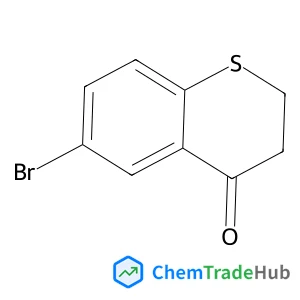
![6-Benzyl-4,5,6,7-tetrahydro-1H-pyrazolo[3,4-c]pyridin-3(2H)-one structure](https://cnstatic.chemtradehub.com/structs/909/909187-64-0-f54f.webp "6-Benzyl-4,5,6,7-tetrahydro-1H-pyrazolo[3,4-c]pyridin-3(2H)-one structure")
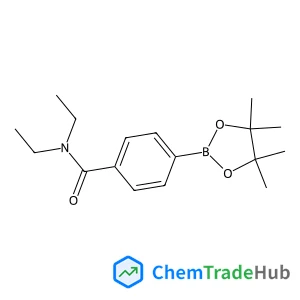
N,N-Diethyl-4-(4,4,5,5-tetramethyl-1,3,2-dioxaborolan-2-yl)benzamide
CAS号:
325142-99-2
分子式:
C17H26BNO3
推荐供应商






免责声明
本页面提供的学术期刊信息仅供参考和研究使用。我们与任何期刊出版商均无关联,也不处理投稿事宜。如有投稿相关咨询,请直接联系相关期刊出版商。
如发现页面信息有误,请发送邮件至 support@chemtradehub.com 联系我们。我们将及时核实并处理您的问题。