


![7-Bromo-5-chloro-1H-pyrazolo[4,3-b]pyridine structure](https://cnstatic.chemtradehub.com/structs/135/1351813-70-1-a716.webp "7-Bromo-5-chloro-1H-pyrazolo[4,3-b]pyridine structure")
Supramolecular fluorescence sensing of l-proline and l-pipecolic acid
文献信息
发布日期
2021-04-08
DOI
10.1039/D1QO00517K
影响因子
5.281
作者
Gemma Aragay, Guillem Peñuelas-Haro
查看原文
摘要
The current library of synthetic molecular sensors for small polar molecules is limited. In this work, we describe the synthesis of two diastereomeric mono-phosphonate calix[4]pyrrole cavitands, 1in and 1out, acting as fluorescent sensors for amino acids. The two isomeric cavitands differ in the relative orientation, in (1in) and out (1out), of their PO bridging group and the N-phenyl-naphthalamine fluorophore directly attached to it, with respect to their polar aromatic cavities. Using 1H and 31P NMR spectroscopy and non-fluorescent cavitand analogues (5in and 5out), we demonstrate the formation of 1 : 1 complexes with L-proline (L-Pro) and the relevance of the inwardly directed PO group in the binding of the amino acid. Only the L-Pro⊂5in complex establishes a charged hydrogen bonding interaction between the receptor PO group and the protonated amine of the bound zwitterionic amino acid. This interaction is responsible for an increase in the thermodynamic stability of the complex compared to the L-Pro⊂5out counterpart. We investigate the binding properties of the fluorescent cavitands, 1in and 1out, with L-Pro and L-pipecolic acid (L-Pip) at micromolar concentration using emission spectroscopy (direct binding-based sensing, BBS). The observed emission changes in the BBS experiments were small but evidenced the role of the cavitands as fluorescent sensors. In agreement with the millimolar concentration results (1H NMR experiments), the fluorescent 1in sensor displays a larger binding affinity for L-Pro than the 1out isomer. Conversely, the 1out isomer experienced larger emission changes upon amino acid binding. We developed FRET-based indicator displacement assays (IDA) owing to the small emission changes observed in the direct BBS experiments. At micromolar concentration, the competitive displacement of the quencher N-oxide 6 from the cavity of the 1 : 1 supramolecular ensemble (6⊂1in and 6⊂1out), by L-Pro, L-Pip, and L-phenylalanine (L-Phe) produced fluorescence “turn-on”. The results of the BBS and IDA experiments assigned a binding selectivity to the 1in isomer for L-Pro.
期刊推荐

Saudi Pharmaceutical Journal

Acta Materialia
Current Opinion in Colloid & Interface Science
Nature Medicine

Chemistry Education Research and Practice
Crystallography Reports
Russian Journal of Applied Chemistry

Current Opinion in Solid State & Materials Science
Organic Process Research & Development
Russian Journal of Coordination Chemistry
相关文献
23Na double-rotation NMR of sodium nucleotides leads to the discovery of a new dCMP hendecahydrate
Frédéric A. Perras, Ilia Korobkov, David L. Bryce
2012-02-01
Communication
DOI: 10.1039/C2CP40273D
Homochiral oligopeptides by chiral amplification: interpretation of experimental data with a copolymerization model
Celia Blanco, David Hochberg
2012-01-12
Paper
DOI: 10.1039/C2CP22813K
Reversible transient hydrogenstorage in a fuelcell–supercapacitor hybrid device
Jesus E. Zerpa Unda, Emil Roduner
2012-02-09
Paper
DOI: 10.1039/C2CP23140A
Iron phthalocyanine coated on single-walled carbon nanotubes composite for the oxygen reduction reaction in alkaline media
Guofa Dong, Meihua Huang, Lunhui Guan
2012-01-06
Communication
DOI: 10.1039/C2CP23718K
Influence of a charged graphene surface on the orientation and conformation of covalently attached oligonucleotides: a molecular dynamics study
O. Kroutil, M. Předota, F. Lankaš, M. Šíp
2012-02-07
Paper
DOI: 10.1039/C2CP23540D
A method for finding the ridge between saddle points applied to rare event rate estimates
Jón Bergmann Maronsson, Hannes Jónsson, Tejs Vegge
2011-12-22
Paper
DOI: 10.1039/C2CP23421A
Construction of biomimetic smart nanochannels with polymer membranes and application in energy conversion systems
2011-12-19
Perspective
DOI: 10.1039/C2CP23911F
Operando DRIFTS study of the redox and catalytic properties of CuO/Ce1−xTbxO2−δ (x = 0–0.5) catalysts: evidence of an induction step during CO oxidation
A. Martínez-Arias, A. B. Hungría, M. Fernández-García, A. Iglesias-Juez, J. Soria, J. C. Conesa, J. A. Anderson, G. Munuera
2011-11-17
Paper
DOI: 10.1039/C1CP23298C
A two-step ICT process for solvatochromic betaine pyridinium revealed by ultrafast spectroscopy, multivariate curve resolution, and TDDFT calculations
Stéphane Aloïse, Zuzanna Pawlowska, Cyril Ruckebusch, Michel Sliwa, Julien Dubois, Olivier Poizat, Guy Buntinx, Aurélie Perrier, François Maurel, Patrice Jacques, Jean-Pierre Malval, Lionel Poisson, Giovanni Piani, Jiro Abe
2012-01-09
Paper
DOI: 10.1039/C2CP22254J
A quantitative study of the clustering of polycyclic aromatic hydrocarbons at high temperatures
Tim S. Totton, Alston J. Misquitta, Markus Kraft
2012-02-15
Paper
DOI: 10.1039/C2CP23008A
您可能还喜欢
化合物问答
2-Bromo-4-chloro-1-(difluoromethyl)benzene(CAS号:1261476-50-9)的市场或研究趋势如何?
随着环保要求的提高和安全意识的增强,该化合物的研究和应用趋势正逐渐转向更安全、更环境友好的替代品。市场关注点主要集中在开发新型合成方法和绿色化学路径,以减少有害...
1261476-50-92-Bromo-4-chloro-1-(...
化合物问答
如何处理含有2,9 - 二苯基-1,10 - 菲罗啉(CAS号:25677-69-4)的废料?
处理含有2,9 - 二苯基 - 1,10 - 菲罗啉的废料时,应先将其收集在适当的容器中,避免与其他化学品混合。随后,可以通过水解或氧化等方法进行处理,直至达到...
25677-69-42,9-Diphenyl-1,10-ph...
化合物问答
处理(6-氯-吡嗪-3-基)-(4-乙基-哌嗪-1-基)-甲酮(CAS号:1178836-15-1)时应注意哪些实验室安全事项?
处理(6-氯-吡嗪-3-基)-(4-乙基-哌嗪-1-基)-甲酮时,应穿戴适当的个人防护装备(PPE),包括手套、护目镜和实验室外套。在通风橱中操作以确保良好的通...
1178836-15-1(6-Chloro-3-pyridazi...
化合物问答
处理(R)-2-氯-1-(2,4-二氯苯基)乙醇(CAS号:114446-57-0)时应注意哪些实验室安全事项?
在处理(R)-2-氯-1-(2,4-二氯苯基)乙醇时,应佩戴防护眼镜、实验室外套和手套,确保通风橱开启以减少接触和吸入的风险。避免直接接触皮肤和眼睛。处理过程中...
114446-57-0(1R)-2-Chloro-1-(2,4...
化合物问答
在合成中是否有3-氯-6-(3-氯哌啶-1-基)吡嗪(CAS号:1185310-37-5)的替代品?
可考虑使用类似结构的化合物作为替代品,如3-氯-6-(哌啶-1-基)吡嗪或3-氯-6-(2-氯哌啶-1-基)吡嗪,这些化合物在结构上与目标化合物相似,可能具有相...
1185310-37-53-Chloro-6-(3-chloro...
化合物问答
苯并三氮唑-5-甲酸乙酯(CAS号:73605-91-1)通常如何合成?
该化合物可以通过乙酸乙酯与5-溴-1H-苯并三氮唑的反应合成,通常在无水条件下进行。合成过程中,需要使用适当的溶剂如乙酸乙酯,并在适当的温度下反应。该反应具有较...
73605-91-1Ethyl 1H-benzotriazo...
化合物问答
什么是一水硫酸镁(CAS号:14168-73-1)?
一水硫酸镁是一种无机化合物,化学式为MgSO₄·H₂O,CAS号为14168-73-1。它由镁离子、硫酸根离子和一个结晶水分子组成,通常呈现为白色粉末或颗粒状固...
14168-73-1Magnesium sulfate hy...
化合物问答
氘代-1,3-二氯-2-丙醇(CAS号:1173020-20-6)应用于哪些行业?
氘代-1,3-二氯-2-丙醇主要应用于医药和有机合成领域,作为研究化合物的氘代替代品,用于标记和追踪反应过程。此外,在聚合物和半导体生产中也有一定的应用潜力。
1173020-20-61,3-Dichloro-2-(~2~H...
化合物问答
如何储存氰乙酸环己酯(CAS号:52688-11-6)?
氰乙酸环己酯应储存在阴凉、干燥、通风良好的环境中,远离火源和热源,防止阳光直射。储存容器应密封良好,避免与空气接触,防止发生不必要的反应。
52688-11-6Cyclohexyl cyanoacet...
化合物问答
2-碘-4-硝基苯胺(CAS号:6293-83-0)的市场或研究趋势如何?
目前,2-碘-4-硝基苯胺在医药和农药领域有一定的研究和应用,尤其是在开发新型药物和农药产品方面。然而,由于其潜在的环境和健康风险,行业正趋向于寻找更为安全和环...
6293-83-02-iodo-4-nitroanilin...
来源期刊
Organic Chemistry Frontiers

CiteScore:
7.8
自引率:
8.7%
年发文量:
724
Organic Chemistry Frontiers publishes high-quality research from across organic chemistry. Emphases are placed on studies that make significant contributions to the field of organic chemistry by reporting either new or significantly improved protocols or methodologies. Topics include, but are not limited to the following: Organic synthesis Development of synthetic methodologies Catalysis Natural products Functional organic materials Supramolecular and macromolecular chemistry Physical and computational organic chemistry
推荐化合物
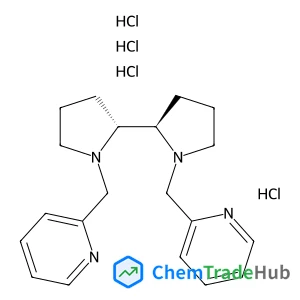
(2R,2'R)-1,1'-Bis(2-pyridinylmethyl)-2,2'-bipyrrolidine tetrahydrochloride
CAS号:
1228077-88-0
分子式:
C20H30Cl4N4
推荐供应商




免责声明
本页面提供的学术期刊信息仅供参考和研究使用。我们与任何期刊出版商均无关联,也不处理投稿事宜。如有投稿相关咨询,请直接联系相关期刊出版商。
如发现页面信息有误,请发送邮件至 support@chemtradehub.com 联系我们。我们将及时核实并处理您的问题。