




![4-{(2R,3R)-3-Methyl-5-[(1E)-1-propen-1-yl]-2,3-dihydro-1-benzofuran-2-yl}phenol structure](https://cnstatic.chemtradehub.com/structs/221/221666-27-9-20a9.webp "4-{(2R,3R)-3-Methyl-5-[(1E)-1-propen-1-yl]-2,3-dihydro-1-benzofuran-2-yl}phenol structure")
Organic synthesis via Kolbe and related non-Kolbe electrolysis: an enabling electro-strategy
文献信息
发布日期
2021-05-18
DOI
10.1039/D1RE00047K
影响因子
4.239
作者
Samina Aslam
查看原文
摘要
An efficient and environmentally friendly synthetic methodology is preferred over conventional methods that require expensive chemicals & oxidants to achieve value-added organic transformations. Electrochemical conversions encounter conventional shortcomings and introduce easy scale-up methods to synthesize complex and hindered molecules employing electricity as a clean reagent and catalyzing entity. Electrochemical conditions minimize waste formation and increase the chances of getting the maximum amount of target products under ambient conditions. The Kolbe and related non-Kolbe electrolysis process where the anodic oxidation of carboxylic acids leads to decarboxylation can be used intelligently to form new bonds and achieve value-added molecules and stereoselective products. The memory of chirality, where we have contributed to, is a more fascinating strategy to achieve highly desired asymmetric products via electrochemical decarboxylation (ED). Besides this, coupling (homo, hetero), dimerization, addition, cyclization, and CH activation via ED are also significant aspects of this strategy. Flow electrochemistry and photochemistry using the ED strategy could enhance the selectivity and product yield, avoiding overoxidation. Herein, we discussed several examples of ED and its applications to drive value-added transformations under mild, clean and sustainable conditions and also addressed mechanistic aspects. This ED approach will enable and provide inspiration for future applications in electro-organic synthesis.
相关文献
Synthesis of 2′-amino-LNA: a new strategy
Christoph Rosenbohm, Signe M. Christensen, Mads D. Sørensen, Daniel Sejer Pedersen, Jesper Wengel, Troels Koch
2003-01-21
Paper
DOI: 10.1039/B208864A
A [15]paracyclophenone and its fluorenone-containing derivatives: syntheses and binding to nerve agent mimics via aryl-CH hydrogen bonding interactions
Peiren Liu, Hongliang Wang, Hong Zeng, Xin Hong, Feihe Huang
2020-05-14
Research Article
DOI: 10.1039/D0QO00456A
A mechanistic study of the manganese porphyrin-catalyzed C–H isocyanation reaction
Ning Liu, Xiahe Chen, Liyuan Jin, Yun-Fang Yang, Yuan-Bin She
2021-02-18
Research Article
DOI: 10.1039/D0QO01442G
The use of enantiomerically pure ketene dithioacetal bis(sulfoxides) in highly diastereoselective intramolecular nitrone cycloadditions. Application in the total synthesis of the β-amino acid (−)-cispentacin and the first asymmetric synthesis of cis-(3R,4R)-4-amino-pyrrolidine-3-carboxylic acid
Varinder K. Aggarwal, Stephen Roseblade, Rikki Alexander
2003-01-30
Paper
DOI: 10.1039/B212719A
Ruthenium-catalysed C–H/C–N bond activation: facile access to isoindolinones
Xiao-Qiang Hu, Ye-Xing Hou, Zi-Kui Liu, Yang Gao
2020-12-21
Research Article
DOI: 10.1039/D0QO01406K
A unique high-diversity natural product collection as a reservoir of new therapeutic leads
Francesca Ghirga, Deborah Quaglio, Mattia Mori, Silvia Cammarone, Antonia Iazzetti, Antonella Goggiamani, Cinzia Ingallina, Bruno Botta, Andrea Calcaterra
2020-12-11
Review Article
DOI: 10.1039/D0QO01210F
Experimental and quantum-mechanical investigation of the vinylsilane-iminium ion cyclization
Lisbet Kværnø, Per-Ola Norrby, David Tanner
2003-02-24
Paper
DOI: 10.1039/B212333A
Carbon dioxide-promoted palladium-catalyzed dehydration of primary allylic alcohols: access to substituted 1,3-dienes
Yan-Kai Huang, Wen-Zhen Zhang, Ke Zhang, Wen-Le Wang, Xiao-Bing Lu
2020-12-30
Research Article
DOI: 10.1039/D0QO01465F
您可能还喜欢
化合物问答
4-[4-三氟甲基苯基]恶唑(CAS号:1126636-40-5)通常如何合成?
4-[4-三氟甲基苯基]恶唑通常通过将4-三氟甲基苯酚与异硫氰酸苯酯在有机溶剂中进行酯化反应合成。该反应可在无水条件下,使用适当的催化剂,如四丁基氢氧化铵,以提...
1126636-40-54-(4-(Trifluoromethy...
59729-32-71-[3-(Dimethylamino)...
化合物问答
RockPhos Pd G3(CAS号:2009020-38-4)通常如何合成?
RockPhos Pd G3 通常通过钯催化偶联反应合成,使用配体 (2'-Amino-2-biphenylyl)(methanesulfonato-kappa...
2009020-38-4(2'-Amino-2-biphenyl...
化合物问答
1-哌啶甲酰胺(CAS号:2158-03-4)的市场或研究趋势如何?
1-哌啶甲酰胺作为有机合成中的重要中间体,其市场需求主要受医药、农药、染料等行业推动。近年来,随着新药开发和绿色化学的发展,该化合物的研究趋势集中在开发更高效、...
2158-03-41-Piperidinecarboxam...
化合物问答
2-(二苯基膦基)乙胺(CAS号:4848-43-5)适用哪些法规指南?
2-(二苯基膦基)乙胺适用于多种法规指南,包括但不限于《全球化学品统一分类和标签制度》(GHS),欧盟《化学品注册、评估、授权和限制》法规(REACH),以及美...
4848-43-52-(Diphenylphosphino...
化合物问答
如何储存间苯二甲酸二烯丙酯(CAS号:1087-21-4)?
间苯二甲酸二烯丙酯应储存在阴凉、干燥、通风良好的地方,远离火源和热源。储存容器应密封,避免光照和高温。储存温度应控制在25℃以下,相对湿度应低于80%。避免与其...
1087-21-4Diallyl isophthalate
化合物问答
什么是间甲苯异硫代异氰酸酯(CAS号:621-30-7)?
间甲苯异硫代异氰酸酯是一种有机化合物,分子式为C7H7NO2S,具有刺激性气味。它是一种重要的有机合成中间体,在合成其他化合物时广泛应用。
621-30-71-Isothiocyanato-3-m...
化合物问答
在合成中是否有N-Boc-D-苯丙氨醇(CAS号:106454-69-7)的替代品?
在合成中,可以考虑使用N-Cbz-D-苯丙氨醇或N-Fmoc-D-苯丙氨醇作为替代品。这些化合物同样具有保护氨基的功能,且在合成过程中表现出良好的反应性能。
106454-69-72-Methyl-2-propanyl ...
化合物问答
3-羟甲基-2-氧异丙基吡啶(CAS号:954240-50-7)的主要用途是什么?
3-羟甲基-2-氧异丙基吡啶主要用于有机合成领域,可以作为合成其他药物、农药或精细化学品的中间体。此外,它还可能在实验室研究中作为特定反应的前体或溶剂。
954240-50-7(2-Isopropoxy-3-pyri...
化合物问答
6-氨基-9-甲基嘌呤(CAS号:700-00-5)应用于哪些行业?
6-氨基-9-甲基嘌呤目前主要应用于医药行业,作为某些药物的中间体。此外,它还可能用于聚合物、传感器和半导体的某些领域,作为功能性单体或掺杂剂。
700-00-59-Methyl-9H-purin-6-...
来源期刊
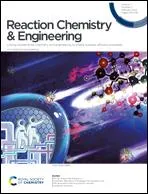
Reaction Chemistry & Engineering
CiteScore:
0
自引率:
8.8%
年发文量:
284
Reaction Chemistry & Engineering is an interdisciplinary journal reporting cutting-edge research focused on enhancing the understanding and efficiency of reactions. Reaction engineering leverages the interface where fundamental molecular chemistry meets chemical engineering and technology. Challenges in chemistry can be overcome by the application of new technologies, while engineers may find improved solutions for process development from the latest developments in reaction chemistry. Reaction Chemistry & Engineering is a unique forum for researchers whose interests span the broad areas of chemical engineering and chemical sciences to come together in solving problems of importance to wider society. All papers should be written to be approachable by readers across the engineering and chemical sciences. Papers that consider multiple scales, from the laboratory up to and including plant scale, are particularly encouraged.
推荐化合物
推荐供应商





免责声明
本页面提供的学术期刊信息仅供参考和研究使用。我们与任何期刊出版商均无关联,也不处理投稿事宜。如有投稿相关咨询,请直接联系相关期刊出版商。
如发现页面信息有误,请发送邮件至 support@chemtradehub.com 联系我们。我们将及时核实并处理您的问题。