



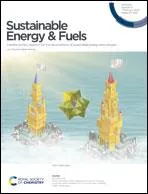
Recycling bread waste into chemical building blocks using a circular biorefining approach
文献信息
发布日期
2021-09-06
DOI
10.1039/D1SE00575H
影响因子
6.367
作者
Vivek Narisetty, Rylan Cox, Nicholas Willoughby, Emel Aktas, Brijesh Tiwari, Avtar Singh Matharu, Konstantinos Salonitis, Vinod Kumar
查看原文
摘要
Food waste is a global problem, causing significant environmental harm and resulting in substantial economic losses globally. Bread is the commonly wasted food item in the developed world and presents a severe problem for the majority of European nations. It is the second most wasted food item in the UK after potatoes, with an equivalent of 20 million slices of bread thrown away daily. Bread is a starchy material and a rich and clean source of easily extractable fermentable sugars – this is in direct contrast to lignocellulosic feedstocks where harsh physical, chemical and/or enzymatic pretreatment processes are required for release of fermentable sugars. Furthermore, these necessary lignocellulosic pretreatment methods often produce sugars contaminated with fermentation inhibitors. Therefore, bread waste presents a clear opportunity as a potential carbon source for novel commercial processes and, to this end, several alternative routes have been developed to utilize bread waste. Possibilities for direct recycling of bread waste within the food industry are limited due to the relatively short material lifetime, stringent process and hygiene requirements. Anaerobic digestion (AD) and incineration are commonly employed methods for the valorisation of bread waste, generating limited amounts of green energy but with little other environmental or economic benefits. Most food wastes and by-products in the UK including bakery waste are treated through AD processes that fail to harness the full potential of the these wastes. This short communication reviews the challenges of handling bread waste, with a focus on a specific UK scenario. The review will consider how bread waste is generated across the supply chain, current practices to deal with the waste and logistics challenges in waste collection. The presence of clean and high-quality fermentable sugars, proteins and other nutrients in bread make it an ideal substrate for generating chemicals, fuels, bioplastics, pharmaceuticals and other renewable products through microbial fermentations. We suggest potential applications for recycling bread waste into its chemical building blocks through a fermentative route where a circular biorefining approach could maximize resource recovery and environmental savings and eliminate waste to as close to zero as possible.
相关文献
Band inversion and switchable magnetic properties of two-dimensional RuClF/WSe2 van der Waals heterostructures
Ziyu Liu, Baozeng Zhou, Xiaocha Wang, Wenbo Mi
2023-12-05
Paper
DOI: 10.1039/D3CP05545K
Insights into the multi-functional lithium difluoro(oxalate)borate additive in boosting the Li-ion reaction kinetics for Li3VO4 anodes
Miaomiao Zhang, Cunyuan Pei, Qiqi Xiang, Lintao Liu, Zhongxu Dai, Huijuan Ma, Shibing Ni
2023-12-06
Paper
DOI: 10.1039/D3CP04952C
Carbon doped hexagonal boron nitride as an efficient metal-free catalyst for NO capture and reduction
Jiali Nie, Ying Li, Dongyue Gao, Yi Fang, Jing Lin, Chengchun Tang, Zhonglu Guo
2023-12-15
Paper
DOI: 10.1039/D3CP04718K
Designing idealised devices for bias-free solar water splitting
Jaemin Park, Dukjoon Kim, Jung Kyu Kim
2023-12-26
Perspective
DOI: 10.1039/D3SE01371E
X-ray induced ultrafast charge transfer in thiophene-based conjugated polymers controlled by core-hole clock spectroscopy
Nicolas Velasquez, Fernanda B. Nunes, Jessica B. Martins, Denis Céolin, Laure Fillaud, Ralph Püttner, Maria Novella Piancastelli, Michael Odelius, Marcella Iannuzzi
2023-12-15
Paper
DOI: 10.1039/D3CP04303G
H2 formation from the E2–E4 states of nitrogenase
Hao Jiang, Ulf Ryde
2023-12-08
Paper
DOI: 10.1039/D3CP05181A
Reaction mechanism of the ethynylation of formaldehyde on copper terminated Cu2O(100) surfaces: a DFT study
2023-11-29
Paper
DOI: 10.1039/D3CP03903J
Delayed photodissociation of the tin cluster Sn22−
Alexander Jankowski, Paul Fischer, Klavs Hansen, Lutz Schweikhard
2023-12-15
Paper
DOI: 10.1039/D3CP04476A
Trapping and thermal migration of the first- and second-row atoms in Ar, Kr and Xe crystals
Iosif V. Leibin, Dmitry S. Bezrukov, Alexei A. Buchachenko
2023-11-15
Paper
DOI: 10.1039/D3CP04178F
Early events in the mechanism of single-source chemical vapor deposition of zirconium and hafnium diboride: a computational investigation
Sergei Prokvolit, Erqian Mao, Thomas G. Gray
2023-12-05
Paper
DOI: 10.1039/D3CP05385G
您可能还喜欢
化合物问答
4-[[6-(3-苯基苯基)-7H-嘌呤-2-基]氨基]苯磺酰胺(CAS号:2079895-42-2)适用哪些法规指南?
该化合物需遵循REACH法规以确保其安全使用和管理。同时,根据其潜在的生物降解性和毒性,也需要符合GHS分类中的相应要求。此外,若用于医药或食品相关领域,则还需...
2079895-42-24-{[6-(3-Biphenylyl)...
化合物问答
反式-度骨化醇(CAS号:74007-20-8)的物理化学性质是什么?
反式-度骨化醇是一种脂溶性维生素D3的衍生物,呈无色或白色结晶性粉末,不溶于水,溶于乙醇、丙酮、氯仿等有机溶剂。其分子式为C28H44O,分子量为404.65。...
74007-20-8trans-Doxercalcifero...
化合物问答
莲花掌苷(CAS号:59282-56-3)的市场或研究趋势如何?
莲花掌苷作为一种天然产物,近年来在抗炎、抗癌等生物活性研究方面显示出一定的潜力,因此市场需求逐渐增长。市场动态方面,随着天然产物开发的深入,预计该化合物的研究会...
59282-56-3Lindleyin
化合物问答
2-溴-6-(吡咯烷-1-基)吡啶-4-硼酸频那醇酯(CAS号:1150271-64-9)应用于哪些行业?
2-溴-6-(吡咯烷-1-基)吡啶-4-硼酸频那醇酯在医药领域有着广泛的应用,它可以用作药物合成中的中间体。此外,它还可以用于有机合成,特别是在构建复杂杂环化合...
1150271-64-92-Bromo-6-(1-pyrroli...
化合物问答
什么是methyl 2-(4-bromophenyl)-3-methylbutanoate(CAS号:1061284-70-5)?
methyl 2-(4-溴苯基)-3-甲基丁酸甲酯是一种化学物质,分子式为C12H13BrO2。它是一种有机化合物,具有一定的挥发性和易燃性。
1061284-70-52-(4-Bromo-phenyl)-3...
化合物问答
CJC1-295(CAS号:863288-34-0)的物理化学性质是什么?
CJC1-295是一种具有复杂肽链结构的化合物,其分子量约为1875 Da。该化合物在水中具有一定的溶解性,但在有机溶剂中的溶解性不佳。它是一种反应活性化合物,...
863288-34-0L-tyrosyl-D-alanyl-L...
化合物问答
三正丁基锍碘(CAS号:18146-62-8)的市场或研究趋势如何?
三正丁基锍碘作为一种重要的有机硫化合物,主要用于有机合成中作为亲电试剂。近年来,由于其在合成中的广泛应用,市场对其需求持续增长。此外,随着绿色化学的发展,对其替...
18146-62-8Tributylsulfonium io...
化合物问答
雌二醇-[13C3]同位素内标(CAS号:1261254-48-1)通常如何合成?
雌二醇-[13C3]同位素内标通常通过在雌二醇分子中引入[13C3]同位素来合成。常见的方法是通过化学标记反应,如与[13C3]标记的甲基溴化物进行亲核取代反应...
1261254-48-117beta-Estradiol-2,3...
化合物问答
N1-(2-吡啶甲基)-N2-(2-甲基-1-萘基)草酰胺(CAS号:2611225-93-3)的物理化学性质是什么?
N1-(2-吡啶甲基)-N2-(2-甲基-1-萘基)草酰胺为固体化合物,具有良好的结晶形态,分子量为340.34 g/mol。该化合物在水中的溶解度较低,但在有...
2611225-93-3N-(2-Methyl-1-naphth...
化合物问答
如何处理含有十五碳烯酸甲酯(顺-10)(C15:1)标准品(CAS号:90176-52-6)的废料?
含有十五碳烯酸甲酯(顺-10)(C15:1)标准品的废料应首先进行适当收集和储存,避免与其他化学品混合。然后,可采用焚烧或交由专业废物处理公司进行处理。处理过程...
90176-52-6(Z)-10-Pentadecenoic...
来源期刊
推荐化合物
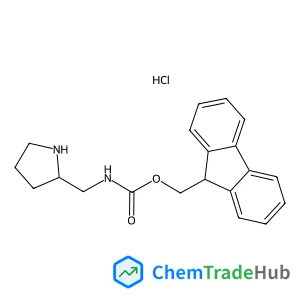
(S)-(9H-Fluoren-9-yl)methyl (pyrrolidin-2-ylmethyl)carbamate hydrochloride
CAS号:
1217813-15-4
分子式:
C20H23ClN2O2
推荐供应商




免责声明
本页面提供的学术期刊信息仅供参考和研究使用。我们与任何期刊出版商均无关联,也不处理投稿事宜。如有投稿相关咨询,请直接联系相关期刊出版商。
如发现页面信息有误,请发送邮件至 support@chemtradehub.com 联系我们。我们将及时核实并处理您的问题。