


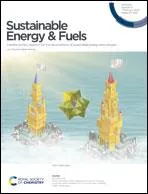
A facile freeze–thaw ultrasonic assisted circulation method of graphite flakes prepared by anode graphite from spent lithium-ion batteries for application in nanofluids
文献信息
发布日期
2021-08-16
DOI
10.1039/D1SE00973G
影响因子
6.367
作者
Yu Qiao, Wen Sheng, Chen He, Bai Yang, Haoxuan Xu, Chenzhen Liu, Zhonghao Rao
查看原文
摘要
Graphite has been widely used as the anode material in lithium-ion batteries (LIBs) due to its good conductivity, layered crystal structure, high charging–discharge potential, and other characteristics. With the rapid development of the LIB industry, the graphite industry has also developed into a mode of high production capacity. The anode graphite of spent LIBs has the characteristics of large layer spacing and ease of being intercalated and peeled due to the reduction of the interlamination force after repeated charge and discharge cycles. In this study, we present a facile freeze–thaw ultrasonic assisted circulation method to prepare two-dimensional low-layer graphite flakes (GFs) using anode graphite from spent LIBs. Characterizations of GFs were carried out by SEM, TEM, XRD and Raman spectroscopy. The results indicate that GFs prepared by graphite of spent LIBs have a better morphology than that prepared by purchased graphite. Furthermore, the GF-filled ethylene glycol (EG) nanofluids exhibit higher thermal conductivity and conductive heat transfer coefficient than base fluids, of which the maximum enhancements are 10.5% and 30%, respectively. The freeze–thaw ultrasonic assisted circulation method is not only an effective method for the reuse of anode graphite from spent LIBs, but also a reference for the synthesis of two-dimensional materials. Furthermore, GF-filled nanofluids could be a potential heat transfer working medium.
期刊推荐
Herald of the Russian Academy of Sciences

Journal of Asian Natural Products Research
Cellulose
Topics in Catalysis

Journal of the Indian Institute of Science
Chinese Journal of Chemistry
Bioorganic & Medicinal Chemistry Letters
Critical Reviews in Solid State and Materials Sciences
Acta Metallurgica Sinica-English Letters
Polycyclic Aromatic Compounds
相关文献
The high resolution spectrum of the S1←S0 transition of anisole
C. G. Eisenhardt
2001-03-14
Paper
DOI: 10.1039/B009507I
Electron magnetic resonance study of stable radicals in irradiated D-fructose single crystals
Gauthier Vanhaelewyn, Philippe Lahorte, Frank De Proft, Wim Mondelaers, Paul Geerlings, Freddy Callens
2001-04-03
Paper
DOI: 10.1039/B008248L
Solvent-induced frequency shifts in the infrared spectrum of acetone in organic solvents
Paper
DOI: 10.1039/A905776E
Structural investigations of celsian glass derived from Ba-LTA zeolite
Jovana Djordjevic, Vera Dondur, Radovan Dimitrijevic, Aleksandar Kremenovic
2001-03-19
Paper
DOI: 10.1039/B009384J
Interaction of tetrameric silver with ammonia in AgCs-rho zeolite
Jaroslaw Sadlo, Marek Danilczuk, Jacek Michalik
2001-02-09
Paper
DOI: 10.1039/B008246P
Disappearance of oscillations in the Brusselator on the mesoscopic scale
2001-03-14
Paper
DOI: 10.1039/B100192M
Synthesis of ethylene–norbornene–1-octene terpolymers with high 1-octene contents, molar masses, and tunable Tg values, in high yields using half-titanocene catalysts
Laura Boggioni, Hitoshi Harakawa, Simona Losio, Kotohiro Nomura, Incoronata Tritto
2021-07-02
Paper
DOI: 10.1039/D1PY00647A
Basis set choice and basis set superposition error (BSSE) in periodic Hartree–Fock calculations on molecular crystals
Mark A. Spackman, Anthony S. Mitchell
2001-03-19
Paper
DOI: 10.1039/B009159F
您可能还喜欢
化合物问答
2-Bromo-4-chloro-1-(difluoromethyl)benzene(CAS号:1261476-50-9)的市场或研究趋势如何?
随着环保要求的提高和安全意识的增强,该化合物的研究和应用趋势正逐渐转向更安全、更环境友好的替代品。市场关注点主要集中在开发新型合成方法和绿色化学路径,以减少有害...
1261476-50-92-Bromo-4-chloro-1-(...
化合物问答
如何处理含有2,9 - 二苯基-1,10 - 菲罗啉(CAS号:25677-69-4)的废料?
处理含有2,9 - 二苯基 - 1,10 - 菲罗啉的废料时,应先将其收集在适当的容器中,避免与其他化学品混合。随后,可以通过水解或氧化等方法进行处理,直至达到...
25677-69-42,9-Diphenyl-1,10-ph...
化合物问答
处理(6-氯-吡嗪-3-基)-(4-乙基-哌嗪-1-基)-甲酮(CAS号:1178836-15-1)时应注意哪些实验室安全事项?
处理(6-氯-吡嗪-3-基)-(4-乙基-哌嗪-1-基)-甲酮时,应穿戴适当的个人防护装备(PPE),包括手套、护目镜和实验室外套。在通风橱中操作以确保良好的通...
1178836-15-1(6-Chloro-3-pyridazi...
化合物问答
处理(R)-2-氯-1-(2,4-二氯苯基)乙醇(CAS号:114446-57-0)时应注意哪些实验室安全事项?
在处理(R)-2-氯-1-(2,4-二氯苯基)乙醇时,应佩戴防护眼镜、实验室外套和手套,确保通风橱开启以减少接触和吸入的风险。避免直接接触皮肤和眼睛。处理过程中...
114446-57-0(1R)-2-Chloro-1-(2,4...
化合物问答
在合成中是否有3-氯-6-(3-氯哌啶-1-基)吡嗪(CAS号:1185310-37-5)的替代品?
可考虑使用类似结构的化合物作为替代品,如3-氯-6-(哌啶-1-基)吡嗪或3-氯-6-(2-氯哌啶-1-基)吡嗪,这些化合物在结构上与目标化合物相似,可能具有相...
1185310-37-53-Chloro-6-(3-chloro...
化合物问答
苯并三氮唑-5-甲酸乙酯(CAS号:73605-91-1)通常如何合成?
该化合物可以通过乙酸乙酯与5-溴-1H-苯并三氮唑的反应合成,通常在无水条件下进行。合成过程中,需要使用适当的溶剂如乙酸乙酯,并在适当的温度下反应。该反应具有较...
73605-91-1Ethyl 1H-benzotriazo...
化合物问答
什么是一水硫酸镁(CAS号:14168-73-1)?
一水硫酸镁是一种无机化合物,化学式为MgSO₄·H₂O,CAS号为14168-73-1。它由镁离子、硫酸根离子和一个结晶水分子组成,通常呈现为白色粉末或颗粒状固...
14168-73-1Magnesium sulfate hy...
化合物问答
氘代-1,3-二氯-2-丙醇(CAS号:1173020-20-6)应用于哪些行业?
氘代-1,3-二氯-2-丙醇主要应用于医药和有机合成领域,作为研究化合物的氘代替代品,用于标记和追踪反应过程。此外,在聚合物和半导体生产中也有一定的应用潜力。
1173020-20-61,3-Dichloro-2-(~2~H...
化合物问答
如何储存氰乙酸环己酯(CAS号:52688-11-6)?
氰乙酸环己酯应储存在阴凉、干燥、通风良好的环境中,远离火源和热源,防止阳光直射。储存容器应密封良好,避免与空气接触,防止发生不必要的反应。
52688-11-6Cyclohexyl cyanoacet...
化合物问答
2-碘-4-硝基苯胺(CAS号:6293-83-0)的市场或研究趋势如何?
目前,2-碘-4-硝基苯胺在医药和农药领域有一定的研究和应用,尤其是在开发新型药物和农药产品方面。然而,由于其潜在的环境和健康风险,行业正趋向于寻找更为安全和环...
6293-83-02-iodo-4-nitroanilin...
来源期刊
推荐化合物
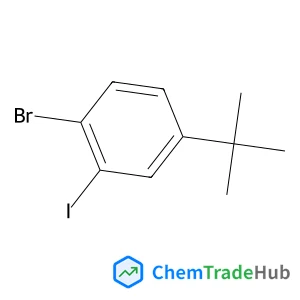
![4,4-Difluoro-2-methyl-1-{[(2-methyl-2-propanyl)oxy]carbonyl}-L-proline structure](https://cnstatic.chemtradehub.com/structs/119/1194032-23-9-f426.webp "4,4-Difluoro-2-methyl-1-{[(2-methyl-2-propanyl)oxy]carbonyl}-L-proline structure")
4,4-Difluoro-2-methyl-1-{[(2-methyl-2-propanyl)oxy]carbonyl}-L-proline
CAS号:
1194032-23-9
分子式:
C11H17F2NO4
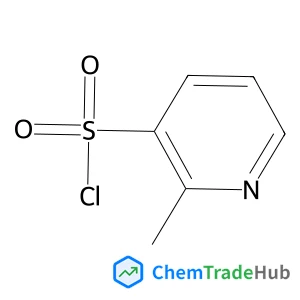
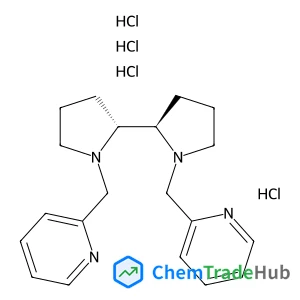
(2R,2'R)-1,1'-Bis(2-pyridinylmethyl)-2,2'-bipyrrolidine tetrahydrochloride
CAS号:
1228077-88-0
分子式:
C20H30Cl4N4
推荐供应商





免责声明
本页面提供的学术期刊信息仅供参考和研究使用。我们与任何期刊出版商均无关联,也不处理投稿事宜。如有投稿相关咨询,请直接联系相关期刊出版商。
如发现页面信息有误,请发送邮件至 support@chemtradehub.com 联系我们。我们将及时核实并处理您的问题。