


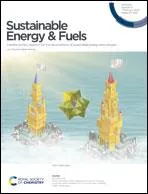
Differences in chemical composition and physical properties caused by industrial storage on sugarcane bagasse result in its efficient enzymatic hydrolysis
文献信息
发布日期
2021-11-22
DOI
10.1039/D1SE01240A
影响因子
6.367
作者
Regiane Priscila Ratti, Jefferson Gonçalves Filgueiras, Maurício Falvo, Marisa Aparecida Lima Coral, Francisco Eduardo Gontijo Guimaraes, Eduardo Ribeiro DeAzevedo, Igor Polikarpov
查看原文
摘要
Sugarcane bagasse (SCB) is a promising feedstock for second-generation ethanol production. Bioconversion of lignocellulose into fermentable sugars involves several technological steps, with biomass pretreatment being among the most expensive ones. Here, we set out to investigate how SCB storage under industrial conditions influences SCB's enzymatic saccharification in the absence of pretreatment. Two sets of SCB samples, fresh (fSCB) and around 6 months aged (aSCB), were collected at relevant industrial settings and compared in terms of their chemical composition, physical structure and efficiency of enzymatic hydrolysis. Chemical and physical analyses revealed significant differences between these samples which had a significant impact on the SCB enzymatic conversion. X-Ray diffraction showed that an average crystallite size is about 20% smaller in aSCB as compared to fSCB. Field emission scanning electron microscopy characterization revealed that fSCB is mainly composed of uniform fibers, while aSCB fibers are more disorganized and unstructured. Confocal laser scanning microscopy images of aSCB demonstrated changes in the autofluorescence spectra, indicating alterations in the lignin structure. Nuclear magnetic resonance relaxometry showed differences in the accessibilities between fresh and aged SCB. Both aSCB and fSCB were hydrolyzed using 25 mg of Cellic® CTec3 per gram of biomass (about 4.1 FPU g−1), and after 96 hours of enzymatic hydrolysis of aSCB without any thermomechanical pretreatment, the yield reached 93% while the fSCB hydrolytic yield was almost 40% smaller. These results can have significant impacts on the optimization of lignocellulosic biomass conversion processes.
期刊推荐
Biocatalysis and Biotransformation

Medicinal Chemistry Research
Bioorganic & Medicinal Chemistry Letters

Journal of the Indian Institute of Science
Cellulose

Critical Reviews in Solid State and Materials Sciences

Colloid Journal
Electroanalysis
Polycyclic Aromatic Compounds

Herald of the Russian Academy of Sciences
相关文献
Role of hysteresis in the molecular picture of friction
D. J. Diestler, G. T. Gao, X. C. Zeng
2001-02-09
Paper
DOI: 10.1039/B007772K
Electron magnetic resonance study of stable radicals in irradiated D-fructose single crystals
Gauthier Vanhaelewyn, Philippe Lahorte, Frank De Proft, Wim Mondelaers, Paul Geerlings, Freddy Callens
2001-04-03
Paper
DOI: 10.1039/B008248L
Conduction electron paramagnetic resonance of metal nanoparticles in AlMCM-41 aluminosilica mesoporous molecular sieves
Jacek Michalik, David Brown, Jong-Sung Yu, Marek Danilczuk, Jeong Yeon Kim, Larry Kevan
2001-04-05
Paper
DOI: 10.1039/B008245G
A new type of neutral–ionic interface in mixed stack organic charge transfer crystals: Temperature induced ionicity change in ClMePD–DMeDCNQI
M. Masino, A. Girlando, L. Farina, A. Brillante
2001-04-06
Paper
DOI: 10.1039/B100243K
The structure of molten mixtures of iron(III) chloride with caesium chloride
Paper
DOI: 10.1039/A905655F
Molecular motions and phase transitions in halogen-bridged one-dimensional complexes [Pt(en)2][PtX2(en)2](ClO4)4 (X: I, Br)
Noriyoshi Kimura, Toru Hachisuka, Yukitaka Nakano, Ryuichi Ikeda
2001-04-03
Paper
DOI: 10.1039/B009646F
Cu-Catalyzed four-component polymerization of alkynes, sulfonyl azides, nucleophiles and electrophiles
Junnan He, Nan Zheng, Ming Li, YuBin Zheng, Wangze Song
2021-07-07
Paper
DOI: 10.1039/D1PY00650A
您可能还喜欢
化合物问答
2-Bromo-4-chloro-1-(difluoromethyl)benzene(CAS号:1261476-50-9)的市场或研究趋势如何?
随着环保要求的提高和安全意识的增强,该化合物的研究和应用趋势正逐渐转向更安全、更环境友好的替代品。市场关注点主要集中在开发新型合成方法和绿色化学路径,以减少有害...
1261476-50-92-Bromo-4-chloro-1-(...
化合物问答
如何处理含有2,9 - 二苯基-1,10 - 菲罗啉(CAS号:25677-69-4)的废料?
处理含有2,9 - 二苯基 - 1,10 - 菲罗啉的废料时,应先将其收集在适当的容器中,避免与其他化学品混合。随后,可以通过水解或氧化等方法进行处理,直至达到...
25677-69-42,9-Diphenyl-1,10-ph...
化合物问答
处理(6-氯-吡嗪-3-基)-(4-乙基-哌嗪-1-基)-甲酮(CAS号:1178836-15-1)时应注意哪些实验室安全事项?
处理(6-氯-吡嗪-3-基)-(4-乙基-哌嗪-1-基)-甲酮时,应穿戴适当的个人防护装备(PPE),包括手套、护目镜和实验室外套。在通风橱中操作以确保良好的通...
1178836-15-1(6-Chloro-3-pyridazi...
化合物问答
处理(R)-2-氯-1-(2,4-二氯苯基)乙醇(CAS号:114446-57-0)时应注意哪些实验室安全事项?
在处理(R)-2-氯-1-(2,4-二氯苯基)乙醇时,应佩戴防护眼镜、实验室外套和手套,确保通风橱开启以减少接触和吸入的风险。避免直接接触皮肤和眼睛。处理过程中...
114446-57-0(1R)-2-Chloro-1-(2,4...
化合物问答
在合成中是否有3-氯-6-(3-氯哌啶-1-基)吡嗪(CAS号:1185310-37-5)的替代品?
可考虑使用类似结构的化合物作为替代品,如3-氯-6-(哌啶-1-基)吡嗪或3-氯-6-(2-氯哌啶-1-基)吡嗪,这些化合物在结构上与目标化合物相似,可能具有相...
1185310-37-53-Chloro-6-(3-chloro...
化合物问答
苯并三氮唑-5-甲酸乙酯(CAS号:73605-91-1)通常如何合成?
该化合物可以通过乙酸乙酯与5-溴-1H-苯并三氮唑的反应合成,通常在无水条件下进行。合成过程中,需要使用适当的溶剂如乙酸乙酯,并在适当的温度下反应。该反应具有较...
73605-91-1Ethyl 1H-benzotriazo...
化合物问答
什么是一水硫酸镁(CAS号:14168-73-1)?
一水硫酸镁是一种无机化合物,化学式为MgSO₄·H₂O,CAS号为14168-73-1。它由镁离子、硫酸根离子和一个结晶水分子组成,通常呈现为白色粉末或颗粒状固...
14168-73-1Magnesium sulfate hy...
化合物问答
氘代-1,3-二氯-2-丙醇(CAS号:1173020-20-6)应用于哪些行业?
氘代-1,3-二氯-2-丙醇主要应用于医药和有机合成领域,作为研究化合物的氘代替代品,用于标记和追踪反应过程。此外,在聚合物和半导体生产中也有一定的应用潜力。
1173020-20-61,3-Dichloro-2-(~2~H...
化合物问答
如何储存氰乙酸环己酯(CAS号:52688-11-6)?
氰乙酸环己酯应储存在阴凉、干燥、通风良好的环境中,远离火源和热源,防止阳光直射。储存容器应密封良好,避免与空气接触,防止发生不必要的反应。
52688-11-6Cyclohexyl cyanoacet...
化合物问答
2-碘-4-硝基苯胺(CAS号:6293-83-0)的市场或研究趋势如何?
目前,2-碘-4-硝基苯胺在医药和农药领域有一定的研究和应用,尤其是在开发新型药物和农药产品方面。然而,由于其潜在的环境和健康风险,行业正趋向于寻找更为安全和环...
6293-83-02-iodo-4-nitroanilin...
来源期刊
推荐化合物
推荐供应商





免责声明
本页面提供的学术期刊信息仅供参考和研究使用。我们与任何期刊出版商均无关联,也不处理投稿事宜。如有投稿相关咨询,请直接联系相关期刊出版商。
如发现页面信息有误,请发送邮件至 support@chemtradehub.com 联系我们。我们将及时核实并处理您的问题。