


![1-{[5-(4,4,5,5-Tetramethyl-1,3,2-dioxaborolan-2-yl)-2-thienyl]methyl}piperidine structure](https://cnstatic.chemtradehub.com/structs/121/1218790-44-3-baef.webp "1-{[5-(4,4,5,5-Tetramethyl-1,3,2-dioxaborolan-2-yl)-2-thienyl]methyl}piperidine structure")
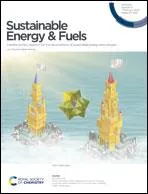
Facilitating the redox conversion of CoSe2 nanorods by Ti3C2Tx to improve the electrode durability as anodes for sodium-ion batteries
文献信息
发布日期
2021-10-29
DOI
10.1039/D1SE01655E
影响因子
6.367
作者
Anmin Peng, Min Zeng, Lin Chen, Xinpeng Li, Zhenliang Yang, Junchen Chen, Bingshu Guo, Zhiyuan Ma, Xing Li
查看原文
摘要
Nanostructured metal selenides based on conversion reactions are promising anode materials for sodium-ion batteries (SIBs). However, the repeat structural degradation accompanied by the detrimental intermediate of sodium selenides (NaxSe) leads them to suffer from continuous capacity decaying and under-voltage failure. In this work, CoSe2 is chosen as a representative by the introduction of a polar Ti3C2Tx matrix to alleviate the performance deterioration caused by the crystal structure evolution. CoSe2 nanorods are in situ grown on the Ti3C2Tx (CoSe2/Ti3C2Tx) surface by a simple one-step hydrothermal reaction during the reduction environment. A tight chemical bonding is formed between CoSe2 and Ti3C2Tx by oxygen bridging, which maintains the stable charge and ion transport during cycling. Meanwhile, Ti3C2Tx facilitates copper coming from the collector being diffused in the electrode, and is involved in the electrochemical reaction in an ether-based electrolyte, resulting in CoSe2 being partially converted to Cu2−xSe after long cycles. Synchronously, Ti3C2Tx improves the mutual transformation of NaxSe ↔ Na2Se during the intercalation/de-intercalation of metal selenides. Therefore, via optimizing the content of Ti3C2Tx, the CoSe2/Ti3C2Tx-10 composite obtains excellent long cycle stability, delivering a specific capacity of 343 mA h g−1 at 0.3 A g−1 after 1200 cycles with a capacity retention of 98%. Even at 10.0 A g−1, CoSe2/Ti3C2Tx-10 exerts about 200 mA h g−1 initial capacity, and remains at 140 mA h g−1 after 1400 cycles. The strategy of introducing a polar matrix to improve the long cycling stability of the metal selenide provides a new opportunity for the development of new anode materials for SIBs.
期刊推荐
Russian Journal of Bioorganic Chemistry
Russian Journal of Coordination Chemistry
Current Opinion in Colloid & Interface Science
Russian Journal of General Chemistry
Saudi Pharmaceutical Journal

Crystallography Reports
Chemistry Education Research and Practice
Journal of Saudi Chemical Society

Current Opinion in Solid State & Materials Science
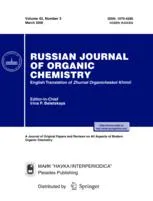
Russian Journal of Organic Chemistry
相关文献
Polarization-resolved and helicity-resolved Raman spectra of monolayer XP3 (X = Ge and In)
Huijun Liu, Weiliang Wang
2022-12-13
Paper
DOI: 10.1039/D2CP03925G
In situ electrochemical observation of anisotropic lattice contraction of La0.6Sr0.4FeO3−δ electrodes during pulsed laser deposition
Christoph Riedl, Sergej Ražnjević, Andreas Ewald Bumberger, Zaoli Zhang, Andreas Limbeck, Alexander Karl Opitz, Markus Kubicek, Jürgen Fleig
2022-12-01
Paper
DOI: 10.1039/D2CP04977E
Rich magnetic phase transitions and completely dual-spin polarization of zigzag PC3 nanoribbons under uniaxial strain
Hui-Min Ni, Jing-Jing He, Fang-Wen Guo, Jia-Bei Dong, Tian-Yi Lu, Wen-Dou Cui, Jia-Ren Yuan, Yan-Dong Guo
2022-12-14
Paper
DOI: 10.1039/D2CP05066H
Tailored modifications of the electronic properties of g-C3N4/C2N-h2D nanoribbons by first-principles calculations
Dong Fan, Maoye Yin, Minghui Zhu, Hengshuai Li, Zhihao Wang, Haiquan Hu, Feng Guo, Zhenbao Feng, Jun Li, Xiaocheng Hu, Dong Zhang, Zhi Li
2022-11-30
Paper
DOI: 10.1039/D2CP05394B
Visualizing screening in noble-metal clusters: static vs. dynamic
Xóchitl López-Lozano
2022-12-10
Paper
DOI: 10.1039/D2CP04316E
Charge transport dynamics of a C6H4NH2CuBr2I/TiO2 heterojunction in aqueous solution under reverse bias
Pujia Cheng, Wenjing Lv, Zhili Shi, Kaidong Zhan, Yaqi Liu, Quinn Qiao, Fan Wu
2022-12-05
Communication
DOI: 10.1039/D2CP04552D
Unravelling the role of dopants in the electrocatalytic activity of ceria towards CO2 reduction in solid oxide electrolysis cells
Elena Marzia Sala, Nicola Mazzanti, Francesco M. Chiabrera, Simone Sanna, Mogens B. Mogensen, Peter V. Hendriksen, Zhongtao Ma, Søren B. Simonsen, Christodoulos Chatzichristodoulou
2023-01-05
Paper
DOI: 10.1039/D2CP05157E
Self-isomerization of nearly planar superatoms formed by actinide embedded gold clusters
Zheng Liu, Yang Gao, Famin Yu, Zhonghua Liu, Jiarui Li, Rui-Qin Zhang, Yan Xue
2022-12-15
Communication
DOI: 10.1039/D2CP05118D
Structural insights into self-assembly of a slow-evolving and mechanically robust supramolecular gel via time-resolved small-angle neutron scattering
Marzieh Mirzamani, Arnab Dawn, Christopher J. Garvey, Lilin He, Hilmar Koerner, Harshita Kumari
2022-11-10
Paper
DOI: 10.1039/D2CP01826H
您可能还喜欢
化合物问答
甲基双烯双酮(CAS号:5173-46-6)通常如何合成?
甲基双烯双酮可以通过多种途径合成。一种常见的合成方法是通过甲基化和环化反应,先由4-甲基-9-烯-1,3-二酮合成,然后进行环化反应得到目标产物。具体的合成路线...
5173-46-6Estra-4,9-diene-3,17...
化合物问答
如何处理含有tert-butyl 3,5-difluorobenzoate(CAS号:467442-11-1)的废料?
处理含有tert-butyl 3,5-difluorobenzoate(CAS号:467442-11-1)的废液时,应首先收集并密封,避免泄漏。随后,建议通过焚...
467442-11-12-Methyl-2-propanyl ...
化合物问答
4-二甲氧基甲基-2-(三氟甲基)嘧啶(CAS号:878760-47-5)通常如何合成?
4-二甲氧基甲基-2-(三氟甲基)嘧啶通常通过三氟甲基化反应合成。首先,将2-氯嘧啶与三氟甲基锂在惰性溶剂中反应,然后将得到的三氟甲基化中间体与二甲氧基甲基化试...
878760-47-54-(Dimethoxymethyl)-...
化合物问答
WRW4(CAS号:878557-55-2)的主要用途是什么?
WRW4主要应用于科学研究领域,尤其是在合成化学和有机合成方面。由于其特殊的化学性质,它可能被用于特定的化学反应或合成过程。
878557-55-2WRW4
化合物问答
什么是6-O-(三异丙基硅基)-D-葡萄烯糖(CAS号:137915-37-8)?
6-O-(三异丙基硅基)-D-葡萄烯糖是一种有机化合物,化学名为1,5-Anhydro-2-deoxy-6-O-(triisopropylsilyl)-D-ar...
137915-37-81,5-Anhydro-2-deoxy-...
化合物问答
N-Benzyl-N,N-dimethyl-2-phenoxyethanaminium(CAS号:7181-73-9)的主要用途是什么?
N-Benzyl-N,N-dimethyl-2-phenoxyethanaminium在有机合成中被用作保护基团,可以用于保护氨基,提高反应的选择性和产率。此外...
7181-73-9N-Benzyl-N,N-dimethy...
化合物问答
什么是3-(Cyclohex-1-en-1-yl)acrylic acid(CAS号:56453-88-4)?
3-(Cyclohex-1-en-1-yl)acrylic acid,简称3-环己烯-1-烯丙酸,是一种含有环己烯基团的丙烯酸衍生物,用于合成其他化合物或作为有...
56453-88-43-(Cyclohex-1-en-1-y...
化合物问答
如何储存(1R)-7-fluoro-1,2,3,4-tetrahydronaphthalen-1-amine(CAS号:1055949-62-6)?
应将(1R)-7-氟-1,2,3,4-四氢萘胺储存于阴凉、干燥、通风良好的地方,远离火源和热源。避免与氧化剂、酸类接触。使用合适的容器,密封保存。
1055949-62-6(1R)-7-Fluoro-1,2,3,...
化合物问答
3-甲基苯并呋喃-2-羧酸(CAS号:24673-56-1)的主要用途是什么?
3-甲基苯并呋喃-2-羧酸主要用作合成其他化合物的中间体,如药物合成、有机合成等领域。此外,该化合物在某些领域作为化学试剂或分析试剂使用。
24673-56-13-Methyl-1-benzofura...
化合物问答
孕烷醇酮(CAS号:128-20-1)适用哪些法规指南?
孕烷醇酮(CAS号:128-20-1)需遵守GHS(全球化学品统一分类和标签制度)的相关分类和标签要求,主要涉及健康危害、环境危害和物理化学危害。此外,还需要遵...
128-20-1(3alpha,5beta)-3-Hyd...
来源期刊
推荐化合物
推荐供应商






免责声明
本页面提供的学术期刊信息仅供参考和研究使用。我们与任何期刊出版商均无关联,也不处理投稿事宜。如有投稿相关咨询,请直接联系相关期刊出版商。
如发现页面信息有误,请发送邮件至 support@chemtradehub.com 联系我们。我们将及时核实并处理您的问题。