






Visualizing screening in noble-metal clusters: static vs. dynamic
文献信息
发布日期
2022-12-10
DOI
10.1039/D2CP04316E
影响因子
3.676
作者
Xóchitl López-Lozano
查看原文
摘要
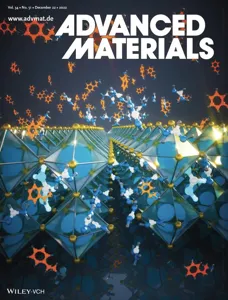
The localized surface-plasmon resonance of metal nanoparticles and clusters corresponds to a collective charge oscillation of the quasi-free metal electrons. The polarization of the more localized d electrons opposes the overall polarization of the electron cloud and thus screens the surface plasmon. By contrast, a static electric external field is well screened, as even very small noble-metal clusters are highly metallic: the field inside is practically zero except for the effect of the Friedel-oscillation-like modulations which lead to small values of the polarization of the d electrons. In the present article, we present and compare representations of the induced densities (i) connected to the surface-plasmon resonance and (ii) resulting from an external static electric field. The two cases allow for an intuitive understanding of the differences between the dynamic and the static screening.
相关文献
Highly transmissive blue electrochromic polymers based on thieno[3,2-b]thiophene
Panpan Xu, Jingjing Shi, Mengmeng Zhu, Yaowu He, Hongtao Yu, Osamu Goto, Hong Meng
2016-07-11
Paper
DOI: 10.1039/C6PY00989A
Direct arylation polymerization of asymmetric push–pull aryl halides
Liyan You, Saadia T. Chaudhry, Yan Zhao, Junchen Liu, Xikang Zhao, Jiazhi He, Jianguo Mei
2017-04-06
Communication
DOI: 10.1039/C7PY00237H
Glycan-decorated HPMA copolymers as high-affinity lectin ligands
P. Bojarová, P. Chytil, B. Mikulová, L. Bumba, R. Konefał, H. Pelantová, J. Krejzová, K. Slámová, L. Petrásková, L. Kotrchová, J. Cvačka, T. Etrych, V. Křen
2017-03-21
Paper
DOI: 10.1039/C7PY00271H
Ring-opening polymerization of donor–acceptor cyclopropanes catalyzed by Lewis acids
Kosuke Hayakawa, Shin-ichi Matsuoka, Masato Suzuki
2017-06-13
Paper
DOI: 10.1039/C7PY00794A
All-thiophene-based conjugated porous organic polymers
Peng-Fei Wang, Hua Wang, Bao-Hang Han
2016-07-15
Paper
DOI: 10.1039/C6PY00725B
Synthesis and field-effect transistor properties of a diseleno[3,2-b:2′,3′-d]silole-based donor–acceptor copolymer: investigation of chalcogen effect
Yu-Chieh Pao, Cheng-Tai Yang, Yu-Ying Lai, Wen-Chia Huang, Chain-Shu Hsu, Yen-Ju Cheng
2016-06-08
Paper
DOI: 10.1039/C6PY00765A
Quantitative end-group functionalization of PNIPAM from aqueous SET-LRP via in situ reduction of Cu(ii) with NaBH4
Mikhail Gavrilov, Zhongfan Jia, Virgil Percec, Michael J. Monteiro
2016-06-27
Paper
DOI: 10.1039/C6PY00968A
您可能还喜欢
化合物问答
甲基双烯双酮(CAS号:5173-46-6)通常如何合成?
甲基双烯双酮可以通过多种途径合成。一种常见的合成方法是通过甲基化和环化反应,先由4-甲基-9-烯-1,3-二酮合成,然后进行环化反应得到目标产物。具体的合成路线...
5173-46-6Estra-4,9-diene-3,17...
化合物问答
如何处理含有tert-butyl 3,5-difluorobenzoate(CAS号:467442-11-1)的废料?
处理含有tert-butyl 3,5-difluorobenzoate(CAS号:467442-11-1)的废液时,应首先收集并密封,避免泄漏。随后,建议通过焚...
467442-11-12-Methyl-2-propanyl ...
化合物问答
4-二甲氧基甲基-2-(三氟甲基)嘧啶(CAS号:878760-47-5)通常如何合成?
4-二甲氧基甲基-2-(三氟甲基)嘧啶通常通过三氟甲基化反应合成。首先,将2-氯嘧啶与三氟甲基锂在惰性溶剂中反应,然后将得到的三氟甲基化中间体与二甲氧基甲基化试...
878760-47-54-(Dimethoxymethyl)-...
化合物问答
WRW4(CAS号:878557-55-2)的主要用途是什么?
WRW4主要应用于科学研究领域,尤其是在合成化学和有机合成方面。由于其特殊的化学性质,它可能被用于特定的化学反应或合成过程。
878557-55-2WRW4
化合物问答
什么是6-O-(三异丙基硅基)-D-葡萄烯糖(CAS号:137915-37-8)?
6-O-(三异丙基硅基)-D-葡萄烯糖是一种有机化合物,化学名为1,5-Anhydro-2-deoxy-6-O-(triisopropylsilyl)-D-ar...
137915-37-81,5-Anhydro-2-deoxy-...
化合物问答
N-Benzyl-N,N-dimethyl-2-phenoxyethanaminium(CAS号:7181-73-9)的主要用途是什么?
N-Benzyl-N,N-dimethyl-2-phenoxyethanaminium在有机合成中被用作保护基团,可以用于保护氨基,提高反应的选择性和产率。此外...
7181-73-9N-Benzyl-N,N-dimethy...
化合物问答
什么是3-(Cyclohex-1-en-1-yl)acrylic acid(CAS号:56453-88-4)?
3-(Cyclohex-1-en-1-yl)acrylic acid,简称3-环己烯-1-烯丙酸,是一种含有环己烯基团的丙烯酸衍生物,用于合成其他化合物或作为有...
56453-88-43-(Cyclohex-1-en-1-y...
化合物问答
如何储存(1R)-7-fluoro-1,2,3,4-tetrahydronaphthalen-1-amine(CAS号:1055949-62-6)?
应将(1R)-7-氟-1,2,3,4-四氢萘胺储存于阴凉、干燥、通风良好的地方,远离火源和热源。避免与氧化剂、酸类接触。使用合适的容器,密封保存。
1055949-62-6(1R)-7-Fluoro-1,2,3,...
化合物问答
3-甲基苯并呋喃-2-羧酸(CAS号:24673-56-1)的主要用途是什么?
3-甲基苯并呋喃-2-羧酸主要用作合成其他化合物的中间体,如药物合成、有机合成等领域。此外,该化合物在某些领域作为化学试剂或分析试剂使用。
24673-56-13-Methyl-1-benzofura...
化合物问答
孕烷醇酮(CAS号:128-20-1)适用哪些法规指南?
孕烷醇酮(CAS号:128-20-1)需遵守GHS(全球化学品统一分类和标签制度)的相关分类和标签要求,主要涉及健康危害、环境危害和物理化学危害。此外,还需要遵...
128-20-1(3alpha,5beta)-3-Hyd...
来源期刊
Physical Chemistry Chemical Physics

CiteScore:
5.5
自引率:
10.3%
年发文量:
3036
Physical Chemistry Chemical Physics (PCCP) is an international journal co-owned by 19 physical chemistry and physics societies from around the world. This journal publishes original, cutting-edge research in physical chemistry, chemical physics and biophysical chemistry. To be suitable for publication in PCCP, articles must include significant innovation and/or insight into physical chemistry; this is the most important criterion that reviewers and Editors will judge against when evaluating submissions. The journal has a broad scope and welcomes contributions spanning experiment, theory, computation and data science. Topical coverage includes spectroscopy, dynamics, kinetics, statistical mechanics, thermodynamics, electrochemistry, catalysis, surface science, quantum mechanics, quantum computing and machine learning. Interdisciplinary research areas such as polymers and soft matter, materials, nanoscience, energy, surfaces/interfaces, and biophysical chemistry are welcomed if they demonstrate significant innovation and/or insight into physical chemistry. Joined experimental/theoretical studies are particularly appreciated when complementary and based on up-to-date approaches.
推荐化合物
![1-Oxa-8-azaspiro[4.5]decan-3-ol structure](https://cnstatic.chemtradehub.com/structs/757/757239-76-2-a0ec.webp "1-Oxa-8-azaspiro[4.5]decan-3-ol structure")
![N-[(1-Ethyl-2-pyrrolidinyl)methyl]-2-hydroxy-5-sulfamoylbenzamide structure](https://cnstatic.chemtradehub.com/structs/673/67381-52-6-877f.webp "N-[(1-Ethyl-2-pyrrolidinyl)methyl]-2-hydroxy-5-sulfamoylbenzamide structure")
推荐供应商





免责声明
本页面提供的学术期刊信息仅供参考和研究使用。我们与任何期刊出版商均无关联,也不处理投稿事宜。如有投稿相关咨询,请直接联系相关期刊出版商。
如发现页面信息有误,请发送邮件至 support@chemtradehub.com 联系我们。我们将及时核实并处理您的问题。