









A regenerable electrochemical sensor for electro-inactive cyclovirobuxine D detection in biological samples
文献信息
发布日期
2023-01-27
DOI
10.1039/D2AN01859D
影响因子
4.616
作者
Yongliang Dong, Jiali Zhai, Ziwei Zhang, Can Peng, Yunjing Zhang, Zipin Zhang
查看原文
摘要
Based on the pKa determination of cyclovirobuxine D (CVB-D) using the method of potentiometry, we predicted the ionization state of CVB-D at physiological pH. Thus, by taking advantage of the ionization state and consequent non-covalent interactions between protonated CVB-D and deprotonated polymerized bromothymol blue (poly-BTB) under physiological conditions, we developed a simple and reusable electrochemical sensor that contains a poly-BTB/SWNT-modified electrode for electro-inactive CVB-D detection in biological fluids using poly-BTB as both the recognition unit and the electrochemical probe. Upon being immersed in the solution of CVB-D, the poly BTB-based electrode shows a current decrease due to the interaction-driven binding of CVB-D on the electrode surface. The current decrease in the electrochemical sensor toward CVB-D concentration shows a linear relationship in the dynamic ranges of 0.01–1 μM and 1–50 μM with a detection limit of 1.65 nM based on 3σ. The sensor can be easily regenerated through the removal of the binding of CVB-D from the electrode surface by highly negatively charged heparin, and it presents high repeatability with an RSD of less than 4.0% for seven measurements. In animal experiments, the electrochemical sensor was selective and sensitive for CVB-D determination in plasma and liver homogenates. The electrochemical sensor is readily accessible, robust, and cost-effective and holds good promise for more applications in biological and clinical fields associated with CVB-D using less technically demanding and simple operating procedures.
相关文献
Hyperpolarized NMR of plant and cancer cell extracts at natural abundance
Jean-Nicolas Dumez, Jonas Milani, Basile Vuichoud, Aurélien Bornet, Julie Lalande-Martin, Lucio Frydman, Sami Jannin
2015-07-20
Communication
DOI: 10.1039/C5AN01203A
Insights into the consequences of co-polymerisation in the early stages of IAPP and Aβ peptide assembly from mass spectrometry
Lydia M. Young, Rachel A. Mahood, Janet C. Saunders, Ling-Hsien Tu, Sheena E. Radford, Alison E. Ashcroft
2015-07-14
Paper
DOI: 10.1039/C5AN00865D
Highly sensitive determination of reduced glutathione based on a cobalt nanoparticle implanted-modified indium tin oxide electrode
Tong Wang, Wen Su, Zhengjun Xiao, Shuang Hao, Yuanchun Li
2015-05-15
Paper
DOI: 10.1039/C5AN00631G
Realization of an efficient cholesterol biosensor using ZnO nanostructured thin film
Neha Batra, Monika Tomar, Vinay Gupta
2012-10-03
Paper
DOI: 10.1039/C2AN35693G
A comparative study of three different nucleic acid amplification techniques combined with microchip electrophoresis for HPV16 E6/E7 mRNA detection
Luyao Lin, Haifang Li, Jin-Ming Lin
2015-08-18
Paper
DOI: 10.1039/C5AN00944H
Accurate assessment of liver steatosis in animal models using a high throughput Raman fiber optic probe
Kevin C. Hewitt, Hanna C. McGregor, Erin Brouwers, Michael A. Short, Samia B. Fashir, Haishan Zeng, Ian P. Alwayn
2015-08-18
Paper
DOI: 10.1039/C5AN01080B
A polyvinyl alcohol-coated silica gel stationary phase for hydrophilic interaction chromatography
Shunli Ji, Yang Zheng, Feifang Zhang, Xinmiao Liang, Bingcheng Yang
2015-08-06
Communication
DOI: 10.1039/C5AN01159K
Determination of ion pairing on capping structures of gold nanoparticles by phase extraction
Mark J. Schadt, Kaylie Young, Jin Luo, Chuan-Jian Zhong
2015-08-12
Communication
DOI: 10.1039/C5AN01165E
Using differential mobility spectrometry to measure ion solvation: an examination of the roles of solvents and ionic structures in separating quinoline-based drugs
Chang Liu, J. C. Yves Le Blanc, Jefry Shields, John S. Janiszewski, Christian Ieritano, Gene F. Ye, Gillian F. Hawes, W. Scott Hopkins, J. Larry Campbell
2015-07-03
Paper
DOI: 10.1039/C5AN00842E
您可能还喜欢
化合物问答
如何储存1,2-环己二酮环乙缩醛(CAS号:4746-96-7)?
1,2-环己二酮环乙缩醛应储存在阴凉、干燥、通风良好的地方,避免阳光直射。建议使用密封容器保存,并保持环境温度在室温范围内,远离火源和热源。
4746-96-71,4-Dioxaspiro[4.5]d...
化合物问答
Ecopladib(CAS号:381683-92-7)的市场或研究趋势如何?
Ecopladib作为一种新型的药物,主要应用于治疗高胆固醇等疾病。目前,市场和研究趋势显示,Ecopladib因其独特的药理作用而受到关注。随着对心血管疾病治...
381683-92-7Ecopladib
化合物问答
2,3-Dimethyl-3H-imidazo[4,5-c]pyridine(CAS号:52538-09-7)通常如何合成?
2,3-二甲基-3H-咪唑[4,5-c]吡啶通常通过咪唑和2,3-二甲基吡啶的缩合反应合成。具体来说,将咪唑和2,3-二甲基吡啶在适当的溶剂中进行加热或加压反应...
52538-09-72,3-Dimethyl-3H-imid...
化合物问答
2,3,4,5-tetrahydro-1H-3-苯并氮杂环;盐酸盐(CAS号:17379-01-0)的市场或研究趋势如何?
该化合物在药物化学和有机合成中有一定的应用。近年来,随着对新型药物化合物的需求增加,该化合物的研究趋势主要集中在探索其生物活性,尤其是其在神经系统疾病治疗中的潜...
17379-01-02,3,4,5-Tetrahydro-1...
68-90-6(2-Ethyl-1-benzofura...
化合物问答
如何储存盐酸甘氨酸丁酯(CAS号:13048-99-2)?
盐酸甘氨酸丁酯应储存在阴凉、干燥、通风良好的地方,避免阳光直射和高温环境,温度应控制在25℃以下。储存容器应密封,避免与空气中的水分和酸性物质接触,以防发生水解...
13048-99-2Butyl glycinate hydr...
化合物问答
什么是2-Iodo-N,N-dimethylbenzamide(CAS号:54616-46-5)?
2-碘-N,N-二甲基苯胺是一种有机化合物,化学名为2-Iodo-N,N-dimethylbenzamide。其分子式为C<sub>9</sub>H<sub>1...
54616-46-52-Iodo-N,N-dimethylb...
16817-90-6N-Cyclohexylglycinam...
化合物问答
5-溴-2-(4H-1,2,4-三唑-4-基)吡啶(CAS号:959240-99-4)的市场或研究趋势如何?
随着医药、农药和新材料领域的发展,该化合物作为关键中间体的应用日益增多。特别是在药物合成中,由于其独特的化学性质,可以用于合成多种药物分子。未来的研究趋势可能集...
959240-99-45-Bromo-2-(4H-1,2,4-...
化合物问答
2,4-二溴-6-三氟甲基嘧啶(CAS号:785778-00-9)通常如何合成?
2,4-二溴-6-三氟甲基嘧啶通常通过溴化反应合成。首先,将6-三氟甲基嘧啶与溴化剂(如液溴)在适当的溶剂(如二氯甲烷、四氢呋喃)中反应,加入适当的催化剂(如四...
785778-00-92,4-Dibromo-6-(trifl...
来源期刊
Analyst

CiteScore:
7.8
自引率:
5.6%
年发文量:
653
Analyst publishes analytical and bioanalytical research that reports premier fundamental discoveries and inventions, and the applications of those discoveries, unconfined by traditional discipline barriers.
推荐化合物
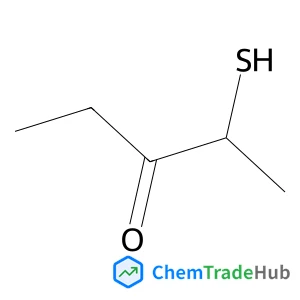
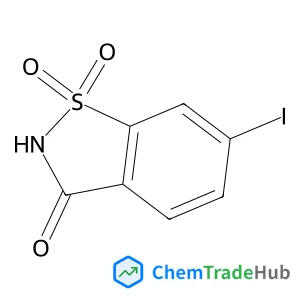
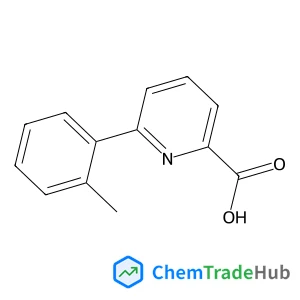
![1-[(4-Methylphenyl)sulfonyl]-3-(4,4,5,5-tetramethyl-1,3,2-dioxaborolan-2-yl)-1H-pyrrolo[2,3-b]pyridine-5-carbonitrile structure](https://cnstatic.chemtradehub.com/structs/143/1434747-57-5-fc0d.webp "1-[(4-Methylphenyl)sulfonyl]-3-(4,4,5,5-tetramethyl-1,3,2-dioxaborolan-2-yl)-1H-pyrrolo[2,3-b]pyridine-5-carbonitrile structure")
推荐供应商




免责声明
本页面提供的学术期刊信息仅供参考和研究使用。我们与任何期刊出版商均无关联,也不处理投稿事宜。如有投稿相关咨询,请直接联系相关期刊出版商。
如发现页面信息有误,请发送邮件至 support@chemtradehub.com 联系我们。我们将及时核实并处理您的问题。