




Recurrent neural networks for time domain modelling of FTIR spectra: application to brain tumour detection
文献信息
发布日期
2023-03-24
DOI
10.1039/D2AN02041F
影响因子
4.616
作者
Georgios Antoniou, Justin J. A. Conn, Benjamin R. Smith, Paul M. Brennan
查看原文
摘要
Attenuated total reflectance (ATR)-Fourier transform infrared (FTIR) spectroscopy alongside machine learning (ML) techniques is an emerging approach for the early detection of brain cancer in clinical practice. A crucial step in the acquisition of an IR spectrum is the transformation of the time domain signal from the biological sample to a frequency domain spectrum via a discrete Fourier transform. Further pre-processing of the spectrum is typically applied to reduce non-biological sample variance, and thus to improve subsequent analysis. However, the Fourier transformation is often assumed to be essential even though modelling of time domain data is common in other fields. We apply an inverse Fourier transform to frequency domain data to map these to the time domain. We use the transformed data to develop deep learning models utilising Recurrent Neural Networks (RNNs) to differentiate between brain cancer and control in a cohort of 1438 patients. The best performing model achieves a mean (cross-validated score) area under the receiver operating characteristic (ROC) curve (AUC) of 0.97 with sensitivity of 0.91 and specificity of 0.91. This is better than the optimal model trained on frequency domain data which achieves an AUC of 0.93 with sensitivity of 0.85 and specificity of 0.85. A dataset comprising 385 patient samples which were prospectively collected in the clinic is used to test a model defined with the best performing configuration and fit to the time domain. Its classification accuracy is found to be comparable to the gold-standard for this dataset demonstrating that RNNs can accurately classify disease states using spectroscopic data represented in the time domain.
相关文献
Extraction, purification and characterization of the crystallin protein of cataractous eye lens nucleus
Muhammad Sher, Ayesha Hameed, Sobia Noreen, Muhammad Fayyaz-ur-Rehman, Muhammad Ajaz Hussain, Syed Nasir Abbas Bukhari
2015-08-03
Paper
DOI: 10.1039/C5AN01212K
Highly sensitive ligand-binding assays in pre-clinical and clinical applications: immuno-PCR and other emerging techniques
Mark Spengler, Michael Adler, Christof M. Niemeyer
2015-07-21
Critical Review
DOI: 10.1039/C5AN00822K
Detection of low concentrations of ampicillin in milk
Chrysafis Andreou, Rustin Mirsafavi
2015-06-09
Communication
DOI: 10.1039/C5AN00864F
Rapid detection of cocaine, benzoylecgonine and methylecgonine in fingerprints using surface mass spectrometry
Melanie J. Bailey, Robert Bradshaw, Simona Francese, Tara L. Salter, Catia Costa, Roger P. Webb, Ingrid Bosman, Kim Wolff, Marcel de Puit
2015-05-01
Paper
DOI: 10.1039/C5AN00112A
Exploring silver ionic liquids for reaction-based gas sensing on a quartz crystal microbalance
Hsin-Yi Li, Tzu-Hsuan Hsu, Chien-Yuan Chen, Ming-Chung Tseng, Yen-Ho Chu
2015-08-05
Communication
DOI: 10.1039/C5AN01404B
Contribution of Raman spectroscopy in nephrology: a candidate technique to detect hydroxyethyl starch of third generation in osmotic renal lesions
T. T. Nguyen, A. Wynckel, M. Fere, L. Van-Gulick, V. Untereiner, P. Birembaut
2015-09-10
Paper
DOI: 10.1039/C5AN00821B
Silver nanostructures in laser desorption/ionization mass spectrometry and mass spectrometry imaging
Justyna Sekuła, Joanna Nizioł, Wojciech Rode, Tomasz Ruman
2015-07-27
Tutorial Review
DOI: 10.1039/C5AN00943J
Collision-energy resolved ion mobility characterization of isomeric mixtures
Michael E. Pettit, Brett Harper, Matthew R. Brantley, Touradj Solouki
2015-07-15
Paper
DOI: 10.1039/C5AN00940E
Zr(H2O)2EDTA modulated luminescent carbon dots as fluorescent probes for fluoride detection
Jia-Ming Liu, Li-ping Lin, Xin-Xing Wang, Li Jiao, Ma-Lin Cui, Shu-Lian Jiang, Wen-Lian Cai, Li-Hong Zhang, Zhi-Yong Zheng
2012-10-19
Paper
DOI: 10.1039/C2AN36055A
您可能还喜欢
化合物问答
如何储存1,2-环己二酮环乙缩醛(CAS号:4746-96-7)?
1,2-环己二酮环乙缩醛应储存在阴凉、干燥、通风良好的地方,避免阳光直射。建议使用密封容器保存,并保持环境温度在室温范围内,远离火源和热源。
4746-96-71,4-Dioxaspiro[4.5]d...
化合物问答
Ecopladib(CAS号:381683-92-7)的市场或研究趋势如何?
Ecopladib作为一种新型的药物,主要应用于治疗高胆固醇等疾病。目前,市场和研究趋势显示,Ecopladib因其独特的药理作用而受到关注。随着对心血管疾病治...
381683-92-7Ecopladib
化合物问答
2,3-Dimethyl-3H-imidazo[4,5-c]pyridine(CAS号:52538-09-7)通常如何合成?
2,3-二甲基-3H-咪唑[4,5-c]吡啶通常通过咪唑和2,3-二甲基吡啶的缩合反应合成。具体来说,将咪唑和2,3-二甲基吡啶在适当的溶剂中进行加热或加压反应...
52538-09-72,3-Dimethyl-3H-imid...
化合物问答
2,3,4,5-tetrahydro-1H-3-苯并氮杂环;盐酸盐(CAS号:17379-01-0)的市场或研究趋势如何?
该化合物在药物化学和有机合成中有一定的应用。近年来,随着对新型药物化合物的需求增加,该化合物的研究趋势主要集中在探索其生物活性,尤其是其在神经系统疾病治疗中的潜...
17379-01-02,3,4,5-Tetrahydro-1...
68-90-6(2-Ethyl-1-benzofura...
化合物问答
如何储存盐酸甘氨酸丁酯(CAS号:13048-99-2)?
盐酸甘氨酸丁酯应储存在阴凉、干燥、通风良好的地方,避免阳光直射和高温环境,温度应控制在25℃以下。储存容器应密封,避免与空气中的水分和酸性物质接触,以防发生水解...
13048-99-2Butyl glycinate hydr...
化合物问答
什么是2-Iodo-N,N-dimethylbenzamide(CAS号:54616-46-5)?
2-碘-N,N-二甲基苯胺是一种有机化合物,化学名为2-Iodo-N,N-dimethylbenzamide。其分子式为C<sub>9</sub>H<sub>1...
54616-46-52-Iodo-N,N-dimethylb...
16817-90-6N-Cyclohexylglycinam...
化合物问答
5-溴-2-(4H-1,2,4-三唑-4-基)吡啶(CAS号:959240-99-4)的市场或研究趋势如何?
随着医药、农药和新材料领域的发展,该化合物作为关键中间体的应用日益增多。特别是在药物合成中,由于其独特的化学性质,可以用于合成多种药物分子。未来的研究趋势可能集...
959240-99-45-Bromo-2-(4H-1,2,4-...
化合物问答
2,4-二溴-6-三氟甲基嘧啶(CAS号:785778-00-9)通常如何合成?
2,4-二溴-6-三氟甲基嘧啶通常通过溴化反应合成。首先,将6-三氟甲基嘧啶与溴化剂(如液溴)在适当的溶剂(如二氯甲烷、四氢呋喃)中反应,加入适当的催化剂(如四...
785778-00-92,4-Dibromo-6-(trifl...
来源期刊
Analyst

CiteScore:
7.8
自引率:
5.6%
年发文量:
653
Analyst publishes analytical and bioanalytical research that reports premier fundamental discoveries and inventions, and the applications of those discoveries, unconfined by traditional discipline barriers.
推荐化合物
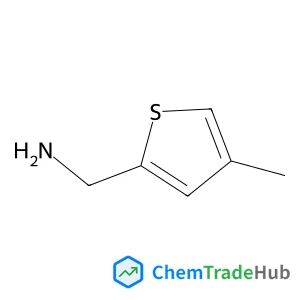
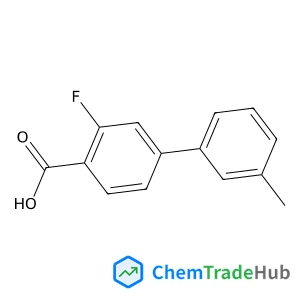
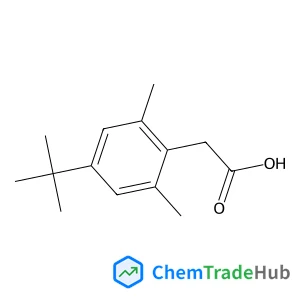
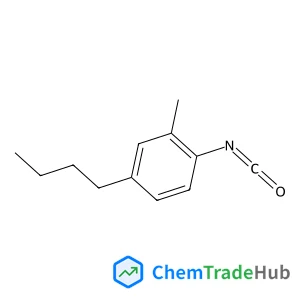
推荐供应商




免责声明
本页面提供的学术期刊信息仅供参考和研究使用。我们与任何期刊出版商均无关联,也不处理投稿事宜。如有投稿相关咨询,请直接联系相关期刊出版商。
如发现页面信息有误,请发送邮件至 support@chemtradehub.com 联系我们。我们将及时核实并处理您的问题。