





![3-[(4-Nitrobenzyl)oxy]-3-oxopropanoic Acid structure](https://cnstatic.chemtradehub.com/structs/773/77359-11-6-0d04.webp "3-[(4-Nitrobenzyl)oxy]-3-oxopropanoic Acid structure")
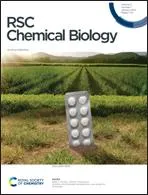
Mutant polymerases capable of 2′ fluoro-modified nucleic acid synthesis and amplification with improved accuracy
文献信息
发布日期
2022-06-17
DOI
10.1039/D2CB00064D
影响因子
0
作者
Trevor A. Christensen, Kristi Y. Lee, Simone Z. P. Gottlieb, Mikayla B. Carrier, Aaron M. Leconte
查看原文
摘要
Nonnatural nucleic acids (xeno nucleic acids, XNA) can possess several useful properties such as expanded reactivity and nuclease resistance, which can enhance the utility of DNA as a biotechnological tool. Native DNA polymerases are unable to synthesize XNA, so, in recent years mutant XNA polymerases have been engineered with sufficient activity for use in processes such as PCR. While substantial improvements have been made, accuracy still needs to be increased by orders of magnitude to approach natural error rates and make XNA polymerases useful for applications that require high fidelity. Here, we systematically evaluate leading Taq DNA polymerase mutants for their fidelity during synthesis of 2′F XNA. To further improve their accuracy, we add mutations that have been shown to increase the fidelity of wild-type Taq polymerases, to some of the best current XNA polymerases (SFM4–3, SFM4–6, and SFP1). The resulting polymerases show significant improvements in synthesis accuracy. In addition to generating more accurate XNA polymerases, this study also informs future polymerase engineering efforts by demonstrating that mutations that improve the accuracy of DNA synthesis may also have utility in improving the accuracy of XNA synthesis.
相关文献
Reducing polyazomethine to poly(N-phenylbenzylamine) with near infrared electrochromic, fluorescence and photovoltaic properties
Jiwei Cai, Ping Zhao, Haijun Niu, Yongfu Lian, Cheng Wang, Xuduo Bai, Wen Wang
2012-11-02
Paper
DOI: 10.1039/C2PY20846F
Electron deficient conjugated polymers based on benzotriazole
James L. Banal, Jegadesan Subbiah, Hamish Graham, Jin-Kyun Lee, Kenneth P. Ghiggino, Wallace W. H. Wong
2012-11-20
Paper
DOI: 10.1039/C2PY20850D
Interrupted SET-LRP of methyl acrylate demonstrates Cu(0) colloidal particles as activating species
Martin E. Levere, Nga H. Nguyen, Hao-Jan Sun, Virgil Percec
2012-10-02
Paper
DOI: 10.1039/C2PY20791E
Novel functional degradable block copolymers for the building of reactive micelles
Sébastien Cajot, Philippe Lecomte, Christine Jérôme, Raphaël Riva
2012-10-23
Paper
DOI: 10.1039/C2PY20528A
Pyrolysis of mixtures of methane and ethane: activation of methane with the aid of radicals generated from ethane
Hitoshi Ogihara, Hiroki Tajima, Hideki Kurokawa
2019-11-14
Paper
DOI: 10.1039/C9RE00400A
Preparation of hybrid nanomaterials by supramolecular interactions between dendritic polymers and carbon nanotubes
Mohsen Adeli, Siamak Beyranvand, Roya Kabiri
2012-09-25
Paper
DOI: 10.1039/C2PY20497E
Redox initiation of bulk thiol–ene polymerizations
Megan A. Cole, Katherine C. Jankousky
2012-11-26
Paper
DOI: 10.1039/C2PY20843A
Catalyst Acquisition by Data Science (CADS): a web-based catalyst informatics platform for discovering catalysts
Yuzuru Tanaka
2020-04-20
Paper
DOI: 10.1039/D0RE00098A
pH and reduction dual-responsive nanogel cross-linked by quaternization reaction for enhanced cellular internalization and intracellular drug delivery
Zhaohui Tang, Hai Sun, Xuesi Chen
2012-11-07
Paper
DOI: 10.1039/C2PY20871G
您可能还喜欢
化合物问答
4-[4-三氟甲基苯基]恶唑(CAS号:1126636-40-5)通常如何合成?
4-[4-三氟甲基苯基]恶唑通常通过将4-三氟甲基苯酚与异硫氰酸苯酯在有机溶剂中进行酯化反应合成。该反应可在无水条件下,使用适当的催化剂,如四丁基氢氧化铵,以提...
1126636-40-54-(4-(Trifluoromethy...
59729-32-71-[3-(Dimethylamino)...
化合物问答
RockPhos Pd G3(CAS号:2009020-38-4)通常如何合成?
RockPhos Pd G3 通常通过钯催化偶联反应合成,使用配体 (2'-Amino-2-biphenylyl)(methanesulfonato-kappa...
2009020-38-4(2'-Amino-2-biphenyl...
化合物问答
1-哌啶甲酰胺(CAS号:2158-03-4)的市场或研究趋势如何?
1-哌啶甲酰胺作为有机合成中的重要中间体,其市场需求主要受医药、农药、染料等行业推动。近年来,随着新药开发和绿色化学的发展,该化合物的研究趋势集中在开发更高效、...
2158-03-41-Piperidinecarboxam...
化合物问答
2-(二苯基膦基)乙胺(CAS号:4848-43-5)适用哪些法规指南?
2-(二苯基膦基)乙胺适用于多种法规指南,包括但不限于《全球化学品统一分类和标签制度》(GHS),欧盟《化学品注册、评估、授权和限制》法规(REACH),以及美...
4848-43-52-(Diphenylphosphino...
化合物问答
如何储存间苯二甲酸二烯丙酯(CAS号:1087-21-4)?
间苯二甲酸二烯丙酯应储存在阴凉、干燥、通风良好的地方,远离火源和热源。储存容器应密封,避免光照和高温。储存温度应控制在25℃以下,相对湿度应低于80%。避免与其...
1087-21-4Diallyl isophthalate
化合物问答
什么是间甲苯异硫代异氰酸酯(CAS号:621-30-7)?
间甲苯异硫代异氰酸酯是一种有机化合物,分子式为C7H7NO2S,具有刺激性气味。它是一种重要的有机合成中间体,在合成其他化合物时广泛应用。
621-30-71-Isothiocyanato-3-m...
化合物问答
在合成中是否有N-Boc-D-苯丙氨醇(CAS号:106454-69-7)的替代品?
在合成中,可以考虑使用N-Cbz-D-苯丙氨醇或N-Fmoc-D-苯丙氨醇作为替代品。这些化合物同样具有保护氨基的功能,且在合成过程中表现出良好的反应性能。
106454-69-72-Methyl-2-propanyl ...
化合物问答
3-羟甲基-2-氧异丙基吡啶(CAS号:954240-50-7)的主要用途是什么?
3-羟甲基-2-氧异丙基吡啶主要用于有机合成领域,可以作为合成其他药物、农药或精细化学品的中间体。此外,它还可能在实验室研究中作为特定反应的前体或溶剂。
954240-50-7(2-Isopropoxy-3-pyri...
化合物问答
6-氨基-9-甲基嘌呤(CAS号:700-00-5)应用于哪些行业?
6-氨基-9-甲基嘌呤目前主要应用于医药行业,作为某些药物的中间体。此外,它还可能用于聚合物、传感器和半导体的某些领域,作为功能性单体或掺杂剂。
700-00-59-Methyl-9H-purin-6-...
来源期刊
推荐化合物
推荐供应商





免责声明
本页面提供的学术期刊信息仅供参考和研究使用。我们与任何期刊出版商均无关联,也不处理投稿事宜。如有投稿相关咨询,请直接联系相关期刊出版商。
如发现页面信息有误,请发送邮件至 support@chemtradehub.com 联系我们。我们将及时核实并处理您的问题。