


![8-Bromo-6-fluoro[1,2,4]triazolo[1,5-a]pyridin-2-amine structure](https://cnstatic.chemtradehub.com/structs/125/1257705-51-3-9f4a.webp "8-Bromo-6-fluoro[1,2,4]triazolo[1,5-a]pyridin-2-amine structure")
Potential energy surfaces of a stacked dimer of benzene and its radical cation: what remains and what appears
文献信息
发布日期
2022-06-29
DOI
10.1039/D2CP01691E
影响因子
3.676
作者
Irina V. Beregovaya, Lyudmila N. Shchegoleva
查看原文
摘要
A stepwise qualitative consideration of the reduction in symmetry for the highly symmetrical “right sandwich” and “twisted sandwich” structures of the stacked benzene dimer caused by the pseudo-Jahn–Teller effect made it possible to construct a scheme of the potential energy surface (PES) of this dimer. Thirty-six equivalent structures of minimum energy are ordered on this extremely flat surface, transforming into each other in an almost barrier-free manner. There are two kinds of these transformations, both of which are pseudorotation. The transformation pathways inherent in this neutral dimer are also characteristic of its radical cation (RC). Structural transformations of the RC are inextricably linked with changes in its electronic state since its stationary structures relate to different electronic states. (C6H6)2+˙ exists in the form of two orbital isomers, each of which “pseudorotates” on its own area of the PES. During the pseudorotation, the SOMO distribution on the fragments of (C6H6)2+˙ changes, which is identical to what occurs during the pseudorotation of the Jahn–Teller benzene RC. These areas are connected by pairwise interconversions of their minimum energy structures. The interconversion of the orbital isomers is a bypassing of conical intersections between corresponding electronic states, which occurs through a synchronized pseudorotation of the fragments. The conclusions of the qualitative consideration and the results of quantum chemical calculations of various levels performed for (C6H6)2+˙ are in full agreement with each other. The revealed features of the structure of the PES of the two reference systems in studying the intermolecular and ion–molecule interactions are the basis for considering their more complex analogs, primarily their less symmetrical ones.
期刊推荐
Russian Journal of Bioorganic Chemistry
Organic Process Research & Development

Current Opinion in Solid State & Materials Science
Russian Chemical Bulletin

Chemical Communications

Acta Materialia

New Journal of Chemistry
Russian Journal of Organic Chemistry
Russian Journal of Applied Chemistry
Drug Discovery Today
相关文献
Switch on/off microcapsules for controllable photosensitive drug release in a ‘release-cease-recommence’ mode
Hang Lin, Wang Xiao, Si-Yong Qin, Si-Xue Cheng, Xian-Zheng Zhang
2014-05-15
Communication
DOI: 10.1039/C4PY00564C
Efficient and economical synthesis of dendrimer-like polystyrene with long subchains through arm-first divergent strategy
Xue-Song Ge, Chen He, Wei-Dong He, Sheng-Qi Chen
2014-04-28
Paper
DOI: 10.1039/C4PY00425F
Synthesis and characterization of quaternary phosphonium-containing, trithiocarbonate RAFT agents
Longhe Zhang, Qiang Tang, R. A. Weiss, Kevin A. Cavicchi
2014-06-27
Paper
DOI: 10.1039/C4PY00615A
Highly pH-sensitive polyurethane exhibiting shape memory and drug release
Ying Li, Ye Liu, Tao Gong, Lin Wang, Shaobing Zhou
2014-05-02
Paper
DOI: 10.1039/C4PY00474D
Supramolecular flower micelle formation of polyrotaxane-containing triblock copolymers prepared from macro-chain transfer agents bearing molecular hooks
Atsushi Tamura, Hajime Tanaka, Nobuhiko Yui
2014-05-16
Paper
DOI: 10.1039/C4PY00379A
Rapid, semi-automated convergent synthesis of low generation triazine dendrimers using microwave assisted reactions
Alan E. Enciso, Zachary M. Abid, Eric E. Simanek
2014-04-15
Paper
DOI: 10.1039/C4PY00349G
Engineering the band gap and energy level of conjugated polymers using a second acceptor unit
Khalid Mahmood, Heng Lu, Zheng-Ping Liu, Cuihong Li, Zhen Lu, Xiao Liu, Tao Fang, Qiaohong Peng, Guangwu Li, Lin Li, Zhishan Bo
2014-04-16
Paper
DOI: 10.1039/C4PY00004H
您可能还喜欢
化合物问答
什么是2,6-二溴-4,8-双[(2-乙基己基)氧基]苯并[1,2-b:4,5-b']二噻吩(CAS号:1226782-13-3)?
2,6-二溴-4,8-双[(2-乙基己基)氧基]苯并[1,2-b:4,5-b']二噻吩是一种有机化合物,分子式为C23H32Br2O2S2。该化合物具有芳香性和...
1226782-13-32,6-Dibromo-4,8-bis[...
化合物问答
木聚硫钠(CAS号:37319-17-8)的物理化学性质是什么?
木聚硫钠通常为无色或白色结晶性粉末,具有吸湿性。其分子量约为121.11 g/mol。木聚硫钠易溶于水,不溶于醇类和其他非极性溶剂。在酸性或碱性溶液中,木聚硫钠...
37319-17-8Pentosan
化合物问答
2-甲氧基-4-(三氟甲基)苄溴, JRD(CAS号:886500-59-0)适用哪些法规指南?
该化合物在合成、储存和运输过程中需遵循《全球化学品统一分类和标签制度》(GHS)的健康、环境和物理危险分类。在欧洲还需符合《化学品注册、评估、授权和限制》(RE...
886500-59-02-Methoxy-4-(trifluo...
化合物问答
1,4-Diazoniabicyclo[2.2.2]octane-1,4-disulfinate(CAS号:119752-83-9)的主要用途是什么?
1,4-二氮杂双环[2.2.2]辛烷-1,4-二硫酸二酯主要用于有机合成中的保护基团,特别是在保护胺基和硫醇基方面具有广泛应用。此外,它还用于一些特殊化学反应的...
119752-83-91,4-Diazabicyclo[2.2...
化合物问答
如何处理含有4-(Bromomethyl)-2-fluorobenzenesulphonamide(CAS号:1645275-47-3)的废料?
含有4-(Bromomethyl)-2-fluorobenzenesulphonamide的废液应首先进行中和处理,以降低pH值,避免对环境造成腐蚀性影响。随后...
1645275-47-34-(Bromomethyl)-2-fl...
化合物问答
Loureiriol(CAS号:479195-44-3)的物理化学性质是什么?
Loureiriol是一种天然化合物,其分子式为C15H22O4。Loureiriol为无色结晶性粉末,具有较高的熔点和良好的热稳定性。其相对分子质量为262....
479195-44-3Loureiriol
化合物问答
在合成中是否有3-氨基苯甲酰苯胺(CAS号:14315-16-3)的替代品?
在合成过程中,可以考虑使用类似结构的化合物作为3-氨基苯甲酰苯胺的替代品,例如N-苯基-3-氰基苯胺或N-苯基-3-硝基苯胺等,这些化合物具有相似的化学性质,可...
14315-16-33-Amino-N-phenylbenz...
化合物问答
4-异氰酰苯基硼酸频哪醇酯(CAS号:380430-64-8)的市场或研究趋势如何?
4-异氰酰苯基硼酸频哪醇酯主要应用于有机合成、药物化学和材料科学领域。随着绿色化学的发展,该化合物因其高效的官能团转化能力和环境友好性而受到越来越多的关注。近年...
380430-64-82-(4-Isocyanatopheny...
化合物问答
如何储存3β-乙酰氧基-7,25-甘遂二烯-24(R)-醇(CAS号:1352001-09-2)?
3β-乙酰氧基-7,25-甘遂二烯-24(R)-醇应储存在阴凉、干燥、通风良好的地方,避免直接光照。储存容器应密封,防止空气中的水分和氧气影响化合物的稳定性。建...
1352001-09-23β-acetoxy-eupha- 7,...
化合物问答
如何储存4-氟-2-甲基-1H-吲哚(CAS号:1260383-51-4)?
应将4-氟-2-甲基-1H-吲哚存放在阴凉、干燥、通风良好的地方,避免直接暴露在光照下。容器应密封,避免与空气中的水蒸气接触。建议在避光、温度不超过25℃的环境...
1260383-51-44-Fluoro-2-methyl-1H...
来源期刊
Physical Chemistry Chemical Physics

CiteScore:
5.5
自引率:
10.3%
年发文量:
3036
Physical Chemistry Chemical Physics (PCCP) is an international journal co-owned by 19 physical chemistry and physics societies from around the world. This journal publishes original, cutting-edge research in physical chemistry, chemical physics and biophysical chemistry. To be suitable for publication in PCCP, articles must include significant innovation and/or insight into physical chemistry; this is the most important criterion that reviewers and Editors will judge against when evaluating submissions. The journal has a broad scope and welcomes contributions spanning experiment, theory, computation and data science. Topical coverage includes spectroscopy, dynamics, kinetics, statistical mechanics, thermodynamics, electrochemistry, catalysis, surface science, quantum mechanics, quantum computing and machine learning. Interdisciplinary research areas such as polymers and soft matter, materials, nanoscience, energy, surfaces/interfaces, and biophysical chemistry are welcomed if they demonstrate significant innovation and/or insight into physical chemistry. Joined experimental/theoretical studies are particularly appreciated when complementary and based on up-to-date approaches.
推荐化合物
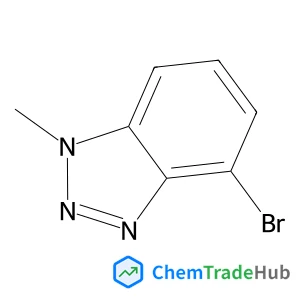
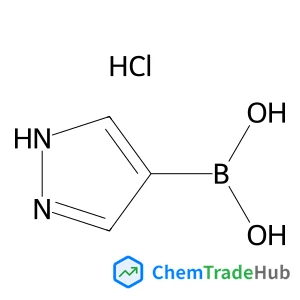
![(1R,5R)-3-{[(2-Methyl-2-propanyl)oxy]carbonyl}-3-azabicyclo[3.1.0]hexane-1-carboxylic acid structure](https://cnstatic.chemtradehub.com/structs/116/1165450-63-4-bfe1.webp "(1R,5R)-3-{[(2-Methyl-2-propanyl)oxy]carbonyl}-3-azabicyclo[3.1.0]hexane-1-carboxylic acid structure")
![N-[2-(2-Pyridinyl)ethyl]-1-propanamine structure](https://cnstatic.chemtradehub.com/structs/554/55496-57-6-22b4.webp "N-[2-(2-Pyridinyl)ethyl]-1-propanamine structure")
推荐供应商






免责声明
本页面提供的学术期刊信息仅供参考和研究使用。我们与任何期刊出版商均无关联,也不处理投稿事宜。如有投稿相关咨询,请直接联系相关期刊出版商。
如发现页面信息有误,请发送邮件至 support@chemtradehub.com 联系我们。我们将及时核实并处理您的问题。