







Water formation on interstellar silicates: the role of Fe2+/H2 interactions in the O + H2 → H2O reaction
文献信息
发布日期
2022-11-01
DOI
10.1039/D2CP04051D
影响因子
3.676
作者
Marc Serra-Peralta, Christian Domínguez-Dalmases, Albert Rimola
查看原文
摘要
Water is the most abundant molecule in the solid state of the interstellar medium, and its presence is critically important for life in space. Interstellar water is thought to be effectively synthesised by reactions occurring on the surfaces of interstellar grains, as gas-phase reactions are not efficient enough to justify its high abundance. In the present work, DFT simulations have been performed to investigate the formation of interstellar water through the O + H2 → H2O reaction on olivinic silicate surfaces that contain Fe2+ cations. The surfaces have been modeled adopting both periodic and cluster approaches. This study focuses on: (i) the stability of the surface models as a function of the electronic states (i.e., quintuplet, triplet and singlet) arising from the presence of the Fe2+ centers, (ii) the adsorption of H2 on the silicate surfaces and its likely activation due to the Fe2+/H2 interactions, and (iii) characterising the energy profiles of the H2O formation reaction complemented with kinetics that include tunneling effects. The results indicate that quintuplet is the most stable electronic state in all the bare surface models. H2 adsorption, however, does not show a clear trend on the relative stabilities of the H2/surface complexes with the electronic states, which is in general more favourable on singlet state surfaces. Finally, reactions simulated on the periodic surfaces show elementary high energy barriers but the reaction is kinetically feasible (considering the long lifetime of interstellar clouds) due to the dominance of tunnelling. In contrast, in the nanocluster models, tunneling effects cannot contribute due to the presence of endoenergetic elementary steps. It is predicted that the reactions on the nanoclusters are only possible if the energy released during the adsorption of the O atom is used to overcome the energy barriers.
相关文献
Localised and delocalised excitons in star-like squaraine homo- and heterotrimers
Harald Ceymann, Moritz Balkenhohl, Alexander Schmiedel, Marco Holzapfel, Christoph Lambert
2015-12-18
Paper
DOI: 10.1039/C5CP06917C
B800–B850 coherence correlates with energy transfer rates in the LH2 complex of photosynthetic purple bacteria
Cathal Smyth, Daniel G. Oblinsky, Gregory D. Scholes
2015-03-17
Paper
DOI: 10.1039/C5CP00295H
Effects of various kinetic rates of FtsZ filaments on bacterial cytokinesis
Zi He, Zhuan Liu, Kunkun Guo, Lina Ding
2015-11-06
Paper
DOI: 10.1039/C5CP00183H
A zero dimensional model of lithium–sulfur batteries during charge and discharge
Monica Marinescu, Teng Zhang, Gregory J. Offer
2015-11-12
Paper
DOI: 10.1039/C5CP05755H
Molecular design of electron transport with orbital rule: toward conductance-decay free molecular junctions
Tomofumi Tada, Kazunari Yoshizawa
2015-10-30
Perspective
DOI: 10.1039/C5CP05423K
Anti-icing properties of a superhydrophobic surface in a salt environment: an unexpected increase in freezing delay times for weak brine droplets
Ludmila B. Boinovich, Alexandre M. Emelyanenko, Kirill A. Emelyanenko, Konstantin I. Maslakov
2015-12-14
Paper
DOI: 10.1039/C5CP06988B
A new look at oxide formation at the copper/electrolyte interface by in situ spectroscopies
Cigdem Toparli, Adnan Sarfraz, Andreas Erbe
2015-11-02
Paper
DOI: 10.1039/C5CP05172J
An auxilliary grid method for the calculation of electrostatic terms in density functional theory on a real-space grid
Michael Zuzovski, Amir Boag, Amir Natan
2015-06-30
Paper
DOI: 10.1039/C5CP01090J
A simulation study of the electrostriction effects in dielectric elastomer composites containing polarizable inclusions with different spatial distributions
Hartmut Löwen, Lei Zhu
2015-11-13
Paper
DOI: 10.1039/C5CP05522A
Quantitative monitoring of the removal of non-encapsulated material external to filled carbon nanotube samples
Markus Martincic, Elzbieta Pach, Belén Ballesteros, Gerard Tobias
2015-10-30
Paper
DOI: 10.1039/C5CP04664E
您可能还喜欢
化合物问答
甲基双烯双酮(CAS号:5173-46-6)通常如何合成?
甲基双烯双酮可以通过多种途径合成。一种常见的合成方法是通过甲基化和环化反应,先由4-甲基-9-烯-1,3-二酮合成,然后进行环化反应得到目标产物。具体的合成路线...
5173-46-6Estra-4,9-diene-3,17...
化合物问答
如何处理含有tert-butyl 3,5-difluorobenzoate(CAS号:467442-11-1)的废料?
处理含有tert-butyl 3,5-difluorobenzoate(CAS号:467442-11-1)的废液时,应首先收集并密封,避免泄漏。随后,建议通过焚...
467442-11-12-Methyl-2-propanyl ...
化合物问答
4-二甲氧基甲基-2-(三氟甲基)嘧啶(CAS号:878760-47-5)通常如何合成?
4-二甲氧基甲基-2-(三氟甲基)嘧啶通常通过三氟甲基化反应合成。首先,将2-氯嘧啶与三氟甲基锂在惰性溶剂中反应,然后将得到的三氟甲基化中间体与二甲氧基甲基化试...
878760-47-54-(Dimethoxymethyl)-...
化合物问答
WRW4(CAS号:878557-55-2)的主要用途是什么?
WRW4主要应用于科学研究领域,尤其是在合成化学和有机合成方面。由于其特殊的化学性质,它可能被用于特定的化学反应或合成过程。
878557-55-2WRW4
化合物问答
什么是6-O-(三异丙基硅基)-D-葡萄烯糖(CAS号:137915-37-8)?
6-O-(三异丙基硅基)-D-葡萄烯糖是一种有机化合物,化学名为1,5-Anhydro-2-deoxy-6-O-(triisopropylsilyl)-D-ar...
137915-37-81,5-Anhydro-2-deoxy-...
化合物问答
N-Benzyl-N,N-dimethyl-2-phenoxyethanaminium(CAS号:7181-73-9)的主要用途是什么?
N-Benzyl-N,N-dimethyl-2-phenoxyethanaminium在有机合成中被用作保护基团,可以用于保护氨基,提高反应的选择性和产率。此外...
7181-73-9N-Benzyl-N,N-dimethy...
化合物问答
什么是3-(Cyclohex-1-en-1-yl)acrylic acid(CAS号:56453-88-4)?
3-(Cyclohex-1-en-1-yl)acrylic acid,简称3-环己烯-1-烯丙酸,是一种含有环己烯基团的丙烯酸衍生物,用于合成其他化合物或作为有...
56453-88-43-(Cyclohex-1-en-1-y...
化合物问答
如何储存(1R)-7-fluoro-1,2,3,4-tetrahydronaphthalen-1-amine(CAS号:1055949-62-6)?
应将(1R)-7-氟-1,2,3,4-四氢萘胺储存于阴凉、干燥、通风良好的地方,远离火源和热源。避免与氧化剂、酸类接触。使用合适的容器,密封保存。
1055949-62-6(1R)-7-Fluoro-1,2,3,...
化合物问答
3-甲基苯并呋喃-2-羧酸(CAS号:24673-56-1)的主要用途是什么?
3-甲基苯并呋喃-2-羧酸主要用作合成其他化合物的中间体,如药物合成、有机合成等领域。此外,该化合物在某些领域作为化学试剂或分析试剂使用。
24673-56-13-Methyl-1-benzofura...
化合物问答
孕烷醇酮(CAS号:128-20-1)适用哪些法规指南?
孕烷醇酮(CAS号:128-20-1)需遵守GHS(全球化学品统一分类和标签制度)的相关分类和标签要求,主要涉及健康危害、环境危害和物理化学危害。此外,还需要遵...
128-20-1(3alpha,5beta)-3-Hyd...
来源期刊
Physical Chemistry Chemical Physics

CiteScore:
5.5
自引率:
10.3%
年发文量:
3036
Physical Chemistry Chemical Physics (PCCP) is an international journal co-owned by 19 physical chemistry and physics societies from around the world. This journal publishes original, cutting-edge research in physical chemistry, chemical physics and biophysical chemistry. To be suitable for publication in PCCP, articles must include significant innovation and/or insight into physical chemistry; this is the most important criterion that reviewers and Editors will judge against when evaluating submissions. The journal has a broad scope and welcomes contributions spanning experiment, theory, computation and data science. Topical coverage includes spectroscopy, dynamics, kinetics, statistical mechanics, thermodynamics, electrochemistry, catalysis, surface science, quantum mechanics, quantum computing and machine learning. Interdisciplinary research areas such as polymers and soft matter, materials, nanoscience, energy, surfaces/interfaces, and biophysical chemistry are welcomed if they demonstrate significant innovation and/or insight into physical chemistry. Joined experimental/theoretical studies are particularly appreciated when complementary and based on up-to-date approaches.
推荐化合物
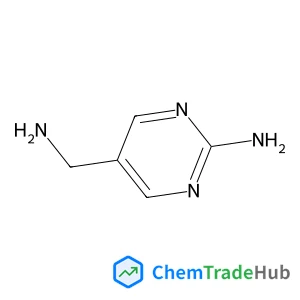
![4-Chloro-N-{[4-(dimethylamino)phenyl]carbamoyl}benzenesulfonamide structure](https://cnstatic.chemtradehub.com/structs/558/5581-42-0-7dcb.webp "4-Chloro-N-{[4-(dimethylamino)phenyl]carbamoyl}benzenesulfonamide structure")

推荐供应商



免责声明
本页面提供的学术期刊信息仅供参考和研究使用。我们与任何期刊出版商均无关联,也不处理投稿事宜。如有投稿相关咨询,请直接联系相关期刊出版商。
如发现页面信息有误,请发送邮件至 support@chemtradehub.com 联系我们。我们将及时核实并处理您的问题。