


![2,6-Bis({(2R)-2-[hydroxy(diphenyl)methyl]-1-pyrrolidinyl}methyl)-4-methylphenol structure](https://cnstatic.chemtradehub.com/structs/877/877395-58-9-70bf.webp "2,6-Bis({(2R)-2-[hydroxy(diphenyl)methyl]-1-pyrrolidinyl}methyl)-4-methylphenol structure")
Immortal polymerization of LA: the influence of steric effects, electronic effects and pKa on chain transfer agents
文献信息
发布日期
2022-03-01
DOI
10.1039/D2PY00081D
影响因子
5.582
作者
Na Liu, Jince Zhang, Jingyi Wen, Xiaolei You, Dawei Fang
查看原文
摘要
The “immortal” ring-opening polymerization (iROP) of L-LA, catalyzed by ligand-free Ca[N(SiMe3)2]2(THF)2 in combination with different chain transfer agents (alcohols, phenols and PhCH2NH2) was systematically investigated for the first time. When alcohols were used as CTAs (pKa: 14.36–12.73), the polymerization proceeded smoothly and efficiently in excess of PhCH2OH and Ph2CHOH feeding, through which the molecular weights of the obtained PLAs could be precisely controlled by the monomer/alcohols and the molecular weight distributions were maintained at a very narrow level, showing a typically immortal characterization. Upon increasing the steric effect of the alcohol (Ph3COH), the activity became lower and the molecular weight distribution became broader than those of PhCH2OH and Ph2CHOH, indicating that the steric effect of alcohols has a significant influence on the iROP of LA. Whereas for the phenol-based CTAs (pKa: 10.17–7.15), the electronic effect was obvious for the ROP of L-LA. When PhOH was used as a module, the activities and initiation efficiencies became slightly lower than those of alcohols, but the molecular weight distributions were kept relatively narrow, which could realize the iROP of L-LA under certain conditions. When PhOH containing a strong electron-withdrawing group (–NO2) was used, the polymerization became inert, while when p-CH3–PhOH with a weak electron-donating group was used as the CTA, the activities were high and the molecular weights and distributions were controlled by the monomer/CTA ratio. Therefore, the electronic effect of PhOH-based CTAs has a great influence on the ROP of LA. Upon further decreasing the pKa to 9.33 (PhCH2NH2), the polymerizations could smoothly proceed but the molecular weight distributions of the polymers were bimodal, showing that the polymerizations were uncontrollable. The study of the active species indicated that the Ca–O group was the initiation group for alcohol- and phenol-based systems. There exists two active species (Ca–NHCH2Ph/Ca–N(SiMe3)2) in the Ca[N(SiMe3)2]2(THF)2/PhCH2NH2 system. The polymerization kinetic behaviors showed that the catalytic activity follows the order of PhCH2OH > Ph2CHOH > PhOH > PhCH2NH2. The kapp of Ph2CHOH increased firstly and then decreased with the increase of the CTA, indicating that the CTA promoted the propagation of polymerization firstly and then decreased the propagation of polymerization.
期刊推荐

Saudi Pharmaceutical Journal
Russian Journal of Coordination Chemistry
Russian Journal of Applied Chemistry
Crystallography Reports

Russian Journal of Bioorganic Chemistry

Journal of Natural Medicines

Journal of Peptide Science

Current Opinion in Solid State & Materials Science

Russian Journal of Organic Chemistry
Current Opinion in Colloid & Interface Science
相关文献
Molecular investigation of evaporation of biodroplets containing single-strand DNA on graphene surface
Fahimeh Akbari, Masumeh Foroutan
2018-01-15
Paper
DOI: 10.1039/C7CP07932J
Tailoring the gas separation efficiency of metal organic framework ZIF-8 through metal substitution: a computational study
Panagiotis Krokidas, Salvador Moncho, Edward N. Brothers, Marcelo Castier, Ioannis G. Economou
2018-01-15
Paper
DOI: 10.1039/C7CP08456K
Cl-Loss dynamics in the dissociative photoionization of CF3Cl with threshold photoelectron–photoion coincidence imaging
Xiangkun Wu, Guoqiang Tang, Hanhui Zhang, Xiaoguo Zhou, Shilin Liu, Fuyi Liu, Liusi Sheng, Bing Yan
2018-01-31
Paper
DOI: 10.1039/C7CP07502B
A systematic study of various 2D materials in the light of defect formation and oxidation
A. K. A. Lu, D. Chiappe
2018-12-19
Paper
DOI: 10.1039/C8CP05665J
High-pressure and temperature dependence of the spontaneous resolution of 1,1′-binaphthyl enantiomers
Kinga Roszak, Andrzej Katrusiak
2018-01-16
Paper
DOI: 10.1039/C7CP07234A
Water desalination using graphene nanopores: influence of the water models used in simulations
Vishnu Prasad K., Remco Hartkamp, Sarith P. Sathian
2018-05-21
Paper
DOI: 10.1039/C8CP00919H
Adsorption and decomposition of dimethyl methylphosphonate on size-selected (MoO3)3 clusters
Xin Tang, Zachary Hicks, Linjie Wang, Gerd Ganteför, Kit H. Bowen, Roman Tsyshevsky, Jianwei Sun, Maija M. Kuklja
2018-01-23
Paper
DOI: 10.1039/C7CP08427G
Competitor analysis of functional group H-bond donor and acceptor properties using the Cambridge Structural Database
James McKenzie, Christopher A. Hunter
2018-09-26
Paper
DOI: 10.1039/C8CP05470C
Understanding water interactions with organic surfaces: environmental molecular beam and molecular dynamics studies of the water–butanol system
Sofia M. Johansson, Xiangrui Kong, Erik S. Thomson, Stéphane Briquez, Céline Toubin, Jan B. C. Pettersson
2018-12-20
Paper
DOI: 10.1039/C8CP04151B
X-ray absorption near edge structure and first-principles spectral investigations of cationic disorder in MgAl2O4 induced by swift heavy ions
S. Yoshioka, K. Tsuruta, T. Yamamoto, K. Yasuda, S. Matsumura, N. Ishikawa, E. Kobayashi
2018-02-01
Paper
DOI: 10.1039/C7CP07591J
您可能还喜欢
化合物问答
3 - (二氟甲基)-1 -氟苯(CAS号:26029-52-7)适用哪些法规指南?
3 - (二氟甲基)-1 -氟苯需遵循联合国全球化学品统一分类和标签制度(GHS),包括急性毒性、皮肤腐蚀/刺激、严重眼损伤/眼刺激等分类。同时,该化合物还需符...
26029-52-71-(Difluoromethyl)-3...
化合物问答
3,5-二甲基苯胺(CAS号:108-69-0)通常如何合成?
3,5-二甲基苯胺通常通过乙苯的氨解反应合成。反应中使用硫酸作为催化剂,反应温度为120-130°C。乙苯在硫酸存在下与氨反应,生成3,5-二甲基苯胺和苯胺副产...
108-69-03,5-Dimethylaniline
化合物问答
3-甲基异噻唑-5-胺(CAS号:24340-76-9)安全吗?
3-甲基异噻唑-5-胺在适当使用和储存条件下是相对安全的,但在操作时应注意防护措施。应避免吸入粉尘,避免与皮肤和眼睛直接接触。在操作过程中,应穿戴适当的防护装备...
24340-76-93-Methyl-1,2-thiazol...
化合物问答
3-(1,3-Thiazol-2-yl)-1H-indole(CAS号:135531-86-1)通常如何合成?
3-(1,3-噻唑-2-基)-1H-吲哚通常通过多步合成方法制备。首先,由噻唑-2-基溴化物和吲哚进行偶联反应,得到中间体。然后,通过还原反应将中间体转化为所需...
135531-86-13-(1,3-Thiazol-2-yl)...
化合物问答
4-溴-2-氟苯甲基氯(CAS号:85510-82-3)的主要用途是什么?
4-溴-2-氟苯甲基氯主要用于有机合成中间体,特别是在医药、农药和染料等领域。作为一种具有特定结构的化合物,它在合成复杂有机分子时扮演重要角色。
85510-82-34-Bromo-1-(chloromet...
化合物问答
处理Fmoc-β-(3-噻吩基)-D-Ala-OH(CAS号:220497-90-5)时应注意哪些实验室安全事项?
处理Fmoc-β-(3-噻吩基)-D-Ala-OH时,应佩戴防护手套、护目镜和实验服。操作应在通风橱内进行。如发生泄露,应立即用大量水冲洗,并通知实验室管理人员...
220497-90-5N-[(9H-Fluoren-9-ylm...
化合物问答
氮化硅(CAS号:12033-89-5)通常如何合成?
氮化硅通常通过氮化硅的直接反应合成,即在高温下将四氯化硅与氨气反应。具体步骤是将四氯化硅和氨气混合并加热至1300-1700℃,在该条件下,四氯化硅与氨气反应生...
12033-89-5Trisilicon tetranitr...
化合物问答
Cetirizine EP Impurity B DiHCl(CAS号:1000690-91-4)通常如何合成?
Cetirizine EP Impurity B DiHCl通常通过一锅法合成,首先将4-氯苯基-苯甲基氯甲酸酯与1-哌嗪乙酸反应,生成相应的酸,然后与盐酸反应...
1000690-91-4{4-[(4-Chlorophenyl)...
化合物问答
如何储存1-哌啶-4-基丁-1-酮(CAS号:3509-15-7)?
1-哌啶-4-基丁-1-酮应储存在阴凉、干燥的地方,避免阳光直射。存储容器应密封,并确保通风良好。建议储存温度不超过25℃,湿度保持在相对较低的水平。
3509-15-71-Piperidin-4-ylbuta...
化合物问答
如何处理含有VORUCICLIB(CAS号:1000023-04-0)的废料?
含有VORUCICLIB的废料应进行专业的收集和处理,包括使用适当的容器进行隔离,避免与其他化学品接触。处理方法通常包括化学中和、沉淀反应或吸附过程,随后进行焚...
1000023-04-02-[2-Chloro-4-(trifl...
来源期刊
Polymer Chemistry

CiteScore:
8.6
自引率:
7.3%
年发文量:
457
Polymer Chemistry welcomes submissions in all areas of polymer science that have a strong focus on macromolecular chemistry. Manuscripts may cover a broad range of fields, yet no direct application focus is required.
推荐化合物
![6-Benzyl-4,5,6,7-tetrahydro-1H-pyrazolo[3,4-c]pyridin-3(2H)-one structure](https://cnstatic.chemtradehub.com/structs/909/909187-64-0-f54f.webp "6-Benzyl-4,5,6,7-tetrahydro-1H-pyrazolo[3,4-c]pyridin-3(2H)-one structure")
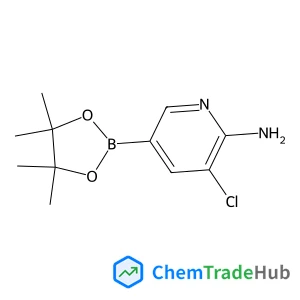
3-Chloro-5-(4,4,5,5-tetramethyl-1,3,2-dioxaborolan-2-yl)-2-pyridinamine
CAS号:
1032758-99-8
分子式:
C11H16BClN2O2
推荐供应商


免责声明
本页面提供的学术期刊信息仅供参考和研究使用。我们与任何期刊出版商均无关联,也不处理投稿事宜。如有投稿相关咨询,请直接联系相关期刊出版商。
如发现页面信息有误,请发送邮件至 support@chemtradehub.com 联系我们。我们将及时核实并处理您的问题。