


Pot- and atom-economic synthesis of oligomeric non-fullerene acceptors via C–H direct arylation
文献信息
发布日期
2022-03-30
DOI
10.1039/D2PY00139J
影响因子
5.582
作者
Li-Hong Wang, Xian-Jie Chen, Dong-Nai Ye, Hui Liu, Yan Chen, Ai-Guo Zhong, Chang-Zhi Li, Shi-Yong Liu
查看原文
摘要
Despite the substantial increase in the power conversion efficiencies (PCEs) of organic solar cells (OSCs), access to organic photoactive materials still remains cumbersome and, hence, relatively high cost in terms of synthesis and purification. In this work, we report, for the first time, the pot- and atom-economic synthesis of oligomerized unfused non-fullerene acceptors (NFAs) via C–H direct arylation (DACH) with gradually increasing chain lengths, i.e., IDB-IC-n and IDBF-IC-n (n = 1–3). These oligomeric NFAs have varied conjugation lengths but the same backbones of alternating indacenodithiophene and benzothiadiazole or difluorobenzothiadiazole. Note that IDB-IC-3 and IDBF-IC-3 have the longest conjugation lengths ever reported among oligomeric NFAs. Systematic studies of structure–property–performance relationships revealed that IDBF-IC-1 achieves the best PCE of 12.12%, accompanied by a decrease in the PCE with an increase in the oligomeric chain length. Our results demonstrate that the opto-electronic properties can be fine-tuned via varying the conjugation length or introducing fluoridated building units. Meanwhile, the highly efficient DACH reaction combined with the pot-economic strategy developed here could be a promising candidate for the synthesis of conjugated oligomers for future OSC applications.
期刊推荐
Journal of Natural Medicines
Saudi Pharmaceutical Journal
Nature Medicine
Russian Journal of Organic Chemistry
Journal of Saudi Chemical Society

New Journal of Chemistry
Russian Journal of Bioorganic Chemistry

Current Opinion in Solid State & Materials Science

Chemical Communications

Chemistry Education Research and Practice
相关文献
Preventing iron(ii) precipitation in aqueous systems using polyacrylic acid: some molecular insights
Pierre-Arnaud Artola, Bernard Rousseau, Carine Clavaguéra, Marion Roy, Dominique You, Gabriel Plancque
2018-06-06
Paper
DOI: 10.1039/C7CP02743E
Molecular dynamics simulation of a nanofluidic energy absorption system: effects of the chiral vector of carbon nanotubes
Sayed Hossein Ganjiani, Alireza Hossein Nezhad
2018-01-16
Paper
DOI: 10.1039/C7CP07395J
A systematic study of various 2D materials in the light of defect formation and oxidation
A. K. A. Lu, D. Chiappe
2018-12-19
Paper
DOI: 10.1039/C8CP05665J
3D structure of the electric double layer of ionic liquid–alcohol mixtures at the electrochemical interface
José M. Otero-Mato, Hadrián Montes-Campos, Oscar Cabeza, Diddo Diddens, Alina Ciach, Luis J. Gallego, Luis M. Varela
2018-11-30
Paper
DOI: 10.1039/C8CP05632C
A theoretical study of the effect of a non-aqueous proton donor on electrochemical ammonia synthesis
Aayush R. Singh, Brian A. Rohr, Yanjing Su, Lijie Qiao
2018-01-17
Paper
DOI: 10.1039/C7CP05484J
The influence of interactions between isotopoloques on coherent, ultrafast vibrational dynamics of liquid C2Cl4
B. Ratajska-Gadomska, W. Gadomski, J. Konarska, K. Polok
2018-01-15
Paper
DOI: 10.1039/C7CP07928A
Comment on “Spectroscopic properties and location of the Ce3+ energy levels in Y3Al2Ga3O12 and Y3Ga5O12 at ambient and high hydrostatic pressure” by S. Mahlik, A. Lazarowska, J. Ueda, S. Tanabe and M. Grinberg, Phys. Chem. Chem. Phys., 2016, 18, 6683
Yongjie Wang, M. Głowacki, M. Berkowski, A. Kamińska
2018-12-14
Comment
DOI: 10.1039/C8CP06154H
Importance of protein flexibility in molecular recognition: a case study on Type-I1/2 inhibitors of ALK
Huiyong Sun, Peichen Pan, Feng Zhu, Shan Chang, Lei Xu, Youyong Li
2018-01-16
Paper
DOI: 10.1039/C7CP08241J
Water desalination using graphene nanopores: influence of the water models used in simulations
Vishnu Prasad K., Remco Hartkamp, Sarith P. Sathian
2018-05-21
Paper
DOI: 10.1039/C8CP00919H
Competitor analysis of functional group H-bond donor and acceptor properties using the Cambridge Structural Database
James McKenzie, Christopher A. Hunter
2018-09-26
Paper
DOI: 10.1039/C8CP05470C
您可能还喜欢
化合物问答
3 - (二氟甲基)-1 -氟苯(CAS号:26029-52-7)适用哪些法规指南?
3 - (二氟甲基)-1 -氟苯需遵循联合国全球化学品统一分类和标签制度(GHS),包括急性毒性、皮肤腐蚀/刺激、严重眼损伤/眼刺激等分类。同时,该化合物还需符...
26029-52-71-(Difluoromethyl)-3...
化合物问答
3,5-二甲基苯胺(CAS号:108-69-0)通常如何合成?
3,5-二甲基苯胺通常通过乙苯的氨解反应合成。反应中使用硫酸作为催化剂,反应温度为120-130°C。乙苯在硫酸存在下与氨反应,生成3,5-二甲基苯胺和苯胺副产...
108-69-03,5-Dimethylaniline
化合物问答
3-甲基异噻唑-5-胺(CAS号:24340-76-9)安全吗?
3-甲基异噻唑-5-胺在适当使用和储存条件下是相对安全的,但在操作时应注意防护措施。应避免吸入粉尘,避免与皮肤和眼睛直接接触。在操作过程中,应穿戴适当的防护装备...
24340-76-93-Methyl-1,2-thiazol...
化合物问答
3-(1,3-Thiazol-2-yl)-1H-indole(CAS号:135531-86-1)通常如何合成?
3-(1,3-噻唑-2-基)-1H-吲哚通常通过多步合成方法制备。首先,由噻唑-2-基溴化物和吲哚进行偶联反应,得到中间体。然后,通过还原反应将中间体转化为所需...
135531-86-13-(1,3-Thiazol-2-yl)...
化合物问答
4-溴-2-氟苯甲基氯(CAS号:85510-82-3)的主要用途是什么?
4-溴-2-氟苯甲基氯主要用于有机合成中间体,特别是在医药、农药和染料等领域。作为一种具有特定结构的化合物,它在合成复杂有机分子时扮演重要角色。
85510-82-34-Bromo-1-(chloromet...
化合物问答
处理Fmoc-β-(3-噻吩基)-D-Ala-OH(CAS号:220497-90-5)时应注意哪些实验室安全事项?
处理Fmoc-β-(3-噻吩基)-D-Ala-OH时,应佩戴防护手套、护目镜和实验服。操作应在通风橱内进行。如发生泄露,应立即用大量水冲洗,并通知实验室管理人员...
220497-90-5N-[(9H-Fluoren-9-ylm...
化合物问答
氮化硅(CAS号:12033-89-5)通常如何合成?
氮化硅通常通过氮化硅的直接反应合成,即在高温下将四氯化硅与氨气反应。具体步骤是将四氯化硅和氨气混合并加热至1300-1700℃,在该条件下,四氯化硅与氨气反应生...
12033-89-5Trisilicon tetranitr...
化合物问答
Cetirizine EP Impurity B DiHCl(CAS号:1000690-91-4)通常如何合成?
Cetirizine EP Impurity B DiHCl通常通过一锅法合成,首先将4-氯苯基-苯甲基氯甲酸酯与1-哌嗪乙酸反应,生成相应的酸,然后与盐酸反应...
1000690-91-4{4-[(4-Chlorophenyl)...
化合物问答
如何储存1-哌啶-4-基丁-1-酮(CAS号:3509-15-7)?
1-哌啶-4-基丁-1-酮应储存在阴凉、干燥的地方,避免阳光直射。存储容器应密封,并确保通风良好。建议储存温度不超过25℃,湿度保持在相对较低的水平。
3509-15-71-Piperidin-4-ylbuta...
化合物问答
如何处理含有VORUCICLIB(CAS号:1000023-04-0)的废料?
含有VORUCICLIB的废料应进行专业的收集和处理,包括使用适当的容器进行隔离,避免与其他化学品接触。处理方法通常包括化学中和、沉淀反应或吸附过程,随后进行焚...
1000023-04-02-[2-Chloro-4-(trifl...
来源期刊
Polymer Chemistry

CiteScore:
8.6
自引率:
7.3%
年发文量:
457
Polymer Chemistry welcomes submissions in all areas of polymer science that have a strong focus on macromolecular chemistry. Manuscripts may cover a broad range of fields, yet no direct application focus is required.
推荐化合物
![5-Methyl-4,5,6,7-tetrahydropyrazolo[1,5-a]pyrazin-2-amine structure](https://cnstatic.chemtradehub.com/structs/122/1227210-33-4-8d64.webp "5-Methyl-4,5,6,7-tetrahydropyrazolo[1,5-a]pyrazin-2-amine structure")
![tert-Butyl N-[(2-chloropyridin-4-yl)methyl]carbamate structure](https://cnstatic.chemtradehub.com/structs/916/916210-27-0-9f95.webp "tert-Butyl N-[(2-chloropyridin-4-yl)methyl]carbamate structure")
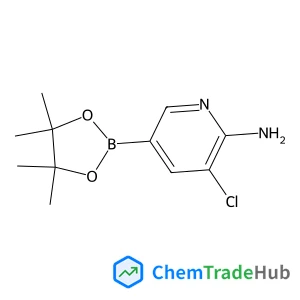
3-Chloro-5-(4,4,5,5-tetramethyl-1,3,2-dioxaborolan-2-yl)-2-pyridinamine
CAS号:
1032758-99-8
分子式:
C11H16BClN2O2
推荐供应商




免责声明
本页面提供的学术期刊信息仅供参考和研究使用。我们与任何期刊出版商均无关联,也不处理投稿事宜。如有投稿相关咨询,请直接联系相关期刊出版商。
如发现页面信息有误,请发送邮件至 support@chemtradehub.com 联系我们。我们将及时核实并处理您的问题。