


![2,6-Bis({(2R)-2-[hydroxy(diphenyl)methyl]-1-pyrrolidinyl}methyl)-4-methylphenol structure](https://cnstatic.chemtradehub.com/structs/877/877395-58-9-70bf.webp "2,6-Bis({(2R)-2-[hydroxy(diphenyl)methyl]-1-pyrrolidinyl}methyl)-4-methylphenol structure")
Commercially available palladium salts as practical and green single-component catalysts in the coordination polymerization of 1-chloro-2-phenylacetylenes in air
文献信息
发布日期
2022-06-27
DOI
10.1039/D2PY00490A
影响因子
5.582
作者
Jupeng Chen, Xiaolin Wu, Shaowen Zhang, Xiangqian Yan, Xiaolu Wu, Qingbin Cao, Huan Xu, Xiaofang Li
查看原文
摘要
Commercially available palladium salts (1–4) (1: PdCl2; 2: PdCl2(CH3CN)2; 3: PdCl2(C6H5CN)2; and 4: Pd(OAc)2) served as low-cost, stable, green, broad-spectrum, and single-component catalysts with low sensitivity toward functional groups and solvents during the coordination polymerization of various 1-chloro-2-phenylacetylenes, Cl–CC–C6H4R (a–j), in air without a co-catalyst, providing a new metal catalyst design concept for the coordination polymerization of disubstituted alkynes.
期刊推荐
Organic Process Research & Development
Russian Journal of Applied Chemistry

Journal of Peptide Science

Acta Materialia

Chemical Communications
Current Opinion in Colloid & Interface Science
Russian Journal of Bioorganic Chemistry
Nature Medicine
Journal of Saudi Chemical Society

Current Opinion in Solid State & Materials Science
相关文献
Carbon-contacted single molecule electrical junctions
Cezhou Zhao, Chun Zhao, Weitao Su, Yannick J. Dappe, Richard J. Nichols
2018-06-21
Paper
DOI: 10.1039/C8CP02877J
Insight into vibrational circular dichroism of proteins by density functional modeling
Jiří Kessler, Valery Andrushchenko, Josef Kapitán, Petr Bouř
2018-01-22
Paper
DOI: 10.1039/C7CP08016F
Kinetics of autoignition: a simple intuitive interpretation and its relation to the Livengood–Wu integral
2018-01-17
Paper
DOI: 10.1039/C7CP07736J
Hydrogen detachment driven by a repulsive 1πσ* state – an electron localization function study of 3-amino-1,2,4-triazole
Andrzej Bil, Zdzisław Latajka, Malgorzata Biczysko
2018-01-16
Paper
DOI: 10.1039/C7CP06744E
Revisiting absorption and electronic circular dichroism spectra of cholesterol in solution: a joint experimental and theoretical study
Andrea Bonvicini, Laure Guilhaudis, Vincent Tognetti, Didier Desmaële, Nathalie Sauvonnet, Hassan Oulyadi, Laurent Joubert
2018-02-06
Paper
DOI: 10.1039/C7CP07713K
Ab initio kinetic Monte Carlo simulation of seeded emulsion polymerizations of styrene
Marco Drache, Katrin Brandl, Rebecca Reinhardt, Sabine Beuermann
2018-01-31
Paper
DOI: 10.1039/C7CP07768H
Understanding water interactions with organic surfaces: environmental molecular beam and molecular dynamics studies of the water–butanol system
Sofia M. Johansson, Xiangrui Kong, Erik S. Thomson, Stéphane Briquez, Céline Toubin, Jan B. C. Pettersson
2018-12-20
Paper
DOI: 10.1039/C8CP04151B
Non-linear and non-local behaviour in spontaneously electrical solids
M. Roman, S. Taj, M. Gutowski, M. R. S. McCoustra, A. C. Dunn, Z. G. Keolopile, A. Rosu-Finsen, A. M. Cassidy, D. Field
2018-01-26
Paper
DOI: 10.1039/C7CP08489G
Structural definition of the BIL and DL: a new universal methodology to rationalize non-linear χ(2)(ω) SFG signals at charged interfaces, including χ(3)(ω) contributions
Simone Pezzotti, Daria Ruth Galimberti, Y. Ron Shen, Marie-Pierre Gaigeot
2018-01-23
Paper
DOI: 10.1039/C7CP06110B
The excess electron at polyethylene interfaces
Fernan Saiz, David Cubero, Nick Quirke
2018-07-27
Paper
DOI: 10.1039/C8CP01330F
您可能还喜欢
化合物问答
3 - (二氟甲基)-1 -氟苯(CAS号:26029-52-7)适用哪些法规指南?
3 - (二氟甲基)-1 -氟苯需遵循联合国全球化学品统一分类和标签制度(GHS),包括急性毒性、皮肤腐蚀/刺激、严重眼损伤/眼刺激等分类。同时,该化合物还需符...
26029-52-71-(Difluoromethyl)-3...
化合物问答
3,5-二甲基苯胺(CAS号:108-69-0)通常如何合成?
3,5-二甲基苯胺通常通过乙苯的氨解反应合成。反应中使用硫酸作为催化剂,反应温度为120-130°C。乙苯在硫酸存在下与氨反应,生成3,5-二甲基苯胺和苯胺副产...
108-69-03,5-Dimethylaniline
化合物问答
3-甲基异噻唑-5-胺(CAS号:24340-76-9)安全吗?
3-甲基异噻唑-5-胺在适当使用和储存条件下是相对安全的,但在操作时应注意防护措施。应避免吸入粉尘,避免与皮肤和眼睛直接接触。在操作过程中,应穿戴适当的防护装备...
24340-76-93-Methyl-1,2-thiazol...
化合物问答
3-(1,3-Thiazol-2-yl)-1H-indole(CAS号:135531-86-1)通常如何合成?
3-(1,3-噻唑-2-基)-1H-吲哚通常通过多步合成方法制备。首先,由噻唑-2-基溴化物和吲哚进行偶联反应,得到中间体。然后,通过还原反应将中间体转化为所需...
135531-86-13-(1,3-Thiazol-2-yl)...
化合物问答
4-溴-2-氟苯甲基氯(CAS号:85510-82-3)的主要用途是什么?
4-溴-2-氟苯甲基氯主要用于有机合成中间体,特别是在医药、农药和染料等领域。作为一种具有特定结构的化合物,它在合成复杂有机分子时扮演重要角色。
85510-82-34-Bromo-1-(chloromet...
化合物问答
处理Fmoc-β-(3-噻吩基)-D-Ala-OH(CAS号:220497-90-5)时应注意哪些实验室安全事项?
处理Fmoc-β-(3-噻吩基)-D-Ala-OH时,应佩戴防护手套、护目镜和实验服。操作应在通风橱内进行。如发生泄露,应立即用大量水冲洗,并通知实验室管理人员...
220497-90-5N-[(9H-Fluoren-9-ylm...
化合物问答
氮化硅(CAS号:12033-89-5)通常如何合成?
氮化硅通常通过氮化硅的直接反应合成,即在高温下将四氯化硅与氨气反应。具体步骤是将四氯化硅和氨气混合并加热至1300-1700℃,在该条件下,四氯化硅与氨气反应生...
12033-89-5Trisilicon tetranitr...
化合物问答
Cetirizine EP Impurity B DiHCl(CAS号:1000690-91-4)通常如何合成?
Cetirizine EP Impurity B DiHCl通常通过一锅法合成,首先将4-氯苯基-苯甲基氯甲酸酯与1-哌嗪乙酸反应,生成相应的酸,然后与盐酸反应...
1000690-91-4{4-[(4-Chlorophenyl)...
化合物问答
如何储存1-哌啶-4-基丁-1-酮(CAS号:3509-15-7)?
1-哌啶-4-基丁-1-酮应储存在阴凉、干燥的地方,避免阳光直射。存储容器应密封,并确保通风良好。建议储存温度不超过25℃,湿度保持在相对较低的水平。
3509-15-71-Piperidin-4-ylbuta...
化合物问答
如何处理含有VORUCICLIB(CAS号:1000023-04-0)的废料?
含有VORUCICLIB的废料应进行专业的收集和处理,包括使用适当的容器进行隔离,避免与其他化学品接触。处理方法通常包括化学中和、沉淀反应或吸附过程,随后进行焚...
1000023-04-02-[2-Chloro-4-(trifl...
来源期刊
Polymer Chemistry

CiteScore:
8.6
自引率:
7.3%
年发文量:
457
Polymer Chemistry welcomes submissions in all areas of polymer science that have a strong focus on macromolecular chemistry. Manuscripts may cover a broad range of fields, yet no direct application focus is required.
推荐化合物
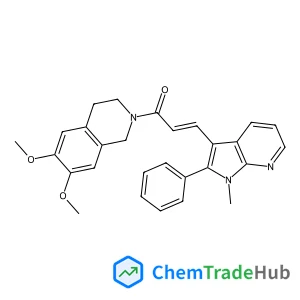
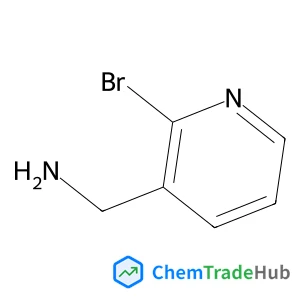
![Pyrazolo[1,5-a]pyridine-3-carbothioamide structure](https://cnstatic.chemtradehub.com/structs/885/885275-44-5-aae0.webp "Pyrazolo[1,5-a]pyridine-3-carbothioamide structure")
推荐供应商




免责声明
本页面提供的学术期刊信息仅供参考和研究使用。我们与任何期刊出版商均无关联,也不处理投稿事宜。如有投稿相关咨询,请直接联系相关期刊出版商。
如发现页面信息有误,请发送邮件至 support@chemtradehub.com 联系我们。我们将及时核实并处理您的问题。