


![tert-Butyl N-[(2-chloropyridin-4-yl)methyl]carbamate structure](https://cnstatic.chemtradehub.com/structs/916/916210-27-0-9f95.webp "tert-Butyl N-[(2-chloropyridin-4-yl)methyl]carbamate structure")
Catalyst-free aziridine-based step-growth polymerization: a facile approach to optically active poly(sulfonamide amine)s and poly(sulfonamide dithiocarbamate)s
文献信息
发布日期
2022-07-07
DOI
10.1039/D2PY00771A
影响因子
5.582
作者
Shibin Chen, Linlin Zhu
查看原文
摘要
A highly facile catalyst-free synthetic methodology for optically active polysulfonamide derivatives with controlled linear architecture has been established based on chiral bis(2-substituted N-sulfonyl aziridine)s. Novel poly(sulfonamide amine)s are prepared in good yields (65–99%) by the step-growth polymerization of bis(aziridine) and diamine. A one-pot, two-step protocol for the synthesis of poly(sulfonamide dithiocarbamate)s has been developed by using the in situ generated bis(dialkyldithiocarbamate), from diamine and carbon disulfide, as the nucleophile to react with bis(aziridine). With appropriate solvents used in this approach, the branches or cross-linkages derived from the homo-polymerization of aziridines are avoided. The synthesized polysulfonamides exhibit excellent thermal properties with decomposition temperature at 5% weight loss (Td,5%) up to 314 °C, and glass transition temperature (Tg) ranging from 49.9 to 137.5 °C. The poly(sulfonamide amine)s bearing tertiary amino groups demonstrate almost complete killing of Staphylococcus aureus (Gram-positive) and Escherichia coli (Gram-negative). It is anticipated that this aziridine-based step-growth polymerization approach will promote aziridine-related polymer chemistry and benefit the exploration of potential applications of aziridine-derived polymeric materials.
期刊推荐

Chemical Communications

Journal of Saudi Chemical Society

Chemistry Education Research and Practice

Current Opinion in Colloid & Interface Science

Russian Journal of General Chemistry

New Journal of Chemistry
Russian Journal of Coordination Chemistry
Organic Process Research & Development
Crystallography Reports

Current Opinion in Solid State & Materials Science
相关文献
Conformational control of electron delocalisation in geometrically-constrained, binuclear ruthenium(ii) bis(2,2′:6′,2″-terpyridine) complexes
Andrew C. Benniston, Anthony Harriman, Peiyi Li, Craig A. Sams
2004-01-30
Communication
DOI: 10.1039/B316620A
Dissociation of dimethyl sulfide on water ice initiated by low-energy (<20 eV) electrons
Hassan Abdoul-Carime, Léon Sanche
2004-01-27
Paper
DOI: 10.1039/B314331G
Modification of carbon electrodes for oxygen reduction and hydrogen peroxide formation: The search for stable and efficient sonoelectrocatalysts
Biljana Šljukić, Craig E. Banks, Slavko Mentus, Richard G. Compton
2004-01-29
Paper
DOI: 10.1039/B316412H
Solvation properties and stability of ribonuclease A in normal and deuterated water studied by dielectric relaxation and differential scanning/pressure perturbation calorimetry
P. Sasisanker, A. Oleinikova, H. Weingärtner, R. Ravindra, R. Winter
2004-03-10
Paper
DOI: 10.1039/B314070A
Comparison of photochemical properties of brookite and anatase TiO2 films
Tatsuo Shibata, Hiroshi Irie, Masahiro Ohmori, Akira Nakajima, Toshiya Watanabe, Kazuhito Hashimoto
2004-02-23
Paper
DOI: 10.1039/B315777F
Hydrogen-bonding and self association investigated in the binary mixture (C6H5CN + CH3OH) via concentration dependent Raman study of the CN stretching mode of benzonitrile (C6H5CN) and ab-initio calculations
P. Raghuvansh(nee Bhriguvansh), Sunil K. Srivastava, Ranjan K. Singh, B. P. Asthana, W. Kiefer
2004-01-06
Paper
DOI: 10.1039/B313255M
Rydberg Matter as the diffuse interstellar band (DIB) carrier in interstellar space: the model and accurate calculations of band centres
2004-03-22
Paper
DOI: 10.1039/B400402G
Kinetics of solid hydrate formation by carbon dioxide: Phase field theory of hydrate nucleation and magnetic resonance imaging
L. Gránásy, G. Tóth, T. Pusztai, G. Tegze
2003-12-08
Paper
DOI: 10.1039/B311202K
Effect of translational energy on the reaction Li + HF(v = 0) → LiF + H
O. Höbel, R. Bobbenkamp, A. Paladini, A. Russo, H. J. Loesch
2004-03-18
Paper
DOI: 10.1039/B400926F
Prediction of inorganic crystal framework structures Part 1: Using a genetic algorithm and an indirect approach to exclusion zones
Scott M. Woodley, Peter D. Battle, Julian D. Gale, C. Richard A. Catlow
2004-03-03
Paper
DOI: 10.1039/B315066F
您可能还喜欢
化合物问答
3 - (二氟甲基)-1 -氟苯(CAS号:26029-52-7)适用哪些法规指南?
3 - (二氟甲基)-1 -氟苯需遵循联合国全球化学品统一分类和标签制度(GHS),包括急性毒性、皮肤腐蚀/刺激、严重眼损伤/眼刺激等分类。同时,该化合物还需符...
26029-52-71-(Difluoromethyl)-3...
化合物问答
3,5-二甲基苯胺(CAS号:108-69-0)通常如何合成?
3,5-二甲基苯胺通常通过乙苯的氨解反应合成。反应中使用硫酸作为催化剂,反应温度为120-130°C。乙苯在硫酸存在下与氨反应,生成3,5-二甲基苯胺和苯胺副产...
108-69-03,5-Dimethylaniline
化合物问答
3-甲基异噻唑-5-胺(CAS号:24340-76-9)安全吗?
3-甲基异噻唑-5-胺在适当使用和储存条件下是相对安全的,但在操作时应注意防护措施。应避免吸入粉尘,避免与皮肤和眼睛直接接触。在操作过程中,应穿戴适当的防护装备...
24340-76-93-Methyl-1,2-thiazol...
化合物问答
3-(1,3-Thiazol-2-yl)-1H-indole(CAS号:135531-86-1)通常如何合成?
3-(1,3-噻唑-2-基)-1H-吲哚通常通过多步合成方法制备。首先,由噻唑-2-基溴化物和吲哚进行偶联反应,得到中间体。然后,通过还原反应将中间体转化为所需...
135531-86-13-(1,3-Thiazol-2-yl)...
化合物问答
4-溴-2-氟苯甲基氯(CAS号:85510-82-3)的主要用途是什么?
4-溴-2-氟苯甲基氯主要用于有机合成中间体,特别是在医药、农药和染料等领域。作为一种具有特定结构的化合物,它在合成复杂有机分子时扮演重要角色。
85510-82-34-Bromo-1-(chloromet...
化合物问答
处理Fmoc-β-(3-噻吩基)-D-Ala-OH(CAS号:220497-90-5)时应注意哪些实验室安全事项?
处理Fmoc-β-(3-噻吩基)-D-Ala-OH时,应佩戴防护手套、护目镜和实验服。操作应在通风橱内进行。如发生泄露,应立即用大量水冲洗,并通知实验室管理人员...
220497-90-5N-[(9H-Fluoren-9-ylm...
化合物问答
氮化硅(CAS号:12033-89-5)通常如何合成?
氮化硅通常通过氮化硅的直接反应合成,即在高温下将四氯化硅与氨气反应。具体步骤是将四氯化硅和氨气混合并加热至1300-1700℃,在该条件下,四氯化硅与氨气反应生...
12033-89-5Trisilicon tetranitr...
化合物问答
Cetirizine EP Impurity B DiHCl(CAS号:1000690-91-4)通常如何合成?
Cetirizine EP Impurity B DiHCl通常通过一锅法合成,首先将4-氯苯基-苯甲基氯甲酸酯与1-哌嗪乙酸反应,生成相应的酸,然后与盐酸反应...
1000690-91-4{4-[(4-Chlorophenyl)...
化合物问答
如何储存1-哌啶-4-基丁-1-酮(CAS号:3509-15-7)?
1-哌啶-4-基丁-1-酮应储存在阴凉、干燥的地方,避免阳光直射。存储容器应密封,并确保通风良好。建议储存温度不超过25℃,湿度保持在相对较低的水平。
3509-15-71-Piperidin-4-ylbuta...
化合物问答
如何处理含有VORUCICLIB(CAS号:1000023-04-0)的废料?
含有VORUCICLIB的废料应进行专业的收集和处理,包括使用适当的容器进行隔离,避免与其他化学品接触。处理方法通常包括化学中和、沉淀反应或吸附过程,随后进行焚...
1000023-04-02-[2-Chloro-4-(trifl...
来源期刊
Polymer Chemistry

CiteScore:
8.6
自引率:
7.3%
年发文量:
457
Polymer Chemistry welcomes submissions in all areas of polymer science that have a strong focus on macromolecular chemistry. Manuscripts may cover a broad range of fields, yet no direct application focus is required.
推荐化合物
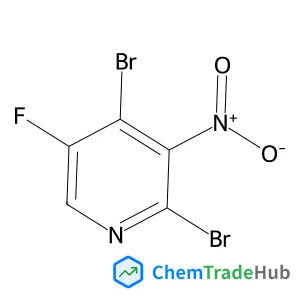
![6-Benzyl-4,5,6,7-tetrahydro-1H-pyrazolo[3,4-c]pyridin-3(2H)-one structure](https://cnstatic.chemtradehub.com/structs/909/909187-64-0-f54f.webp "6-Benzyl-4,5,6,7-tetrahydro-1H-pyrazolo[3,4-c]pyridin-3(2H)-one structure")
![4-Chloro-3-(trifluoromethyl)-1H-pyrrolo[2,3-b]pyridine structure](https://cnstatic.chemtradehub.com/structs/869/869335-75-1-a9d0.webp "4-Chloro-3-(trifluoromethyl)-1H-pyrrolo[2,3-b]pyridine structure")
推荐供应商






免责声明
本页面提供的学术期刊信息仅供参考和研究使用。我们与任何期刊出版商均无关联,也不处理投稿事宜。如有投稿相关咨询,请直接联系相关期刊出版商。
如发现页面信息有误,请发送邮件至 support@chemtradehub.com 联系我们。我们将及时核实并处理您的问题。