


![trans-2-{[(Tert-butoxy)carbonyl]amino}cyclobutane-1-carboxylic acid structure](https://cnstatic.chemtradehub.com/structs/951/951173-25-4-27cd.webp "trans-2-{[(Tert-butoxy)carbonyl]amino}cyclobutane-1-carboxylic acid structure")
Will the circle be unbroken? The climate mitigation and sustainable development given by a circular economy of carbon, nitrogen, phosphorus and water
文献信息
发布日期
2023-04-28
DOI
10.1039/D2SU00121G
影响因子
0
作者
Patrick McKenna, Fiona Zakaria, Barbara Evans, Steven Banwart
查看原文
摘要
Closing the loop in the flow of C, nutrients and water between agriculture, the human diet and sanitation services offers benefits for humanity across multiple platforms of public health, food security and climate mitigation. This study assesses these benefits by describing the hypothetical scenario of a global, ‘fully functional’ circular economy, in which 100% of C, N and P were recovered from human excreta and returned to agricultural soil. Crop nutrient demand is calculated and compared with that which could be recovered, and greenhouse (GHG) emissions from fertilizer production, fertilizer application and sanitation services are presented, as are freshwater availability and crop irrigation requirements. These are considered to analyse the broader effects of this circular economy that is driven by dietary nutrition demand on climate change, the provision of sanitation services and crop irrigation, in 2022 and with projections to 2030 and 2050. We find the capacity of the circular economy to deliver crop nutrients and mitigate GHG emissions varies by region. Some regions benefit from supplementing conventional mineral fertilizers with excreta-derived fertilizers, others from reducing GHG emissions from sanitation services through improved resource recovery rates. A hypothetical, fully functional circular economy that recovers all excreta nutrient C, N and P would reduce global GHG emissions from N and P mineral fertilizer production and application by 140 Tg CO2 equivalents (CO2 e) per year in 2022 (∼12% of total emissions from mineral fertilizer production and application) and provide a maximum of 104 Tg C per year for sequestration in global cropland (∼12% of estimated annual soil C sequestration potential). A portion of this sequestered C will return to the atmosphere via soil respiration, however, with co-benefits to other soil functions such as crop nutrient fertility. The maximum potential reduction in GHG emissions from sanitation services through these measures would bring reductions of 445 Tg CO2 e per year in 2022, rising to 562 Tg CO2 e in 2050. Our results provide evidence to guide specific regional policy on reducing GHG emissions, offsetting mineral fertilizer use and optimizing municipal water use using the circular economy.
期刊推荐
Journal of Physics and Chemistry of Solids

Nature

Science

European Journal of Wood and Wood Products
Proceedings of the National Academy of Sciences of the United States of America
Planta Medica
Molecular Pharmacology

Journal of Heterocyclic Chemistry
Journal of Organometallic Chemistry
Russian Chemical Reviews
相关文献
Influence of high energy electron irradiation on the network structure of gelatin hydrogels as investigated by small-angle X-ray scattering (SAXS)
Paolo Tempesti, Emiliano Fratini
2017-04-26
Paper
DOI: 10.1039/C7CP00195A
In silico analysis of interaction pattern switching in ligand⋯receptor binding in Golgi α-mannosidase II induced by the protonated states of inhibitors
J. Kóňa, H. Tokiwa
2017-05-04
Paper
DOI: 10.1039/C7CP01200D
How is charge transport different in ionic liquids? The effect of high pressure
P. Goodrich, J. Jacquemin
2017-04-26
Paper
DOI: 10.1039/C6CP08592J
Effects of microsolvation on a SN2 reaction: indirect atomistic dynamics and weakened suppression of reactivity
Li Yang, Xu Liu, Jiaxu Zhang, Jing Xie
2017-03-15
Paper
DOI: 10.1039/C7CP00294G
Surface chemistry of methanol on different ZnO surfaces studied by vibrational spectroscopy
Yuemin Wang
2017-04-18
Paper
DOI: 10.1039/C7CP01715D
Operando X-ray spectroscopic observations of modulations of local atomic and electronic structures of color switching smart film
Han-Wei Chang, Jeng-Lung Chen, Chi-Liang Chen, Da-Hau Wei, Jin-Ming Chen, Wu-Ching Chou, Chung-Li Dong
2017-04-19
Paper
DOI: 10.1039/C7CP01116D
Critical behavior in tetragonal antiperovskite GeNFe3 with a frustrated ferromagnetic state
B. S. Wang, L. Zhang, S. Lin, J. C. Lin, P. Tong, W. H. Song
2017-05-02
Paper
DOI: 10.1039/C6CP08020K
Sodium–carboxylate contact ion pair formation induces stabilization of palmitic acid monolayers at high pH
Ellen M. Adams, Bethany A. Wellen, Raphael Thiraux, Sandeep K. Reddy, Andrew S. Vidalis, Francesco Paesani, Heather C. Allen
2017-03-28
Paper
DOI: 10.1039/C7CP00167C
Anisotropic ion diffusion in α-Cr2O3: an atomistic simulation study
Penghui Cao, Daniel Wells, Michael Philip Short
2017-02-27
Paper
DOI: 10.1039/C7CP00838D
The quasi-unchanged gas-phase molecular structures of the atmospheric aerosol precursor β-pinene and its oxidation product nopinone
E. M. Neeman, J.-R. Avilés-Moreno, T. R. Huet
2017-04-27
Paper
DOI: 10.1039/C7CP01298E
您可能还喜欢
化合物问答
N-2,2-丙烯基-2-丙烯酰胺(CAS号:2555-13-7)通常如何合成?
N-2,2-丙烯基-2-丙烯酰胺通常通过丙烯酰胺与丙烯基卤化物的缩合反应合成。该反应通常在温和的条件下进行,使用适量的碱如吡啶作为催化剂。反应的选择性良好,产率...
2555-13-7N-Allylacrylamide
化合物问答
什么是1,2-二碘四氟代乙烷(CAS号:354-65-4)?
1,2-二碘四氟代乙烷是一种有机化合物,化学式为C2F4I2,CAS号为354-65-4。它是一种无色透明液体,具有特殊的化学性质和物理性质,包括高沸点、低挥发...
354-65-41,1,2,2-Tetrafluoro-...
化合物问答
3-溴-1H-吡咯[3,2-c]吡啶-4-碳腈(CAS号:1000341-71-8)适用哪些法规指南?
根据GHS(全球化学品统一分类和标签制度),3-溴-1H-吡咯[3,2-c]吡啶-4-碳腈被归类为第2类易燃液体。在欧盟,该化合物需要符合REACH法规的要求,...
1000341-71-83-Bromo-1H-pyrrolo[3...
化合物问答
1-氯甲基萘磺酸(CAS号:87491-79-0)安全吗?
1-氯甲基萘磺酸在使用时需要谨慎,因为它具有一定的刺激性和腐蚀性。操作时应佩戴适当的防护装备,如防化服、手套、护目镜等,避免直接接触皮肤和吸入其蒸汽。
87491-79-01-((Chloromethyl)sul...
化合物问答
二氯(二环戊二烯)铂(CAS号:12083-92-0)的主要用途是什么?
该化合物主要用于催化剂领域,特别是在有机合成中的催化氧化反应以及作为某些药物合成的中间体。此外,它还被研究用于纳米材料的制备。
12083-92-0(1S,7R)-Tricyclo[5.2...
化合物问答
3-溴-7-氯噻吩并[3,2-b]吡啶-6-甲腈(CAS号:798574-82-0)安全吗?
3-溴-7-氯噻吩并[3,2-b]吡啶-6-甲腈在处理时需要谨慎,因其含有溴和氯等强卤素,可能具有一定的刺激性和腐蚀性。使用时应佩戴适当的个人防护装备,避免皮肤...
798574-82-03-Bromo-7-chlorothie...
化合物问答
(R)-1-((R)-2-(2’-二环己基膦苯基)三戊铁基]乙基(双-3,5-三氟甲基苯基)膦(CAS号:494227-32-6)的主要用途是什么?
该化合物主要用于有机合成领域,特别是作为催化剂或配体,在有机合成反应中发挥重要作用。此外,它还可能应用于催化加氢反应、偶联反应等。
494227-32-6Walphos SL-W008-1
化合物问答
3-[6-(Diphenylphosphoryl)-2-naphthyl]-1,10-phenanthroline(CAS号:1480371-38-7)安全吗?
3-[6-(Diphenylphosphoryl)-2-naphthyl]-1,10-phenanthroline在正常使用条件下相对安全,但在操作时应穿戴适当...
1480371-38-73-[6-(Diphenylphosph...
化合物问答
在合成中是否有ETHYL 2-(4-(4,4,5,5-TETRAMETHYL-1,3,2-DIOXABOROLAN-2-YL)CYCLOHEX-3-ENYL)ACETATE(CAS号:1166829-70-4)的替代品?
可以考虑使用类似结构的化合物作为替代品,如2-(4-环戊基环己烯基)乙酸酯,这种化合物在结构上相似,可能在某些合成路径中作为替代品。
1166829-70-4Ethyl [4-(4,4,5,5-te...
化合物问答
如何处理含有3-(3-氨基丙基)丙酮缩甘油(CAS号:131606-42-3)的废料?
处理含有3-(3-氨基丙基)丙酮缩甘油的废料时,首先应确保遵守当地的环保法规。对于危险废物,应进行分类收集,然后送至专业的废物处理设施进行焚烧或安全填埋。在处理...
131606-42-33-[(2,2-Dimethyl-1,3...
来源期刊
推荐化合物
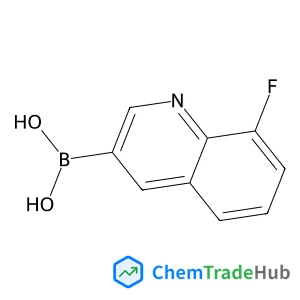
![3-[(3R,4R)-3-[(6-aminopyrimidin-4-yl)-methyl-amino]-4-methyl-1-piperidyl]-3-oxo-propanenitrile structure](https://cnstatic.chemtradehub.com/structs/164/1640971-60-3-83a4.webp "3-[(3R,4R)-3-[(6-aminopyrimidin-4-yl)-methyl-amino]-4-methyl-1-piperidyl]-3-oxo-propanenitrile structure")

推荐供应商




免责声明
本页面提供的学术期刊信息仅供参考和研究使用。我们与任何期刊出版商均无关联,也不处理投稿事宜。如有投稿相关咨询,请直接联系相关期刊出版商。
如发现页面信息有误,请发送邮件至 support@chemtradehub.com 联系我们。我们将及时核实并处理您的问题。