



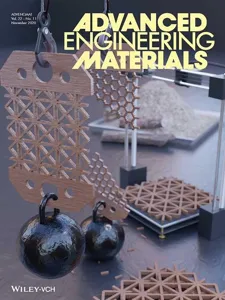
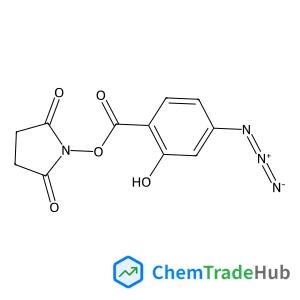
Large vibrationally induced parity violation effects in CHDBrI+
文献信息
发布日期
2023-11-15
DOI
10.1039/D3CC03787H
影响因子
6.222
作者
Eduardus, Yuval Shagam, Arie Landau, Shirin Faraji, Peter Schwerdtfeger, Anastasia Borschevsky
查看原文
摘要
The isotopically chiral molecular ion CHDBrI+ is identified as an exceptionally promising candidate for the detection of parity violation in vibrational transitions. The largest predicted parity-violating frequency shift reaches 1.8 Hz for the hydrogen wagging mode which has a sub-Hz natural line width and its vibrational frequency auspiciously lies in the available laser range. In stark contrast to this result, the parent neutral molecule is two orders of magnitude less sensitive to parity violation. The origin of this effect is analyzed and explained. Precision vibrational spectroscopy of CHDBrI+ is feasible as it is amenable to preparation at internally low temperatures and resistant to predissociation, promoting long interrogation times (Landau et al., J. Chem. Phys., 2023, 159, 114307). The intersection of these properties in this molecular ion places the first observation of parity violation in chiral molecules within reach.
相关文献
Tuning photocatalytic performance of the near-infrared-driven photocatalyst Cu2(OH)PO4 based on effective mass and dipole moment
Zhujie Li, Ying Dai, Xiangchao Ma, Yingtao Zhu, Baibiao Huang
2013-11-11
Paper
DOI: 10.1039/C3CP53381F
Electron impact induced anion production in acetylene
Ewelina Szymańska, Iztok Čadež, E. Krishnakumar, Nigel J. Mason
2013-11-27
Paper
DOI: 10.1039/C3CP54459A
The effect of water on the structural, electronic and photocatalytic properties of graphitic carbon nitride
Li-Min Liu, Shi-Jin Zhao
2013-12-16
Paper
DOI: 10.1039/C3CP54333A
Diversification of EPR signatures in site directed spin labeling using a β-phosphorylated nitroxide
Nolwenn Le Breton, Marlène Martinho, Kuanysh Kabytaev, Jérémie Topin, Elisabetta Mileo, David Blocquel, Johnny Habchi, Sonia Longhi, Antal Rockenbauer, Jérôme Golebiowski, Bruno Guigliarelli, Sylvain R. A. Marque, Valérie Belle
2014-01-02
Paper
DOI: 10.1039/C3CP54816C
The unimolecular chemistry of [Zn(amino acid)2-H]+ in the gas phase: H2 elimination when the amino acid is a secondary amine
Ameneh Gholami, Travis D. Fridgen
2014-01-06
Paper
DOI: 10.1039/C3CP53716A
Effects of process parameters on the defects in graphene oxide–polyaniline composites investigated by positron annihilation spectroscopy
Utpal Rana, P. M. G. Nambissan, Sudip Malik, Kuntal Chakrabarti
2013-12-16
Paper
DOI: 10.1039/C3CP54032D
Mapping the structure of amyloid nucleation precursors by protein engineering kinetic analysis
David Ruzafa, Lorena Varela, Ana I. Azuaga, Francisco Conejero-Lara, Bertrand Morel
2013-12-06
Paper
DOI: 10.1039/C3CP54383H
The formation of carbamate ions in interstellar ice analogues
Yamilet Rodríguez-Lazcano, Belén Maté, Víctor J. Herrero, Rafael Escribano, Óscar Gálvez
2013-10-15
Paper
DOI: 10.1039/C3CP53153H
Conformer-selective photoelectron spectroscopy of α-lactalbumin derived multianions in the gas phase
Matthias Vonderach, Marc-Oliver Winghart, Luke MacAleese, Fabien Chirot, Rodolphe Antoine, Philippe Dugourd, Patrick Weis
2013-12-12
Paper
DOI: 10.1039/C3CP54596B
Direct evidence of hydrogen-atom tunneling dynamics in the excited state hydrogen transfer (ESHT) reaction of phenol–ammonia clusters
J. D. Rodríguez, M. G. González, L. Rubio-Lago, L. Bañares
2013-12-13
Paper
DOI: 10.1039/C3CP54362E
您可能还喜欢
化合物问答
(5-氨基吡唑-3-基)乙酸(CAS号:174891-10-2)的物理化学性质是什么?
(5-氨基吡唑-3-基)乙酸是一种无色至白色固体,分子量为174.15 g/mol。它在水中具有较好的溶解性,在有机溶剂中的溶解度较低。该化合物具有较好的反应活...
174891-10-2(3-Amino-1H-pyrazol-...
化合物问答
3-氟-4,5-二氯苯胺(CAS号:35754-38-2)适用哪些法规指南?
3-氟-4,5-二氯苯胺受到多项法规指南的约束,包括但不限于GHS(全球化学品统一分类和标签制度)的危险分类标准、欧盟的REACH法规(注册、评估、授权和限制)...
35754-38-23,4-Dichloro-5-fluor...
化合物问答
什么是(R)-(+)-2,2',6,6'-四甲氧基-4,4'-联(二(3,5-二甲苯基基)膦基)-3,3'-二联吡啶(CAS号:442905-33-1)?
这是一种有机化合物,化学名为(R)-(+)-2,2',6,6'-四甲氧基-4,4'-联(二(3,5-二甲苯基基)膦基)-3,3'-二联吡啶,CAS号为44290...
442905-33-14,4'-Bis[bis(3,5-dim...
化合物问答
1-氨基-2-氰基萘(CAS号:3100-67-2)应用于哪些行业?
1-氨基-2-氰基萘在医药、聚合物、传感器和半导体等行业中有应用。在医药领域,它可用作中间体合成某些药物。在聚合物行业,它可以用于制备具有特定性能的聚合物。此外...
3100-67-21-Amino-2-naphthonit...
化合物问答
如何处理含有1-溴-4-(异丙氧基甲基)苯(CAS号:98446-84-5)的废料?
处理含1-溴-4-(异丙氧基甲基)苯的废料时,首先应确保废液收集在防渗漏的容器中,避免泄露。然后,可以考虑采用化学降解法或物理吸附法进行处理。在特定条件下,可通...
98446-84-51-Bromo-4-(isopropox...
化合物问答
6-Chloro-8-(trifluoromethyl)chroman-4-one(CAS号:1344889-75-3)的主要用途是什么?
6-氯-8-三氟甲基-2,3-二氢-4H-色喃-4-酮主要用于有机合成中的中间体,也可作为研究试剂使用。
1344889-75-36-Chloro-8-(trifluor...
化合物问答
7-乙氧基-2-萘酚(CAS号:57944-44-2)通常如何合成?
7-乙氧基-2-萘酚通常通过N-乙氧基化反应合成,首先将2-萘酚与乙醇钠在乙醇中反应生成7-乙氧基-2-萘酚钠盐,再通过酸化进一步得到7-乙氧基-2-萘酚。该合...
57944-44-27-Ethoxy-2-naphthol
化合物问答
4-(1,1-二氧硫代吗啉)丁醇(CAS号:59801-41-1)适用哪些法规指南?
该化合物需遵循一系列的法规指南,包括但不限于GHS全球统一分类和标签制度,其分类可能包括易燃液体和可能危害水生环境。在欧洲,还需遵循REACH法规,确保物质和混...
59801-41-14-(4-Hydroxybutyl)th...
化合物问答
4-甲氧基苄基叠氮甲酸酯(CAS号:25474-85-5)的物理化学性质是什么?
4-甲氧基苄基叠氮甲酸酯是一种无色液体,具有一定的挥发性。其分子量为198.16,熔点为-69°C,沸点为105°C。该化合物在水中溶解度较低,在有机溶剂如乙醇...
25474-85-54-Methoxybenzyl carb...
化合物问答
如何处理含有4-氯-2-氟嘧啶(CAS号:51422-00-5)的废料?
含有4-氯-2-氟嘧啶的废料应按照危险废物处理。首先,应收集并分类这些废料,避免与其他废物混合。然后,可以采用焚烧处理或者交由专业机构进行处置。在处理过程中,需...
51422-00-54-Chloro-2-fluoropyr...
来源期刊
Chemical Communications

CiteScore:
8.6
自引率:
4.7%
年发文量:
2458
ChemComm publishes urgent research which is of outstanding significance and interest to experts in the field, while also appealing to the journal’s broad chemistry readership. Our communication format is ideally suited to short, urgent studies that are of such importance that they require accelerated publication. Our scope covers all topics in chemistry, and research at the interface of chemistry and other disciplines (such as materials science, nanoscience, physics, engineering and biology) where there is a significant novelty in the chemistry aspects. Major topic areas covered include: Analytical Chemistry Catalysis Chemical Biology and medicinal chemistry Computational Chemistry and Machine Learning Energy and sustainable chemistry Environmental Chemistry Green Chemistry Inorganic Chemistry Materials Chemistry Nanoscience Organic Chemistry Physical Chemistry Polymer Chemistry Supramolecular Chemistry
推荐化合物
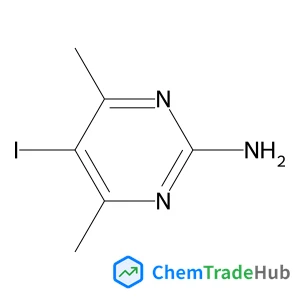
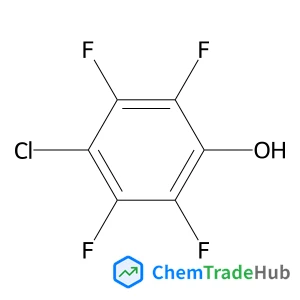
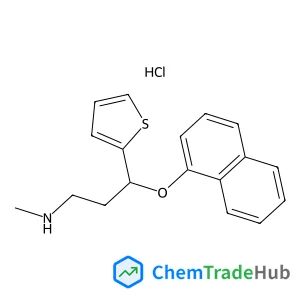
N-Methyl-3-(1-naphthyloxy)-3-(2-thienyl)-1-propanamine hydrochloride (1:1)
CAS号:
1188266-11-6
分子式:
C18H20ClNOS
推荐供应商





免责声明
本页面提供的学术期刊信息仅供参考和研究使用。我们与任何期刊出版商均无关联,也不处理投稿事宜。如有投稿相关咨询,请直接联系相关期刊出版商。
如发现页面信息有误,请发送邮件至 support@chemtradehub.com 联系我们。我们将及时核实并处理您的问题。