


The formation of carbamate ions in interstellar ice analogues
文献信息
发布日期
2013-10-15
DOI
10.1039/C3CP53153H
影响因子
3.676
作者
Yamilet Rodríguez-Lazcano, Belén Maté, Víctor J. Herrero, Rafael Escribano, Óscar Gálvez
查看原文
摘要
Carbon dioxide and ammonia are two of the most abundant species in astrophysical media, where they can react in the solid phase under certain conditions. This contribution presents a study of this reaction both in the presence of water and for anhydrous samples. It is shown that after deposition at 15 K, the reaction can start by warming the deposit, and the process continues on up to a temperature of 220 K. Reaction products are studied using infrared spectroscopy and mass spectrometry. For anhydrous samples, a 2 : 1 stoichiometry mixture of NH3 : CO2 gives the highest yield of products. The reaction is favored when a small amount of water is present, which enables ammonia and carbon dioxide molecules to collide within the pores and channels of the amorphous water solid. Large concentration of water, on the other hand, hampers such collisions. The main reaction product is found to be ammonium carbamate, but also carbamic acid is formed, and, in the presence of water, ammonium bicarbonate is produced as well. Theoretical calculations are carried out to provide the basis for the assignment of the spectra. Some of the experiments presented in this contribution consist of the generation of a compact water ice matrix where the carbamate and ammonium ions are embedded. If such a system was found in astrophysical media, it is shown that the ammonium ion could not be detected, whereas two infrared features of the carbamate ion in the 1040 to 1115 cm−1 (9 to 9.6 μm) region could enable the observation of this species.
期刊推荐

Main Group Chemistry
NDT & E International
Critical Reviews in Solid State and Materials Sciences

Acta Metallurgica Sinica-English Letters
Cellulose

Journal of Chemical Sciences

Bioorganic & Medicinal Chemistry Letters
Polycyclic Aromatic Compounds
Heteroatom Chemistry
Journal of Asian Natural Products Research
相关文献
Exploring the relationship between cocrystal stability and symmetry: is Wallach's rule applicable to multi-component solids?
Tomislav Friščić, László Fábián, Jonathan C. Burley, David G. Reid, Melinda J. Duer, William Jones
2008-01-30
Communication
DOI: 10.1039/B717532A
Ni–nitrilotriacetic acid-modified quantum dots as a site-specific labeling agent of histidine-tagged proteins in live cells
Junwon Kim, Hye-Young Park, Jaeseung Kim, Jiyoung Ryu, Do Yoon Kwon, Regis Grailhe, Rita Song
2008-02-19
Communication
DOI: 10.1039/B719434J
Unconventional thermodynamically stable cis isomer and trans to cis thermal isomerization in reversibly photoresponsive [0.0](3,3′)-azobenzenophane
Yasuo Norikane, Ryuzi Katoh, Nobuyuki Tamaoki
2008-03-03
Communication
DOI: 10.1039/B718813G
Rapid formation of metal–organic nano-capsules gives new insight into the self-assembly process‡
Nicholas P. Power, John E. Warren, Jerry L. Atwood
2008-02-27
Communication
DOI: 10.1039/B719769A
Chemoenzymatic synthesis of prodigiosin analogues—exploring the substrate specificity of PigC
Suresh R. Chawrai, Neil R. Williamson, George P. C. Salmond, Finian J. Leeper
2008-02-05
Communication
DOI: 10.1039/B719353J
Fluorescence microscopy coupled to electrochemistry: a powerful tool for the controlled electrochemical switch of fluorescent molecules
Fabien Miomandre, Rachel Meallet-Renault, Jean-Jacques Vachon, Robert Bernard Pansu, Pierre Audebert
2008-02-19
Communication
DOI: 10.1039/B718899D
Lewis acid-catalyzed hydrogenation: B(C6F5)3-mediated reduction of imines and nitriles with H2‡
Preston A. Chase, Titel Jurca, Douglas W. Stephan
2008-03-06
Communication
DOI: 10.1039/B718598G
Use of ionic liquids (ILs) for the IL-anion size-dependent formation of Cr, Mo and W nanoparticles from metal carbonyl M(CO)6 precursors
Engelbert Redel, Ralf Thomann, Christoph Janiak
2008-03-14
Communication
DOI: 10.1039/B718055A
Synthesis of iron oxide nanoparticles in a microfluidic device: preliminary results in a coaxial flow millichannel
Ali Abou Hassan, Olivier Sandre, Valérie Cabuil, Patrick Tabeling
2008-02-18
Communication
DOI: 10.1039/B719550H
您可能还喜欢
化合物问答
(5-氨基吡唑-3-基)乙酸(CAS号:174891-10-2)的物理化学性质是什么?
(5-氨基吡唑-3-基)乙酸是一种无色至白色固体,分子量为174.15 g/mol。它在水中具有较好的溶解性,在有机溶剂中的溶解度较低。该化合物具有较好的反应活...
174891-10-2(3-Amino-1H-pyrazol-...
化合物问答
3-氟-4,5-二氯苯胺(CAS号:35754-38-2)适用哪些法规指南?
3-氟-4,5-二氯苯胺受到多项法规指南的约束,包括但不限于GHS(全球化学品统一分类和标签制度)的危险分类标准、欧盟的REACH法规(注册、评估、授权和限制)...
35754-38-23,4-Dichloro-5-fluor...
化合物问答
什么是(R)-(+)-2,2',6,6'-四甲氧基-4,4'-联(二(3,5-二甲苯基基)膦基)-3,3'-二联吡啶(CAS号:442905-33-1)?
这是一种有机化合物,化学名为(R)-(+)-2,2',6,6'-四甲氧基-4,4'-联(二(3,5-二甲苯基基)膦基)-3,3'-二联吡啶,CAS号为44290...
442905-33-14,4'-Bis[bis(3,5-dim...
化合物问答
1-氨基-2-氰基萘(CAS号:3100-67-2)应用于哪些行业?
1-氨基-2-氰基萘在医药、聚合物、传感器和半导体等行业中有应用。在医药领域,它可用作中间体合成某些药物。在聚合物行业,它可以用于制备具有特定性能的聚合物。此外...
3100-67-21-Amino-2-naphthonit...
化合物问答
如何处理含有1-溴-4-(异丙氧基甲基)苯(CAS号:98446-84-5)的废料?
处理含1-溴-4-(异丙氧基甲基)苯的废料时,首先应确保废液收集在防渗漏的容器中,避免泄露。然后,可以考虑采用化学降解法或物理吸附法进行处理。在特定条件下,可通...
98446-84-51-Bromo-4-(isopropox...
化合物问答
6-Chloro-8-(trifluoromethyl)chroman-4-one(CAS号:1344889-75-3)的主要用途是什么?
6-氯-8-三氟甲基-2,3-二氢-4H-色喃-4-酮主要用于有机合成中的中间体,也可作为研究试剂使用。
1344889-75-36-Chloro-8-(trifluor...
化合物问答
7-乙氧基-2-萘酚(CAS号:57944-44-2)通常如何合成?
7-乙氧基-2-萘酚通常通过N-乙氧基化反应合成,首先将2-萘酚与乙醇钠在乙醇中反应生成7-乙氧基-2-萘酚钠盐,再通过酸化进一步得到7-乙氧基-2-萘酚。该合...
57944-44-27-Ethoxy-2-naphthol
化合物问答
4-(1,1-二氧硫代吗啉)丁醇(CAS号:59801-41-1)适用哪些法规指南?
该化合物需遵循一系列的法规指南,包括但不限于GHS全球统一分类和标签制度,其分类可能包括易燃液体和可能危害水生环境。在欧洲,还需遵循REACH法规,确保物质和混...
59801-41-14-(4-Hydroxybutyl)th...
化合物问答
4-甲氧基苄基叠氮甲酸酯(CAS号:25474-85-5)的物理化学性质是什么?
4-甲氧基苄基叠氮甲酸酯是一种无色液体,具有一定的挥发性。其分子量为198.16,熔点为-69°C,沸点为105°C。该化合物在水中溶解度较低,在有机溶剂如乙醇...
25474-85-54-Methoxybenzyl carb...
化合物问答
如何处理含有4-氯-2-氟嘧啶(CAS号:51422-00-5)的废料?
含有4-氯-2-氟嘧啶的废料应按照危险废物处理。首先,应收集并分类这些废料,避免与其他废物混合。然后,可以采用焚烧处理或者交由专业机构进行处置。在处理过程中,需...
51422-00-54-Chloro-2-fluoropyr...
来源期刊
Physical Chemistry Chemical Physics

CiteScore:
5.5
自引率:
10.3%
年发文量:
3036
Physical Chemistry Chemical Physics (PCCP) is an international journal co-owned by 19 physical chemistry and physics societies from around the world. This journal publishes original, cutting-edge research in physical chemistry, chemical physics and biophysical chemistry. To be suitable for publication in PCCP, articles must include significant innovation and/or insight into physical chemistry; this is the most important criterion that reviewers and Editors will judge against when evaluating submissions. The journal has a broad scope and welcomes contributions spanning experiment, theory, computation and data science. Topical coverage includes spectroscopy, dynamics, kinetics, statistical mechanics, thermodynamics, electrochemistry, catalysis, surface science, quantum mechanics, quantum computing and machine learning. Interdisciplinary research areas such as polymers and soft matter, materials, nanoscience, energy, surfaces/interfaces, and biophysical chemistry are welcomed if they demonstrate significant innovation and/or insight into physical chemistry. Joined experimental/theoretical studies are particularly appreciated when complementary and based on up-to-date approaches.
推荐化合物
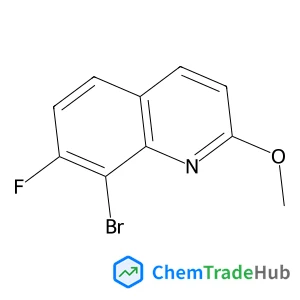
![(2R,6S)-6-[(Benzyloxy)methyl]-4-{[(2-methyl-2-propanyl)oxy]carbonyl}-2-morpholinecarboxylic acid structure](https://cnstatic.chemtradehub.com/structs/109/1093085-91-6-3382.webp "(2R,6S)-6-[(Benzyloxy)methyl]-4-{[(2-methyl-2-propanyl)oxy]carbonyl}-2-morpholinecarboxylic acid structure")
推荐供应商






免责声明
本页面提供的学术期刊信息仅供参考和研究使用。我们与任何期刊出版商均无关联,也不处理投稿事宜。如有投稿相关咨询,请直接联系相关期刊出版商。
如发现页面信息有误,请发送邮件至 support@chemtradehub.com 联系我们。我们将及时核实并处理您的问题。