


Chronological development of functional fluorophores for bio-imaging
文献信息
发布日期
2023-12-01
DOI
10.1039/D3CC04895K
影响因子
6.222
作者
Subrata Munan, Young-Tae Chang, Animesh Samanta
查看原文
摘要
Functional fluorophores represent an emerging research field, distinguished by their diverse applications, especially in sensing and cellular imaging. After the discovery of quinine sulfate and subsequent elucidation of the fluorescence mechanism by Sir George Stokes, research in the field of fluorescence gained momentum. Over the past few decades, advancements in sophisticated instruments, including super-resolution microscopy, have further promoted cellular imaging using traditional fluorophores. These advancements include deciphering sensing mechanisms via photochemical reactions and scrutinizing the applications of fluorescent probes that specifically target organelles. This approach elucidates molecular interactions with biomolecules. Despite the abundance of literature illustrating different classes of probe development, a concise summary of newly developed fluorophores remains inadequate. In this review, we systematically summarize the chronological discovery of traditional fluorophores along with new fluorophores. We briefly discuss traditional fluorophores ranging from visible to near-infrared (NIR) in the context of cellular imaging and in vivo imaging. Furthermore, we explore ten new core fluorophores developed between 2007 and 2022, which exhibit advanced optical properties, providing new insights into bioimaging. We illustrate the utilization of new fluorophores in cellular imaging of biomolecules, such as reactive oxygen species (ROS), reactive nitrogen species (RNS), and proteins and microenvironments, especially pH and viscosity. Few of the fluorescent probes provided new insights into disease progression. Furthermore, we speculate on the potential prospects and significant challenges of existing fluorophores and their potential biomedical research applications. By addressing these aspects, we intend to illuminate the compelling advancements in fluorescent probe development and their potential influence across various fields.
期刊推荐
Acta Metallurgica Sinica-English Letters

Herald of the Russian Academy of Sciences

Critical Reviews in Solid State and Materials Sciences
Atomization and Sprays

Main Group Chemistry

NDT & E International

Journal of the Indian Institute of Science

Topics in Catalysis
Heteroatom Chemistry
Medicinal Chemistry Research
相关文献
Synthesis and biological evaluation of a monocyclic Fc-binding antibody-recruiting molecule for cancer immunotherapy
Koichi Sasaki, Kyohei Muguruma, Rento Osawa, Akane Fukuda, Atsuhiko Taniguchi, Yoshio Hayashi
2021-01-21
Research Article
DOI: 10.1039/D0MD00337A
Amino alcohol acrylonitriles as broad spectrum and tumour selective cytotoxic agents
Jennifer R. Baker, Cecilia C. Russell, Jayne Gilbert, Adam McCluskey, Jennette A. Sakoff
2021-03-09
Research Article
DOI: 10.1039/D1MD00021G
Studies on the affinity of 6-[(n-(cyclo)aminoalkyl)oxy]-4H-chromen-4-ones for sigma 1/2 receptors
Winnie Deuther-Conrad, Daniel Diez-Iriepa, Isabel Iriepa, Francisco López-Muñoz, María Angeles Martínez-Grau, Michael Gütschow, José Marco-Contelles
2021-05-20
Research Article
DOI: 10.1039/D1MD00105A
The role of small molecules in cell and gene therapy
Lewis L. Brayshaw, Carlos Martinez-Fleites, Takis Athanasopoulos, Thomas Southgate, Laurent Jespers, Christopher Herring
2020-12-24
Review Article
DOI: 10.1039/D0MD00221F
β-Carboline-based molecular hybrids as anticancer agents: a brief sketch
Jay Prakash Soni, Yogesh Yeole, Nagula Shankaraiah
2021-03-24
Review Article
DOI: 10.1039/D0MD00422G
Structural evolution of toll-like receptor 7/8 agonists from imidazoquinolines to imidazoles
Deepender Kaushik, Arshpreet Kaur
2021-05-14
Review Article
DOI: 10.1039/D1MD00031D
The modulatory role of sulfated and non-sulfated small molecule heparan sulfate-glycomimetics in endothelial dysfunction: absolute structural clarification, molecular docking and simulated dynamics, SAR analyses and ADMET studies
Daniel M. Gill, Sabrina A. Shamir, Fiona L. Wilkinson, M. Yvonne Alexander, Marinonio L. Cornelio, Alan M. Jones
2021-04-23
Research Article
DOI: 10.1039/D0MD00366B
Fragment-based drug discovery: opportunities for organic synthesis
Jeffrey D. St. Denis, Richard J. Hall, Christopher W. Murray, Tom D. Heightman, David C. Rees
2020-12-24
Review Article
DOI: 10.1039/D0MD00375A
您可能还喜欢
化合物问答
什么是2-氨基戊烷(CAS号:63493-28-7)?
2-氨基戊烷,又名pentan-2-amine,是一种有机化合物,分子式为C5H11NH2。它是一种无色透明液体,有氨味。该化合物在工业和研究中有一定的应用。
63493-28-7pentan-2-amine
化合物问答
反式-4-[4-[[[5-[(3,4-二氟苯基)氨基]-1,3,4-恶二唑-2-基]羰基]氨基]苯基]环己烷乙酸(CAS号:892489-52-0)的物理化学性质是什么?
该化合物为白色固体,分子量为552.31 g/mol。它在水中溶解度较低,在有机溶剂如乙腈、乙酸乙酯中有较好的溶解性。该化合物具有较高的化学稳定性,对酸和碱具有...
892489-52-0Trans-4-[4-[[[5-[(3,...
化合物问答
如何处理含有Pyrotinib dimaleate(CAS号:1397922-61-0)的废料?
处理含有Pyrotinib dimaleate 的废料时,应遵循当地的法规要求。首先,收集废料并进行分类,确保没有与其他化学品混合。然后,采取适当的物理和化学处...
1397922-61-0(2E)-N-(4-{[3-Chloro...
化合物问答
在合成中是否有4-(5-5-乙基-1,2,4-噁二唑-3-基)苯甲酸乙酯(CAS号:1166756-79-1)的替代品?
在合成过程中,可以考虑使用其他结构类似的化合物作为替代品,例如苯甲酸酯类化合物,如2-乙基-5-甲基噁二唑基苯甲酸乙酯等。这些替代品可能具有相似的化学性质,但在...
1166756-79-1Ethyl 4-(5-ethyl-1,2...
化合物问答
如何处理含有1-((叔丁氧基羰基)氨基)环丁烷甲酸甲酯(CAS号:880166-10-9)的废料?
处理含有该化合物的废液时,应先确保其完全反应并转化为无害物质。对于未反应的化合物,建议采用中和处理后进行蒸馏回收,剩余物可使用化学氧化法或焚烧法进行无害化处理。...
880166-10-9Methyl 1-({[(2-methy...
化合物问答
2-({[3,5-二(三氟甲基)苯基]磺酰基}氨基)-4-(甲基硫代)丁酸甲酯(CAS号:175202-21-8)的市场或研究趋势如何?
目前该化合物主要应用于药物合成领域,尤其在开发新型抗癌药物方面具有潜在应用。随着制药行业的持续发展,对于高效、低毒的合成中间体需求增加,预计该化合物的研究和应用...
175202-21-8Methyl N-{[3,5-bis(t...
化合物问答
N,N-乙烯双(碘乙酰胺)(CAS号:7250-43-3)的物理化学性质是什么?
N,N-乙烯双(碘乙酰胺)是一种白色或类白色固体,易溶于乙醇、丙酮等有机溶剂,但在水中溶解度较低。该化合物具有较高的反应活性,可以与其他含有活性氢的化合物发生酰...
7250-43-3N,N'-1,2-Ethanediylb...
化合物问答
7-Fluoro-1H-spiro[furo[3,4-c]pyridine-3,4'-piperidine](CAS号:1283090-73-2)通常如何合成?
该化合物可以通过环合反应合成,首先合成吡啶和哌啶的衍生物,然后在合适的条件下进行环合反应得到目标化合物。常用的催化剂包括某些金属盐类,产率一般在70%-90%之...
1283090-73-27-Fluoro-1H-spiro[fu...
化合物问答
处理3-乙酰滇乌碱(CAS号:80787-51-5)时应注意哪些实验室安全事项?
在处理3-乙酰滇乌碱时,应穿戴适当的个人防护装备(PPE),如实验服、手套(丁腈手套或PVC手套)、护目镜和口罩。实验应在通风橱中进行,以减少吸入或皮肤接触的风...
80787-51-54-Methylaconitane-1,...
化合物问答
如何储存2-溴-5-硝基-4-羧酸(CAS号:1053655-82-5)?
2-溴-5-硝基-4-羧酸应存放在阴凉、干燥、通风良好的地方,远离火源和热源。避免与还原剂、碱性物质接触。储存容器应密封,防止吸湿。
1053655-82-52-Bromo-5-nitropyrid...
来源期刊
Chemical Communications
CiteScore:
8.6
自引率:
4.7%
年发文量:
2458
ChemComm publishes urgent research which is of outstanding significance and interest to experts in the field, while also appealing to the journal’s broad chemistry readership. Our communication format is ideally suited to short, urgent studies that are of such importance that they require accelerated publication. Our scope covers all topics in chemistry, and research at the interface of chemistry and other disciplines (such as materials science, nanoscience, physics, engineering and biology) where there is a significant novelty in the chemistry aspects. Major topic areas covered include: Analytical Chemistry Catalysis Chemical Biology and medicinal chemistry Computational Chemistry and Machine Learning Energy and sustainable chemistry Environmental Chemistry Green Chemistry Inorganic Chemistry Materials Chemistry Nanoscience Organic Chemistry Physical Chemistry Polymer Chemistry Supramolecular Chemistry
推荐化合物
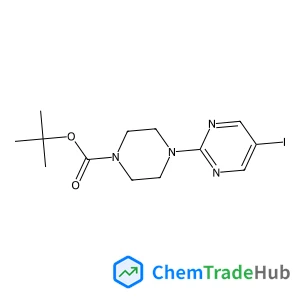
2-Methyl-2-propanyl 4-(5-iodo-2-pyrimidinyl)-1-piperazinecarboxylate
CAS号:
1027616-32-5
分子式:
C13H19IN4O2
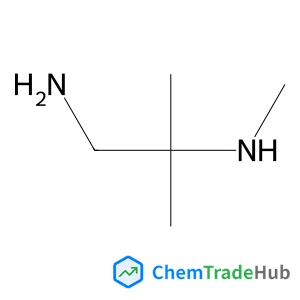
![4-{[4-(Trifluoromethoxy)benzyl]oxy}benzonitrile structure](https://cnstatic.chemtradehub.com/structs/103/1036629-63-6-2172.webp "4-{[4-(Trifluoromethoxy)benzyl]oxy}benzonitrile structure")
推荐供应商




免责声明
本页面提供的学术期刊信息仅供参考和研究使用。我们与任何期刊出版商均无关联,也不处理投稿事宜。如有投稿相关咨询,请直接联系相关期刊出版商。
如发现页面信息有误,请发送邮件至 support@chemtradehub.com 联系我们。我们将及时核实并处理您的问题。