


Computational screening of single-atom doped In2O3 catalysts for the reverse water gas shift reaction
文献信息
发布日期
2023-11-29
DOI
10.1039/D3CP04352E
影响因子
3.676
作者
查看原文
摘要
The reverse water gas shift (RWGS) reaction is an important method for converting carbon dioxide (CO2) into valuable chemicals and fuels by hydrogenation. In this paper, the catalytic activity of single-atom metal-doped (M = Pt, Ir, Pd, Rh, Cu, Ni) indium oxide (c-In2O3) catalysts in the cubic phase for the RWGS reaction was investigated using density functional theory (DFT) calculations. This was achieved by identifying metal sites, screening oxygen vacancies, followed by further calculating the energy barriers for the direct and indirect dissociation pathways of the RWGS reaction. Our results show that the single-atom dopant in the indium oxide lattice promotes the creation of oxygen vacancies on the In2O3 surface, thereby facilitating the adsorption and activation of CO2 by the oxide surface and initiating the subsequent RWGS reaction. Furthermore, we find that the oxygen vacancy (OV) formation energy on the surface of the single-atom metal doped c-In2O3(111) surface can be used as a descriptor for CO2 adsorption, and the higher the OV formation energy, the more stable the CO2 adsorption structure is. The Cu/In2O3 structure has relatively high energy barriers for both direct (1.92 eV) and indirect dissociation (2.09 eV) in the RWGS reaction, indicating its low RWGS reactivity. In contrast, the Ir/In2O3 and Rh/In2O3 structures are more conducive to the direct dissociation of CO2 into CO, which may serve as more efficient RWGS catalysts. Furthermore, microkinetic simulations show that single atom metal doping to In2O3 enhances CO2 conversion, especially under high reaction temperatures, where the formation of oxygen vacancies is the limiting factor for CO2 reactivity on the M/In2O3 (M = Cu, Ir, Rh) models. Among these three single-atom catalysts, the Ir/In2O3 model was predicted to have the best CO2 reactivity at reaction temperatures above 573 K.
期刊推荐
Pharmacological Reviews

Nature
Pure and Applied Chemistry
Journal of Heterocyclic Chemistry
Journal of Organometallic Chemistry

Organic Preparations and Procedures International
Russian Chemical Reviews

Journal of Physics and Chemistry of Solids
Israel Journal of Chemistry

European Journal of Wood and Wood Products
相关文献
A microfluidic chip based ratiometric aptasensor for antibiotic detection in foods using stir bar assisted sorptive extraction and rolling circle amplification
Liyong He, Zhipeng Shen, Yuting Cao, Tianhua Li, Dazhen Wu, Youren Dong, Ning Gan
2019-02-25
Paper
DOI: 10.1039/C9AN00106A
Multiplex detection of quality indicator molecule targets in urine using programmable hairpin probes based on a simple double-T type microchip electrophoresis platform and isothermal polymerase-catalyzed target recycling
Lingying Zhou, Ning Gan, Yongxiang Wu, Futao Hu, Jianyuan Lin, Yuting Cao, Dazhen Wu
2018-05-04
Paper
DOI: 10.1039/C8AN00141C
A homogeneous electrochemical sensor for Hg2+ determination in environmental water based on the T–Hg2+–T structure and exonuclease III-assisted recycling amplification
Hao Yu, Lingshan Su, Chang Liu, Yanling Song, Shaoyun Wang, Zhenyu Lin, Fang Chen
2018-03-29
Paper
DOI: 10.1039/C8AN00462E
DNA aptamers from whole-cell SELEX as new diagnostic agents against glioblastoma multiforme cells
Qiaoyi Wu, Yuzhe Wang, Hongyao Wang, Liang Wu, Huimin Zhang, Zhi Zhu, Dezhi Kang
2018-04-18
Paper
DOI: 10.1039/C8AN00271A
Simple preparation and highly selective detection of silver ions using an electrochemical sensor based on sulfur-doped graphene and a 3,3′,5,5′-tetramethylbenzidine composite modified electrode
Yuan Yu
2018-04-10
Paper
DOI: 10.1039/C7AN02084H
Fabrication of paper-based analytical devices optimized by central composite design
Vahid Hamedpour, Riccardo Leardi, Koji Suzuki, Daniel Citterio
2018-03-31
Paper
DOI: 10.1039/C8AN00332G
Novel magnetic hollow zein nanoparticles for preconcentration of chlorpyrifos from water and soil samples prior to analysis via high-performance liquid chromatography (HPLC)
Mojtaba Rahimi Moghadam, Behrooz Zargar, Saadat Rastegarzadeh
2018-04-03
Paper
DOI: 10.1039/C7AN01526G
A paper-based chemiluminescence immunoassay device for rapid and high-throughput detection of allergen-specific IgE
Xisi Han, Mengda Cao, Meirong Wu, Yu-Jie Wang, Changmin Yu, Chengwu Zhang, Haidong Yu, Ji-Fu Wei, Lin Li
2019-02-18
Paper
DOI: 10.1039/C8AN02020E
您可能还喜欢
化合物问答
什么是2,6-二溴-4,8-双[(2-乙基己基)氧基]苯并[1,2-b:4,5-b']二噻吩(CAS号:1226782-13-3)?
2,6-二溴-4,8-双[(2-乙基己基)氧基]苯并[1,2-b:4,5-b']二噻吩是一种有机化合物,分子式为C23H32Br2O2S2。该化合物具有芳香性和...
1226782-13-32,6-Dibromo-4,8-bis[...
化合物问答
木聚硫钠(CAS号:37319-17-8)的物理化学性质是什么?
木聚硫钠通常为无色或白色结晶性粉末,具有吸湿性。其分子量约为121.11 g/mol。木聚硫钠易溶于水,不溶于醇类和其他非极性溶剂。在酸性或碱性溶液中,木聚硫钠...
37319-17-8Pentosan
化合物问答
2-甲氧基-4-(三氟甲基)苄溴, JRD(CAS号:886500-59-0)适用哪些法规指南?
该化合物在合成、储存和运输过程中需遵循《全球化学品统一分类和标签制度》(GHS)的健康、环境和物理危险分类。在欧洲还需符合《化学品注册、评估、授权和限制》(RE...
886500-59-02-Methoxy-4-(trifluo...
化合物问答
1,4-Diazoniabicyclo[2.2.2]octane-1,4-disulfinate(CAS号:119752-83-9)的主要用途是什么?
1,4-二氮杂双环[2.2.2]辛烷-1,4-二硫酸二酯主要用于有机合成中的保护基团,特别是在保护胺基和硫醇基方面具有广泛应用。此外,它还用于一些特殊化学反应的...
119752-83-91,4-Diazabicyclo[2.2...
化合物问答
如何处理含有4-(Bromomethyl)-2-fluorobenzenesulphonamide(CAS号:1645275-47-3)的废料?
含有4-(Bromomethyl)-2-fluorobenzenesulphonamide的废液应首先进行中和处理,以降低pH值,避免对环境造成腐蚀性影响。随后...
1645275-47-34-(Bromomethyl)-2-fl...
化合物问答
Loureiriol(CAS号:479195-44-3)的物理化学性质是什么?
Loureiriol是一种天然化合物,其分子式为C15H22O4。Loureiriol为无色结晶性粉末,具有较高的熔点和良好的热稳定性。其相对分子质量为262....
479195-44-3Loureiriol
化合物问答
在合成中是否有3-氨基苯甲酰苯胺(CAS号:14315-16-3)的替代品?
在合成过程中,可以考虑使用类似结构的化合物作为3-氨基苯甲酰苯胺的替代品,例如N-苯基-3-氰基苯胺或N-苯基-3-硝基苯胺等,这些化合物具有相似的化学性质,可...
14315-16-33-Amino-N-phenylbenz...
化合物问答
4-异氰酰苯基硼酸频哪醇酯(CAS号:380430-64-8)的市场或研究趋势如何?
4-异氰酰苯基硼酸频哪醇酯主要应用于有机合成、药物化学和材料科学领域。随着绿色化学的发展,该化合物因其高效的官能团转化能力和环境友好性而受到越来越多的关注。近年...
380430-64-82-(4-Isocyanatopheny...
化合物问答
如何储存3β-乙酰氧基-7,25-甘遂二烯-24(R)-醇(CAS号:1352001-09-2)?
3β-乙酰氧基-7,25-甘遂二烯-24(R)-醇应储存在阴凉、干燥、通风良好的地方,避免直接光照。储存容器应密封,防止空气中的水分和氧气影响化合物的稳定性。建...
1352001-09-23β-acetoxy-eupha- 7,...
化合物问答
如何储存4-氟-2-甲基-1H-吲哚(CAS号:1260383-51-4)?
应将4-氟-2-甲基-1H-吲哚存放在阴凉、干燥、通风良好的地方,避免直接暴露在光照下。容器应密封,避免与空气中的水蒸气接触。建议在避光、温度不超过25℃的环境...
1260383-51-44-Fluoro-2-methyl-1H...
来源期刊
Physical Chemistry Chemical Physics

CiteScore:
5.5
自引率:
10.3%
年发文量:
3036
Physical Chemistry Chemical Physics (PCCP) is an international journal co-owned by 19 physical chemistry and physics societies from around the world. This journal publishes original, cutting-edge research in physical chemistry, chemical physics and biophysical chemistry. To be suitable for publication in PCCP, articles must include significant innovation and/or insight into physical chemistry; this is the most important criterion that reviewers and Editors will judge against when evaluating submissions. The journal has a broad scope and welcomes contributions spanning experiment, theory, computation and data science. Topical coverage includes spectroscopy, dynamics, kinetics, statistical mechanics, thermodynamics, electrochemistry, catalysis, surface science, quantum mechanics, quantum computing and machine learning. Interdisciplinary research areas such as polymers and soft matter, materials, nanoscience, energy, surfaces/interfaces, and biophysical chemistry are welcomed if they demonstrate significant innovation and/or insight into physical chemistry. Joined experimental/theoretical studies are particularly appreciated when complementary and based on up-to-date approaches.
推荐化合物
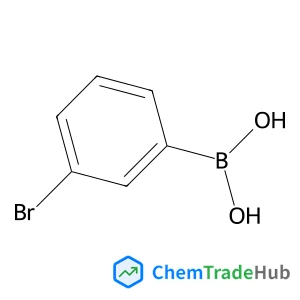
推荐供应商





免责声明
本页面提供的学术期刊信息仅供参考和研究使用。我们与任何期刊出版商均无关联,也不处理投稿事宜。如有投稿相关咨询,请直接联系相关期刊出版商。
如发现页面信息有误,请发送邮件至 support@chemtradehub.com 联系我们。我们将及时核实并处理您的问题。