



Adsorption and dehydrogenation of ammonia on Ru55, Cu55 and Ru@Cu54 nanoclusters: role of single atom alloy catalyst
文献信息
发布日期
2023-12-12
DOI
10.1039/D3CP04830F
影响因子
3.676
作者
D. Chattaraj, C. Majumder
查看原文
摘要
Hydrogen production by the catalytic decomposition of ammonia (NH3) is an important process for several important applications, which include energy production and environment-related issues. The role of single Ru-atom substitution in a Cu55 nanocluster (NC) has been illustrated using the NH3 decomposition reaction as a model system. The structural stability of Ru@Cu54 NC has been evaluated using Ru55 and Cu55 NCs for comparison. Ru@Cu54 prefers an icosahedron structure (Ih), like Ru55 and Cu55 NCs, with almost comparable average binding energies of −5.55 eV per atom. The adsorption of NHx (x = 0–3) on different adsorption sites of the icosahedron Ru@Cu54 NC has also been studied and the corresponding adsorption energies have been estimated. The site-preference investigation suggested that NH3 prefers to adsorb vertically to the Ru@Cu54. The stable geometries of the N and H atoms on the high symmetry adsorption sites of Ru@Cu54 NC have been studied. Although the N atom favours top and hollow sites, the H atom prefers to stay in the Ru–Cu bridge site along with the hollow sites. The adsorption energy of N on the Ru@Cu54 NC fcc site is found to be −5.42 eV, which is very close to the optimal value (−5.81 eV) of the ammonia decomposition volcano curve. The reaction energies for stepwise H atom elimination from an adsorbed NH3 molecule have been estimated. Finally, NH3 adsorption and decomposition on Ru@Cu54 have been illustrated in terms of electronic structure analysis. The energetics calculations for the dehydrogenation of NH3 suggest that Ru@Cu54 NC can be a suitable catalyst.
期刊推荐

Proceedings of the National Academy of Sciences of the United States of America
Molecular Pharmacology

European Journal of Wood and Wood Products

Kinetics and Catalysis
Journal of Medicinal Chemistry
Fibre Chemistry
Journal of Organometallic Chemistry
Pharmacological Reviews

Journal of Heterocyclic Chemistry
Pure and Applied Chemistry
相关文献
Highly stable protein immobilization via maleimido-thiol chemistry to monitor enzymatic activity
Jonas Schartner, Jörn Güldenhaupt, Sarah Katharina Gaßmeyer, Katharina Rosga, Robert Kourist, Klaus Gerwert, Carsten Kötting
2018-04-18
Paper
DOI: 10.1039/C8AN00301G
A microfluidic chip based ratiometric aptasensor for antibiotic detection in foods using stir bar assisted sorptive extraction and rolling circle amplification
Liyong He, Zhipeng Shen, Yuting Cao, Tianhua Li, Dazhen Wu, Youren Dong, Ning Gan
2019-02-25
Paper
DOI: 10.1039/C9AN00106A
Three-dimensional direct visualization of silica dispersion in polymer-based composites
Zemin Feng, Jinpan Zhong, Weijiang Guan, Rui Tian, Chao Lu, Caifeng Ding
2018-03-16
Paper
DOI: 10.1039/C8AN00016F
An implanted pH sensor read using radiography
Md. Arifuzzaman, Paul W. Millhouse, Yash Raval, Thomas B. Pace, Shayesteh Beladi Behbahani, John D. DesJardins, Tzuen-Rong J. Tzeng
2019-03-19
Paper
DOI: 10.1039/C8AN02337A
Highly labeled methylene blue-ds DNA silica nanoparticles for signal enhancement of immunoassays: application to the sensitive detection of bacteria in human platelet concentrates
Romaric Bonnet, Carole Farre, Lionel Valera, Ludivine Vossier, Fanny Léon, Typhaine Dagland, Agnès Pouzet, Nicole Jaffrézic-Renault, Jeannette Fareh, Chantal Fournier-Wirth, Carole Chaix
2018-04-19
Paper
DOI: 10.1039/C8AN00165K
Ultrasensitive SERS detection of specific oligonucleotides based on Au@AgAg bimetallic nanorods
Cui-Fang Ning, Ya-Fei Tian, Wen Zhou, Bin-Cheng Yin
2019-03-13
Paper
DOI: 10.1039/C9AN00306A
Construction of an ultrasensitive electrochemiluminescent aptasensor for ractopamine detection
Huiwen Xiong, Jingwen Gao, Ying Wang, Ziyi Chen, Miao-Miao Chen, Xiuhua Zhang, Shengfu Wang
2019-02-25
Paper
DOI: 10.1039/C9AN00183B
Electroanalytical identification of 25I-NBOH and 2C-I via differential pulse voltammetry: a rapid and sensitive screening method to avoid misidentification
Ana Flávia Belchior de Andrade, Jose Gonzalez-Rodriguez
2019-02-20
Paper
DOI: 10.1039/C9AN00062C
您可能还喜欢
化合物问答
什么是2,6-二溴-4,8-双[(2-乙基己基)氧基]苯并[1,2-b:4,5-b']二噻吩(CAS号:1226782-13-3)?
2,6-二溴-4,8-双[(2-乙基己基)氧基]苯并[1,2-b:4,5-b']二噻吩是一种有机化合物,分子式为C23H32Br2O2S2。该化合物具有芳香性和...
1226782-13-32,6-Dibromo-4,8-bis[...
化合物问答
木聚硫钠(CAS号:37319-17-8)的物理化学性质是什么?
木聚硫钠通常为无色或白色结晶性粉末,具有吸湿性。其分子量约为121.11 g/mol。木聚硫钠易溶于水,不溶于醇类和其他非极性溶剂。在酸性或碱性溶液中,木聚硫钠...
37319-17-8Pentosan
化合物问答
2-甲氧基-4-(三氟甲基)苄溴, JRD(CAS号:886500-59-0)适用哪些法规指南?
该化合物在合成、储存和运输过程中需遵循《全球化学品统一分类和标签制度》(GHS)的健康、环境和物理危险分类。在欧洲还需符合《化学品注册、评估、授权和限制》(RE...
886500-59-02-Methoxy-4-(trifluo...
化合物问答
1,4-Diazoniabicyclo[2.2.2]octane-1,4-disulfinate(CAS号:119752-83-9)的主要用途是什么?
1,4-二氮杂双环[2.2.2]辛烷-1,4-二硫酸二酯主要用于有机合成中的保护基团,特别是在保护胺基和硫醇基方面具有广泛应用。此外,它还用于一些特殊化学反应的...
119752-83-91,4-Diazabicyclo[2.2...
化合物问答
如何处理含有4-(Bromomethyl)-2-fluorobenzenesulphonamide(CAS号:1645275-47-3)的废料?
含有4-(Bromomethyl)-2-fluorobenzenesulphonamide的废液应首先进行中和处理,以降低pH值,避免对环境造成腐蚀性影响。随后...
1645275-47-34-(Bromomethyl)-2-fl...
化合物问答
Loureiriol(CAS号:479195-44-3)的物理化学性质是什么?
Loureiriol是一种天然化合物,其分子式为C15H22O4。Loureiriol为无色结晶性粉末,具有较高的熔点和良好的热稳定性。其相对分子质量为262....
479195-44-3Loureiriol
化合物问答
在合成中是否有3-氨基苯甲酰苯胺(CAS号:14315-16-3)的替代品?
在合成过程中,可以考虑使用类似结构的化合物作为3-氨基苯甲酰苯胺的替代品,例如N-苯基-3-氰基苯胺或N-苯基-3-硝基苯胺等,这些化合物具有相似的化学性质,可...
14315-16-33-Amino-N-phenylbenz...
化合物问答
4-异氰酰苯基硼酸频哪醇酯(CAS号:380430-64-8)的市场或研究趋势如何?
4-异氰酰苯基硼酸频哪醇酯主要应用于有机合成、药物化学和材料科学领域。随着绿色化学的发展,该化合物因其高效的官能团转化能力和环境友好性而受到越来越多的关注。近年...
380430-64-82-(4-Isocyanatopheny...
化合物问答
如何储存3β-乙酰氧基-7,25-甘遂二烯-24(R)-醇(CAS号:1352001-09-2)?
3β-乙酰氧基-7,25-甘遂二烯-24(R)-醇应储存在阴凉、干燥、通风良好的地方,避免直接光照。储存容器应密封,防止空气中的水分和氧气影响化合物的稳定性。建...
1352001-09-23β-acetoxy-eupha- 7,...
化合物问答
如何储存4-氟-2-甲基-1H-吲哚(CAS号:1260383-51-4)?
应将4-氟-2-甲基-1H-吲哚存放在阴凉、干燥、通风良好的地方,避免直接暴露在光照下。容器应密封,避免与空气中的水蒸气接触。建议在避光、温度不超过25℃的环境...
1260383-51-44-Fluoro-2-methyl-1H...
来源期刊
Physical Chemistry Chemical Physics

CiteScore:
5.5
自引率:
10.3%
年发文量:
3036
Physical Chemistry Chemical Physics (PCCP) is an international journal co-owned by 19 physical chemistry and physics societies from around the world. This journal publishes original, cutting-edge research in physical chemistry, chemical physics and biophysical chemistry. To be suitable for publication in PCCP, articles must include significant innovation and/or insight into physical chemistry; this is the most important criterion that reviewers and Editors will judge against when evaluating submissions. The journal has a broad scope and welcomes contributions spanning experiment, theory, computation and data science. Topical coverage includes spectroscopy, dynamics, kinetics, statistical mechanics, thermodynamics, electrochemistry, catalysis, surface science, quantum mechanics, quantum computing and machine learning. Interdisciplinary research areas such as polymers and soft matter, materials, nanoscience, energy, surfaces/interfaces, and biophysical chemistry are welcomed if they demonstrate significant innovation and/or insight into physical chemistry. Joined experimental/theoretical studies are particularly appreciated when complementary and based on up-to-date approaches.
推荐化合物
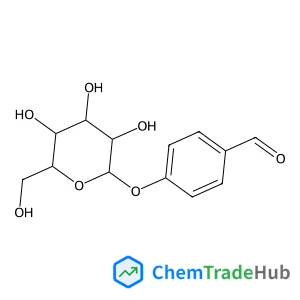
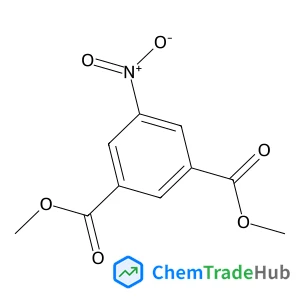
推荐供应商




免责声明
本页面提供的学术期刊信息仅供参考和研究使用。我们与任何期刊出版商均无关联,也不处理投稿事宜。如有投稿相关咨询,请直接联系相关期刊出版商。
如发现页面信息有误,请发送邮件至 support@chemtradehub.com 联系我们。我们将及时核实并处理您的问题。