


π-Electronic ion pairs: building blocks for supramolecular nanoarchitectonics viaiπ–iπ interactions
文献信息
发布日期
2023-10-05
DOI
10.1039/D3CS00581J
影响因子
54.564
作者
Yohei Haketa, Kazuhisa Yamasumi, Hiromitsu Maeda
查看原文
摘要
The pairing of charged π-electronic systems and their ordered arrangement have been achieved by iπ–iπ interactions that are derived from synergetically worked electrostatic and dispersion forces. Charged π-electronic systems that provide ion pairs as building blocks for assemblies have been prepared by diverse strategies for introducing charge in the core π-electronic systems. One method to prepare charged π-electronic systems is the use of covalent bonding that makes π-electronic ions and valence-mismatched metal complexes as well as protonated and deprotonated states. Noncovalent ion complexation is another method used to create π-electronic ions, particularly for anion binding, producing negatively charged π-electronic systems. Charged π-electronic systems afford various ion pairs, consisting of both cationic and anionic π-systems, depending on their combinations. Geometries and electronic states of the constituents in π-electronic ion pairs affect the photophysical properties and assembling modes. Recent progress in π-electronic ion pairs has revealed intriguing characteristics, including the transformation into radical pairs through electron transfer and the magnetic properties influenced by the countercations. Furthermore, the assembly states exhibit diversity as observed in crystals and soft materials including liquid-crystal mesophases. While the chemistry of ion pairs (salts) is well-established, the field of π-electronic ion pairs is relatively new; however, it holds great promise for future applications in novel materials and devices.
期刊推荐
Journal of Asian Natural Products Research
Journal of the Indian Institute of Science
Biocatalysis and Biotransformation

Main Group Chemistry

Bioorganic & Medicinal Chemistry

Herald of the Russian Academy of Sciences

Polycyclic Aromatic Compounds

Heteroatom Chemistry
Critical Reviews in Solid State and Materials Sciences
Electroanalysis
相关文献
Metal-free visible-light-induced photoredox-catalyzed intermolecular pyridylation/phosphinoylation of alkenes
Jiaxuan Shen, Yipin Zhang, Yanjiang Yu, Manman Wang
2020-12-22
Research Article
DOI: 10.1039/D0QO01218A
Relations between 77Se NMR chemical shifts of (phenylseleno)benzenes and their molecular structures derived from nine X-ray crystal structures
Jette Oddershede, Lars Henriksen, Sine Larsen
2003-02-21
Paper
DOI: 10.1039/B211130F
A [15]paracyclophenone and its fluorenone-containing derivatives: syntheses and binding to nerve agent mimics via aryl-CH hydrogen bonding interactions
Peiren Liu, Hongliang Wang, Hong Zeng, Xin Hong, Feihe Huang
2020-05-14
Research Article
DOI: 10.1039/D0QO00456A
Cascade intramolecular rearrangement/cycloaddition of nitrocyclopropane carboxylates with alkynes/alkenes: access to uncommon bi(hetero)cyclic systems
Rohit Kumar Varshnaya, Priyanka Singh, Navpreet Kaur, Prabal Banerjee
2021-01-21
Research Article
DOI: 10.1039/D0QO01535K
Xanthanoltrimer A–C: three xanthanolide sesquiterpene trimers from the fruits of Xanthium italicum Moretti isolated by HPLC-MS-SPE-NMR
Jiang Fu, Ya-Nan Wang, Shuang-Gang Ma, Li Li, Xiao-Jing Wang, Yong Li, Yun-Bao Liu, Jing Qu, Shi-Shan Yu
2021-01-26
Research Article
DOI: 10.1039/D0QO01541E
Correction: Fused ambipolar aza-isoindigos with NIR absorption
Danlei Zhu, Hailiang Liao, Sheik Haseena, Mahesh Kumar Ravva, Shengyu Cong, Liuyuan Lan, Yazhou Wang, Zhengke Li, Lang Jiang, Wan Yue
2021-03-03
Correction
DOI: 10.1039/D1QO90017J
(±)-Pinnatifidaones A–D, four pairs of highly modified neolignan enantiomers with a rare spirocyclohexenone skeleton from Crataegus pinnatifida
Rui Guo, Peng Zhao, Xiaoqi Yu, Guodong Yao, Bin Lin, Xiaoxiao Huang, Shaojiang Song
2021-01-06
Research Article
DOI: 10.1039/D0QO01475C
Recent advances in quinazolinones as an emerging molecular platform for luminescent materials and bioimaging
Zhiming Xing, Wanhui Wu, Yongxiang Miao, Yingqun Tang, Youkang Zhou, Lifang Zheng, Yang Fu, Zhibin Song, Yiyuan Peng
2021-02-02
Review Article
DOI: 10.1039/D0QO01425G
Photochemical synthesis of 3-hydroxyphenanthro[9,10-c]furan-1(3H)-ones from α-keto acids and alkynes
Beibei Zhao, Zhen Zhang, Yu Ge, Pinhua Li, Tao Miao
2021-01-04
Research Article
DOI: 10.1039/D0QO01487G
您可能还喜欢
化合物问答
4-[4-三氟甲基苯基]恶唑(CAS号:1126636-40-5)通常如何合成?
4-[4-三氟甲基苯基]恶唑通常通过将4-三氟甲基苯酚与异硫氰酸苯酯在有机溶剂中进行酯化反应合成。该反应可在无水条件下,使用适当的催化剂,如四丁基氢氧化铵,以提...
1126636-40-54-(4-(Trifluoromethy...
59729-32-71-[3-(Dimethylamino)...
化合物问答
RockPhos Pd G3(CAS号:2009020-38-4)通常如何合成?
RockPhos Pd G3 通常通过钯催化偶联反应合成,使用配体 (2'-Amino-2-biphenylyl)(methanesulfonato-kappa...
2009020-38-4(2'-Amino-2-biphenyl...
化合物问答
1-哌啶甲酰胺(CAS号:2158-03-4)的市场或研究趋势如何?
1-哌啶甲酰胺作为有机合成中的重要中间体,其市场需求主要受医药、农药、染料等行业推动。近年来,随着新药开发和绿色化学的发展,该化合物的研究趋势集中在开发更高效、...
2158-03-41-Piperidinecarboxam...
化合物问答
2-(二苯基膦基)乙胺(CAS号:4848-43-5)适用哪些法规指南?
2-(二苯基膦基)乙胺适用于多种法规指南,包括但不限于《全球化学品统一分类和标签制度》(GHS),欧盟《化学品注册、评估、授权和限制》法规(REACH),以及美...
4848-43-52-(Diphenylphosphino...
化合物问答
如何储存间苯二甲酸二烯丙酯(CAS号:1087-21-4)?
间苯二甲酸二烯丙酯应储存在阴凉、干燥、通风良好的地方,远离火源和热源。储存容器应密封,避免光照和高温。储存温度应控制在25℃以下,相对湿度应低于80%。避免与其...
1087-21-4Diallyl isophthalate
化合物问答
什么是间甲苯异硫代异氰酸酯(CAS号:621-30-7)?
间甲苯异硫代异氰酸酯是一种有机化合物,分子式为C7H7NO2S,具有刺激性气味。它是一种重要的有机合成中间体,在合成其他化合物时广泛应用。
621-30-71-Isothiocyanato-3-m...
化合物问答
在合成中是否有N-Boc-D-苯丙氨醇(CAS号:106454-69-7)的替代品?
在合成中,可以考虑使用N-Cbz-D-苯丙氨醇或N-Fmoc-D-苯丙氨醇作为替代品。这些化合物同样具有保护氨基的功能,且在合成过程中表现出良好的反应性能。
106454-69-72-Methyl-2-propanyl ...
化合物问答
3-羟甲基-2-氧异丙基吡啶(CAS号:954240-50-7)的主要用途是什么?
3-羟甲基-2-氧异丙基吡啶主要用于有机合成领域,可以作为合成其他药物、农药或精细化学品的中间体。此外,它还可能在实验室研究中作为特定反应的前体或溶剂。
954240-50-7(2-Isopropoxy-3-pyri...
化合物问答
6-氨基-9-甲基嘌呤(CAS号:700-00-5)应用于哪些行业?
6-氨基-9-甲基嘌呤目前主要应用于医药行业,作为某些药物的中间体。此外,它还可能用于聚合物、传感器和半导体的某些领域,作为功能性单体或掺杂剂。
700-00-59-Methyl-9H-purin-6-...
来源期刊
Chemical Society Reviews
CiteScore:
80.8
自引率:
1.2%
年发文量:
250
Chem Soc Rev publishes review articles covering important topics at the forefront of the chemical sciences. Reviews should be of the very highest quality and international impact. We particularly encourage international and multidisciplinary collaborations among our authors. Our scope covers the breadth of the chemical sciences, including interdisciplinary topics where the article has a basis in chemistry. Topics include: Analytical chemistry Biomaterials chemistry Bioorganic/medicinal chemistry Catalysis Chemical Biology Coordination Chemistry Crystal Engineering Energy Sustainable chemistry Green chemistry Inorganic chemistry Inorganic materials Main group chemistry Nanoscience Organic chemistry Organic materials Organometallics Physical chemistry Supramolecular chemistry Synthetic methodology Theoretical and computational chemistry
推荐化合物
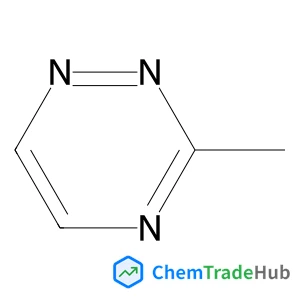
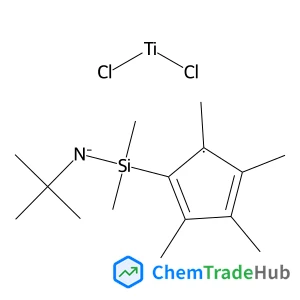
2,3,4,5-TETRAMETHYLCYCLOPENTADIENEDIMETHYLSILYL-TERT-BUTYLAMIDO TITANIUM DICHLORIDE
CAS号:
135072-61-6
分子式:
C15H27Cl2NSiTi-
推荐供应商







免责声明
本页面提供的学术期刊信息仅供参考和研究使用。我们与任何期刊出版商均无关联,也不处理投稿事宜。如有投稿相关咨询,请直接联系相关期刊出版商。
如发现页面信息有误,请发送邮件至 support@chemtradehub.com 联系我们。我们将及时核实并处理您的问题。