





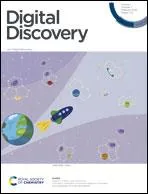
Machine learning based feature engineering for thermoelectric materials by design
文献信息
发布日期
2024-01-03
DOI
10.1039/D3DD00131H
影响因子
0
作者
U. S. Vaitesswar, Tan Huang, Jose Recatala-Gomez, Shuo-Wang Yang
查看原文
摘要
Availability of material datasets through high performance computing has enabled the use of machine learning to not only discover correlations and employ materials informatics to perform screening, but also to take the first steps towards materials by design. Computational materials databases are well-labelled and provide a fertile ground for predicting both ground-state and functional properties of materials. However, a clear design approach that allows prediction of materials with the desired functional performance does not yet exist. In this work, we train various machine learning models on a dataset curated from a combination of Materials Project as well as computationally calculated thermoelectric electronic power factor using a constant relaxation time Boltzmann transport equation (BoltzTrap). We show that simple random forest-based machine learning models outperform more complex neural network-based approaches on the moderately sized dataset and also allow for interpretability. In addition, when trained on only cubic material systems, the best performing machine learning model employs a perturbative scanning approach to find new candidates in Materials Project that it has never seen before, and automatically converges upon half-Heusler alloys as promising thermoelectric materials. We validate this prediction by performing density functional theory and BoltzTrap calculations to reveal accurate matching. One of those predicted to be a good material, NbFeSb, has been studied recently by the thermoelectric community; from this study, we propose four new half-Heusler compounds as promising thermoelectric materials – TiGePt, ZrInAu, ZrSiPd and ZrSiPt. Our approach is generalizable to extrapolate into previously unexplored material spaces and establishes an automated pipeline for the development of high-throughput functional materials.
相关文献
Silica-surface reorganization during organotin grafting evidenced by 119Sn DNP SENS: a tandem reaction of gem-silanols and strained siloxane bridges
Matthew P. Conley, Aaron J. Rossini, Aleix Comas-Vives, Maxence Valla, Gilles Casano, Olivier Ouari, Paul Tordo, Anne Lesage, Lyndon Emsley, Christophe Copéret
2014-06-12
Paper
DOI: 10.1039/C4CP01973C
Exploring zinc coordination in novel zinc battery electrolytes
Mega Kar, Bjorn Winther-Jensen, Maria Forsyth, Douglas R. MacFarlane
2014-04-24
Paper
DOI: 10.1039/C4CP00749B
Systematic study on novel catalytic activity of CO oxidation driven by strong electronic interaction between the monatomic-layered Pt30 cluster disk and the Si substrate
Hisato Yasumatsu, Nobuyuki Fukui
2014-07-03
Paper
DOI: 10.1039/C4CP02221A
Structures and optical properties of two phases of SrMgF4
Alexander P. Yelisseyev, Lei Bai, Zheshuai Lin, Alina A. Goloshumova, Sergei I. Lobanov, Dmitry Y. Naumov
2014-11-04
Paper
DOI: 10.1039/C4CP04689G
Crystal polymorphism: dependence of oxygen diffusion through 2D ordered Co nanocrystals
2013-12-18
Communication
DOI: 10.1039/C3CP54656J
Observing Pt nanoparticle formation at the atomic level during polyol synthesis
Jocenir Boita, Lucas Nicolao, Maria C. M. Alves, Jonder Morais
2014-07-10
Paper
DOI: 10.1039/C4CP01925C
Towards a high thermoelectric performance in rare-earth substituted SrTiO3: effects provided by strongly-reducing sintering conditions
A. V. Kovalevsky, A. A. Yaremchenko, S. Populoh, P. Thiel, D. P. Fagg, J. R. Frade
2014-10-28
Paper
DOI: 10.1039/C4CP04127E
Morphology and chemical states of size-selected Ptn clusters on an aluminium oxide film on NiAl(110)
Atsushi Beniya, Noritake Isomura, Hirohito Hirata, Yoshihide Watanabe
2014-07-01
Paper
DOI: 10.1039/C4CP01767F
Copper clusters as novel fluorescent probes for the detection and photocatalytic elimination of lead ions
M. A. López-Quintela
2014-08-01
Communication
DOI: 10.1039/C4CP02148G
Structural dynamics effects on the ultrafast chemical bond cleavage of a photodissociation reaction
María E. Corrales, Garikoitz Balerdi, Rebeca de Nalda, Luis Bañares, Ahmed H. Zewail
2013-12-24
Paper
DOI: 10.1039/C3CP54677B
您可能还喜欢
化合物问答
硅烷偶联剂ZQ-172(CAS号:1067-53-4)的主要用途是什么?
硅烷偶联剂ZQ-172主要用于增强无机填料与有机高分子材料之间的相容性,常见于橡胶、塑料、涂料和胶黏剂等复合体系中。其硅氧烷基团可与玻璃纤维、二氧化硅等无机物表...
1067-53-46-(2-Methoxyethoxy)-...
化合物问答
如何处理含有6-(2,4-二甲氧基苯基)-2-吡啶甲醇(CAS号:887981-31-9)的废料?
对于含有该化合物的废料,首先应收集并分类存放,避免与其它化学品混合。在处理前,需进行必要的检测,确定其含量和性质。随后,可以采用化学氧化、生物降解或物理吸附等方...
887981-31-9[6-(2,4-Dimethoxyphe...
化合物问答
甲砜霉素甘氨酸酯盐酸盐(CAS号:2611-61-2)的物理化学性质是什么?
该化合物为白色或类白色结晶性粉末,不溶于水,溶于乙醇和氯仿。分子量为403.03 g/mol。它具有手性,含有三个手性中心,分别为2S,3R构型。该化合物在酸性...
2611-61-2(2S,3R)-2-[(Dichloro...
化合物问答
如何储存反式-环丙烷-1,2-二胺双盐酸盐(CAS号:3187-76-6)?
反式-环丙烷-1,2-二胺双盐酸盐应存放在阴凉、干燥且通风良好的地方,避免阳光直射。储存容器应密封,以防挥发和受潮。同时,应远离火源和热源,确保储存环境温度不超...
3187-76-6trans-1,2-Diaminocyc...
化合物问答
什么是吩嗪硫酸甲酯(CAS号:299-11-6)?
吩嗪硫酸甲酯是一种有机化合物,化学结构由吩嗪环与甲酯基团构成,分子式为C10H9N2SO4。其为吩嗪类衍生物,具有典型的芳香环结构和酯基官能团,常作为氧化剂或染...
299-11-65-Methylphenazin-5-i...
化合物问答
N1-异丙基二乙烯三胺(CAS号:207399-20-0)的市场或研究趋势如何?
随着绿色化学和环保意识的提高,N1-异丙基二乙烯三胺的研究趋势正向低毒、环保的方向发展。市场趋势方面,由于其在功能性材料、药物合成等领域的需求,预计其市场需求将...
207399-20-0N-(2-Aminoethyl)-N'-...
化合物问答
4,4-Dimethyl-5,6-dihydro-4H-cyclopenta[d][1,3]thiazol-2-amine(CAS号:1182284-47-4)应用于哪些行业?
该化合物在医药、聚合物、传感器和半导体领域有潜在的应用。在医药领域,作为一种新型的噻唑类化合物,它可能具有抗炎、抗病毒等生物活性。在聚合物领域,该化合物可用作增...
1182284-47-44,4-Dimethyl-5,6-dih...
化合物问答
处理5-(PYRIDIN-4-YL)-OXAZOL-2-YLAMINE(CAS号:1014629-83-4)时应注意哪些实验室安全事项?
在处理5-(吡啶-4-基)-2-氧代-1-氧杂环己烷-3-胺时,应佩戴防护眼镜、手套和防护服。实验应在通风橱中进行,以避免吸入有害气体。如果发生泄露,应立即用大...
1014629-83-45-(4-Pyridinyl)-1,3-...
化合物问答
什么是伊托必利N-氧化物(CAS号:141996-98-7)?
伊托必利N-氧化物是一种化学化合物,其分子结构是伊托必利的N位进行氧化处理后的产物。它具有一定的生物活性,主要用于药物研究和开发。
141996-98-7Itopride N-Oxide
化合物问答
氟氯烟酸(CAS号:82671-06-5)安全吗?
氟氯烟酸属于有机氯化物,具有一定的毒性,需谨慎处理。在操作过程中,应佩戴防护手套、护目镜和实验服,避免吸入其粉尘或蒸汽。接触皮肤或眼睛可能导致刺激,应采取适当的...
82671-06-52,6-Dichloro-5-fluor...
来源期刊
推荐化合物


推荐供应商




免责声明
本页面提供的学术期刊信息仅供参考和研究使用。我们与任何期刊出版商均无关联,也不处理投稿事宜。如有投稿相关咨询,请直接联系相关期刊出版商。
如发现页面信息有误,请发送邮件至 support@chemtradehub.com 联系我们。我们将及时核实并处理您的问题。