


High-value utilization of lignin: construction of an intelligent release system for targeting the delivery of pesticides
文献信息
发布日期
2023-11-23
DOI
10.1039/D3GC03434H
影响因子
10.182
作者
Yitong Wang, Xiaona Yu, Shuaishuai Ma, Shuling Cao, Xufeng Yuan
查看原文
摘要
The utilization of biomass for the production of agricultural green inputs is regarded as a crucial strategy for achieving low-carbon development in agriculture, while also fully harnessing the potential of renewable resources. Pesticides, as a vital agricultural input, often encounter issues pertaining to inefficient usage, resulting in significant environmental pollution and economic losses. As a main component of lignocellulosic biomass, lignin has become one of the most appealing biopolymers for the construction of advanced pesticide delivery systems. This review aims to provide a thorough summary of the advancements in lignin-based controlled release formulations (LCRFs) for the precise delivery of pesticides. The research in this field has experienced rapid growth in the past five years, making it an important area of study. Common LCRFs are introduced, and the factors influencing the release of active ingredients (AIs) within different LCRFs are analyzed. Special emphasis is placed on intelligent-responsive LCRFs, encompassing an overview of the existing formulations and an exploration of their potential application scenarios and development strategies. It is crucial to promote innovation in pesticide formulations based on the actual demands of agricultural production. We hope this review will stimulate the high-value utilization of lignin and the green development of plant protection technologies.
期刊推荐

Colloid Journal
Bioorganic & Medicinal Chemistry

Chinese Journal of Chemistry

Herald of the Russian Academy of Sciences
Bioorganic & Medicinal Chemistry Letters
Journal of the Indian Institute of Science
Medicinal Chemistry Research

Atomization and Sprays

Critical Reviews in Solid State and Materials Sciences

Polycyclic Aromatic Compounds
相关文献
Polymer defect engineering – conductive 2D organic platelets from precise thiophene-doped polyethylene
Oksana Suraeva, Beomjin Jeong, Kamal Asadi, Katharina Landfester, Ingo Lieberwirth
2021-03-02
Paper
DOI: 10.1039/D1PY00117E
Intrinsic high-k–low-loss dielectric polyimides containing ortho-position aromatic nitrile moieties: reconsideration on Clausius–Mossotti equation
Tianwen Zhu, Qiaoxi Yu, Weiwen Zheng, Runxin Bei, Wenhui Wang, Minming Wu, Siwei Liu, Zhenguo Chi, Yi Zhang, Jiarui Xu
2021-03-24
Paper
DOI: 10.1039/D1PY00084E
NMR investigations of polytrifluoroethylene (PTrFE) synthesized by RAFT
Vincent Bouad, Marc Guerre, Sami Zeliouche, Bruno Améduri, Cédric Totée, Gilles Silly, Rinaldo Poli, Vincent Ladmiral
2021-03-15
Paper
DOI: 10.1039/D0PY01753A
Polyamides containing a biorenewable aromatic monomer based on coumalate esters: from synthesis to evaluation of the thermal and mechanical properties
Jurrie Noordijk, Bert Gebben, Monique H. M. Meeusen-Wierts, Katrien V. Bernaerts
2021-03-23
Paper
DOI: 10.1039/D1PY00005E
Improved enantioselectivity in thiol–ene photopolymerization of sulphur-containing polymers with circularly polarized luminescence
Chen-Lu He, Zeyu Feng, Yan Li, Manman Zhou, Liyang Zhao, Sizhen Shan, Mengqiao Wang, Xin Chen, Xi-Sheng Wang, Gang Zou
2021-03-31
Paper
DOI: 10.1039/D1PY00082A
Droplet nucleation in miniemulsion thiol–ene step photopolymerization
Marc Schmutz
2021-03-08
Paper
DOI: 10.1039/D1PY00139F
您可能还喜欢
化合物问答
如何处理含有顺-二(2,2'-联吡啶)二氯化钌(II)二水合物(CAS号:67776-38-9)的废料?
处理含有该化合物的废料时,应先收集并分类,然后根据其危险特性选择合适的处理方法。推荐采用焚烧或由专业机构进行安全处理,以确保符合环保法规的要求。处理过程中应佩戴...
67776-38-93-{[(2R,3R,4S,5R,6R)...
化合物问答
4-amino-2-bromo-3-iodopyridine(CAS号:1300750-77-9)的市场或研究趋势如何?
4-氨基-2-溴-3-碘吡啶主要应用于药物合成和研究领域,尤其是在抗病毒和抗癌药物的研发中。随着新型药物的需求增加,该化合物的研究趋势较好。市场方面,由于其特殊...
1300750-77-92-bromo-3-iodopyridi...
化合物问答
4-乙酰基氨基-2-氨基-苯甲酸(CAS号:43134-76-5)的市场或研究趋势如何?
当前,4-乙酰基氨基-2-氨基-苯甲酸(CAS号:43134-76-5)在医药和化工领域有一定的应用。随着药物研发的进展,该化合物在新型药物设计中的应用可能增加...
43134-76-54-Acetamido-2-aminob...
化合物问答
庚a氟-1-(1-碘-1,2,2,2-四氟乙氧基)丙烷(CAS号:107432-46-2)的市场或研究趋势如何?
该化合物目前主要用于特定的工业应用,如氟聚合物的合成。市场趋势显示,由于其独特的结构和性能,未来可能在新型氟材料和特种化学品领域有更多的应用。研究趋势方面,主要...
107432-46-21,1,1,2,2,3,3-Heptaf...
化合物问答
在合成中是否有Propargyl-PEG13-bromide(CAS号:2055105-25-2)的替代品?
可以考虑使用1,3-丁二烯-1-炔-3-基-聚乙二醇-13-溴化物作为Propargyl-PEG13-bromide的替代品,因为两者在结构上相似,均可用于合成...
2055105-25-2Propargyl-peg13-brom...
化合物问答
2-氨基-6-甲氧基嘌呤(CAS号:20535-83-5)安全吗?
2-氨基-6-甲氧基嘌呤在正常使用条件下相对安全,但在操作时仍需注意防护措施,如佩戴手套和护目镜,避免吸入或接触皮肤和眼睛。
20535-83-56-Methoxy-7H-purin-2...
化合物问答
2-甲基-3-溴苯乙酸乙酯(CAS号:1261862-72-9)适用哪些法规指南?
该化合物根据其化学性质和潜在危害,可能适用于GHS(全球化学品统一分类和标签制度)的分类标准。具体分类需依据其毒性和燃烧危险性进行评估。此外,欧洲化学品管理局(...
1261862-72-9Ethyl (3-bromo-2-met...
化合物问答
4,4-二甲基吡咯烷-3-羧酸盐酸盐(CAS号:1351343-41-3)应用于哪些行业?
4,4-二甲基吡咯烷-3-羧酸盐酸盐在医药、聚合物和传感器领域有应用。在医药领域,它可以作为某些药物的中间体;在聚合物领域,它可用作某些聚合物的稳定剂;在传感器...
1351343-41-34,4-Dimethyl-3-pyrro...
化合物问答
处理5-Hydroxy-7-methoxy-2-(4-methoxyphenyl)-4-oxo-4H-chromen-6-yl 2-O-beta-D-xylopyranosyl-beta-D-glucopyranoside(CAS号:149998-39-0)时应注意哪些实验室安全事项?
处理该化合物时应注意使用个人防护装备(如手套、护目镜和实验服),在通风橱中操作。避免直接接触皮肤和吸入,泄漏时应立即清理并使用适当的吸收材料。参考安全数据表(S...
149998-39-05-Hydroxy-7-methoxy-...
化合物问答
7-甲基-1,2,3,4-四氢-吖啶-9-甲酸(CAS号:345621-27-4)的市场或研究趋势如何?
该化合物在医药研究中具有潜在应用价值,特别是在抗癌药物研发方面。随着研究的深入,对其合成方法的优化和生物活性的进一步探索将成为研究热点。
345621-27-47-Methyl-1,2,3,4-tet...
来源期刊
Green Chemistry
CiteScore:
16.1
自引率:
7.5%
年发文量:
944
Green Chemistry provides a unique forum for the publication of innovative research on the development of alternative green and sustainable technologies. The scope of Green Chemistry is based on, but not limited to, the definition proposed by Anastas and Warner (Green Chemistry: Theory and Practice, P T Anastas and J C Warner, Oxford University Press, Oxford, 1998). Green chemistry is the utilisation of a set of principles that reduces or eliminates the use or generation of hazardous substances in the design, manufacture and application of chemical products. Green Chemistry is at the frontiers of this continuously-evolving interdisciplinary science and publishes research that attempts to reduce the environmental impact of the chemical enterprise by developing a technology base that is inherently non-toxic to living things and the environment. Submissions on all aspects of research relating to the endeavour are welcome. The journal publishes original and significant cutting-edge research that is likely to be of wide general appeal. To be published, work must present a significant advance in green chemistry. Papers must contain a comparison with existing methods and demonstrate advantages over those methods before publication can be considered. For more information please see this Editorial. Coverage includes the following, but is not limited to: Design (e.g. biomimicry, design for degradation/recycling/reduced toxicity…) Reagents & Feedstocks (e.g. renewables, CO2, solvents, auxiliary agents, waste utilization…) Synthesis (e.g. organic, inorganic, synthetic biology…) Catalysis (e.g. homogeneous, heterogeneous, enzyme, whole cell…) Process (e.g. process design, intensification, separations, recycling, efficiency…) Energy (e.g. renewable energy, fuels, photovoltaics, fuel cells, energy storage, energy carriers…) Applications (e.g. electronics, dyes, consumer products, coatings, pharmaceuticals, preservatives, building materials, chemicals for industry/agriculture/mining…) Impact (e.g. safety, metrics, LCA, sustainability, (eco)toxicology…) Green chemistry is, by definition, a continuously-evolving frontier. Therefore, the inclusion of a particular material or technology does not, of itself, guarantee that a paper is suitable for the journal. To be suitable, the novel advance should have the potential for reduced environmental impact relative to the state of the art. Green Chemistry does not normally deal with research associated with 'end-of-pipe' or remediation issues.
推荐化合物
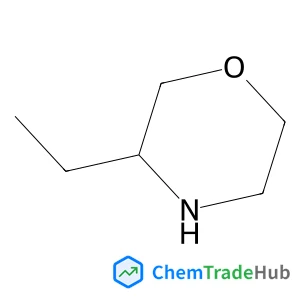
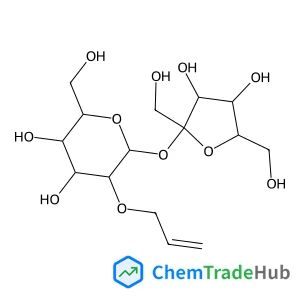
![Methyl 8-azabicyclo[3.2.1]octane-3-carboxylate hydrochloride structure](https://cnstatic.chemtradehub.com/structs/179/179022-43-6-77f5.webp "Methyl 8-azabicyclo[3.2.1]octane-3-carboxylate hydrochloride structure")
推荐供应商





免责声明
本页面提供的学术期刊信息仅供参考和研究使用。我们与任何期刊出版商均无关联,也不处理投稿事宜。如有投稿相关咨询,请直接联系相关期刊出版商。
如发现页面信息有误,请发送邮件至 support@chemtradehub.com 联系我们。我们将及时核实并处理您的问题。