







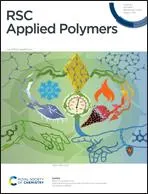
Porous bioelectronic substrates for simple electrochemical conjugation and subsequent, controlled electrochemical release of antisense oligonucleotide drug
文献信息
发布日期
2023-08-28
DOI
10.1039/D3LP00047H
影响因子
0
作者
Devon T. Bryant, Alireza Akbarinejad, Lisa I. Pilkington, Anthony R. J. Phillips
查看原文
摘要
Materials and methods that enable selective and controllable conjugation and release of chemical and biological substances are in demand for various applications, such as drug delivery, cell stimulation, and cancer therapy. Stimuli-responsive systems for controlled release and enhanced drug efficacy are of particular interest. We have here developed an electrochemically addressable system for the specific conjugation and release of connexin43 antisense as a wound-healing agent. The system is based on a conducting terpolymer, P(EDOT-co-EDOTSAc-co-EDOTEG), which was coated onto both carbon cloth and highly porous electrospun substrates. We optimized the conducting terpolymer composition and characterized and compared the terpolymer-coated substrates. The conductive terpolymer contains EDOTSAc, which has an acetylthiomethyl group that can be transformed into a “free” thiol. This thiol can undergo reversible oxidation/reduction cycles at moderate potentials (+1.0 and −0.8 V, respectively) to enable electrochemical conjugation and controlled release. The system was able to quickly conjugate (1 min) and release (5 min) a model thiol molecule in a highly controllable manner, which was demonstrated with, and compared between, carbon cloth and electrospun fiber substrates. Furthermore, successful conjugation and release of connexin43 antisense were demonstrated. Overall, this electrochemical system offers a porous and flexible platform with electrochemically stimulated conjugation and release capabilities that holds significant potential for wound dressing applications.
相关文献
Multisegmented polymers via step-growth and RAFT miniemulsion polymerization
Thiago R. Guimarães, Dewen Zhou, Per B. Zetterlund
2021-09-23
Paper
DOI: 10.1039/D1PY01163D
Ring opening polymerization of β-acetoxy-δ-methylvalerolactone, a triacetic acid lactone derivative
Hussnain Sajjad, Emily A. Prebihalo, William B. Tolman, Theresa M. Reineke
2021-11-14
Paper
DOI: 10.1039/D1PY00561H
Reversible-deactivation radical polymerization of vinyl acetate mediated by tralen, an organomediator
Chun-Wei Chang, Yu-Yu Jen, Shan-Cheng Tang, Pan Zhang, Changle Chen, Chi-How Peng
2021-08-26
Paper
DOI: 10.1039/D1PY00904D
Polyesters with bio-based ferulic acid units: crosslinking paves the way to property consolidation
Doris Pospiech, Andreas Korwitz, Hartmut Komber, Dieter Jehnichen, Kerstin Arnhold, Harald Brünig, Holger Scheibner, Michael T. Müller
2021-08-23
Paper
DOI: 10.1039/D1PY00851J
Visible light-responsive micelles enable co-delivery of nitric oxide and antibiotics for synergistic antibiofilm applications
Kewu He, Zhiqiang Shen, Zhenhua Chen, Bin Zheng, Sheng Cheng, Jinming Hu
2021-10-14
Paper
DOI: 10.1039/D1PY01137E
A transparent cyclo-linear polyphenylsiloxane elastomer integrating high refractive index, thermal stability and flexibility
Xinyu Cao, Xinxin Shang, Xianglan Zhang, Cheng Huang, Jingnan Zhang, Kun Zheng
2021-07-27
Paper
DOI: 10.1039/D1PY00688F
Crosslinked porous polyimides: structure, properties and applications
Basiram Brahma Narzary, Benjamin C. Baker, Neha Yadav, Valerio D'Elia, Charl F. J. Faul
2021-09-21
Review Article
DOI: 10.1039/D1PY00997D
A cascade strategy towards the direct synthesis of green polyesters with versatile functional groups
Xueting Wan, Jian Jiang, Yanyan Tu, Siyuan Xu, Jing Li, Huanjun Lu, Zhikai Li, Lianhu Xiong, Xiaohong Li, Youliang Zhao, Yingfeng Tu
2021-09-30
Paper
DOI: 10.1039/D1PY01124C
One-pot synthesis and aqueous solution properties of pH-responsive schizophrenic diblock copolymer nanoparticles prepared via RAFT aqueous dispersion polymerization
S. M. North, S. P. Armes
2021-09-29
Paper
DOI: 10.1039/D1PY01114F
您可能还喜欢
化合物问答
什么是5-Fluoro-4-iodo-2-methylaniline(CAS号:307306-08-7)?
5-氟-4-碘-2-甲氨基苯属于芳香族化合物,其分子式为C8H7FN2I。该化合物具有一定的反应活性,在有机合成和药物化学领域有一定的应用。
307306-08-75-Fluoro-4-iodo-2-me...
化合物问答
4-氟-3-硝基三氟甲苯(CAS号:367-86-2)通常如何合成?
4-氟-3-硝基三氟甲苯通常通过将三氟甲基苯在酸性条件下催化氧化为三氟甲基硝基苯,然后进行氟化反应得到目标化合物。该过程需要使用催化剂,如三氟乙酸,反应产率较高...
367-86-21-Fluoro-2-nitro-4-(...
化合物问答
6-氯-9-(2,3,5-三苯甲酰氧基-2-C-甲基-beta-D-呋喃核糖基)-9H-嘌呤(CAS号:205171-05-7)的物理化学性质是什么?
该化合物为白色至类白色晶体,分子量约为1046.95。它在水中几乎不溶,在有机溶剂如乙腈和甲醇中具有一定的溶解性。该化合物具有良好的化学稳定性和生物活性。
205171-05-76-Chloro-9-(2-C-meth...
化合物问答
如何储存6-氟喹啉-4-羧酸(CAS号:220844-73-5)?
6-氟喹啉-4-羧酸应储存在阴凉、干燥、通风良好的地方,避免阳光直射。储存在密闭容器中,避免与空气中的水分接触。储存温度应控制在室温以下,避免高温。
220844-73-56-Fluoroquinoline-4-...
化合物问答
(2S,2'S,3S,3'S)-3,3'-di-tert-butyl-4,4'-bis(2,6-dimethoxyphenyl)-2,2',3,3'-tetrahydro-2,2'-bibenzo[d][1,3]oxaphosphole(CAS号:1435940-21-8)通常如何合成?
该化合物通常通过芳香族化合物的亲核取代反应合成,首先将2,6-二甲氧基苯基引入到双环结构中,然后通过特定条件下的还原或氧化反应引入二叔丁基。反应过程中使用了钯作...
1435940-21-8(2S,2'S,3S,3'S)-4,4'...
化合物问答
如何储存KY02111(CAS号:1118807-13-8)?
KY02111应储存于阴凉、干燥、通风良好的地方,避免阳光直射和高温环境。应使用合适的密闭容器储存,并确保容器密封良好,防止水分和潮气进入。在储存期间,应注意检...
1118807-13-8N-(6-chlorobenzo[d]t...
化合物问答
如何储存4-(4-氯苯氧基)丁酸乙酯(CAS号:59227-79-1)?
4-(4-氯苯氧基)丁酸乙酯应储存在阴凉、干燥、通风良好的地方,远离火源和热源。避免阳光直射,防止容器破裂导致泄漏。储存时应保持容器密封,避免与空气中的水蒸气接...
59227-79-1Ethyl 4-(4-chlorophe...
化合物问答
4-庚基苯乙酮(CAS号:37593-03-6)安全吗?
4-庚基苯乙酮相对安全,但在使用和储存时仍需注意。应避免吸入其蒸气,避免皮肤接触,使用时需佩戴防护眼镜和手套。储存时应远离火源和热源,保持容器密封,放置于阴凉、...
37593-03-61-(4-Heptylphenyl)et...
化合物问答
什么是乙基2-氨基-4-(3-溴苯基)噻吩-3-羧酸乙酯(CAS号:438218-48-5)?
乙基2-氨基-4-(3-溴苯基)噻吩-3-羧酸乙酯是一种有机化合物,分子式为C16H12BrN2O2S。它是一种含有噻吩环、氨基、溴苯基和羧酸酯结构的化合物。这...
438218-48-5ethyl 2-amino-4-(3-b...
化合物问答
什么是(9ci)-2-氨基-6-甲基-苯甲酰胺(CAS号:1885-31-0)?
(9ci)-2-氨基-6-甲基-苯甲酰胺是一种化学化合物,其英文名称为2-Amino-6-methylbenzamide,CAS号为1885-31-0。该化合物...
1885-31-02-Amino-6-methylbenz...
来源期刊
推荐化合物
![2,2'-{2,2-Propanediylbis[(2,6-dibromo-4,1-phenylene)oxy]}diethanol structure](https://cnstatic.chemtradehub.com/structs/416/4162-45-2-b3d6.webp "2,2'-{2,2-Propanediylbis[(2,6-dibromo-4,1-phenylene)oxy]}diethanol structure")
推荐供应商


免责声明
本页面提供的学术期刊信息仅供参考和研究使用。我们与任何期刊出版商均无关联,也不处理投稿事宜。如有投稿相关咨询,请直接联系相关期刊出版商。
如发现页面信息有误,请发送邮件至 support@chemtradehub.com 联系我们。我们将及时核实并处理您的问题。