



Enhancing the perovskite solar cell performance by the interface modification of Zn–Sn–O compound heterostructures
文献信息
发布日期
2023-12-01
DOI
10.1039/D3MA00674C
影响因子
0
作者
Ramarajan Ramanathan, Chellakumar R., K. Ravichandran, Michel Zinigrad
查看原文
摘要
Enhancing the performance of perovskite solar cells (PSCs) is one of the prime concerns of researchers worldwide. For PSC devices, it is essential to develop the individual layer efficiently and cost-effectively. This work emphasizes the possibility of employing Zn–Sn oxide-based composite materials as alternative electron transport layers (ETLs) in PSC devices. Pristine Zn2SnO4 (ZTO), composite ZTO–ZnO, and ZTO–SnO2 heterostructure-based ETLs were prepared by a simple solid-state calcination technique and proposed as an alternative to the TiO2 photoanode used in PSC devices. The power conversion efficiency of the designed PSCs was studied based on crystallinity, morphology, cross-section, roughness, contact angle, work function, and Raman analysis of the ETL material. TEM analysis confirms the phase pure ZTO and heterostructure formation as a function of material stoichiometry. Compared to the pristine ZTO, the ZTO–ZnO and ZTO–SnO2 composites have enhanced PSC performance. The ZTO–SnO2 composites exhibit better band matching and charge transfer behavior with the perovskite layer than the pristine ZTO and ZTO–ZnO composites. The ZTO–SnO2 ETL-based PSC device displays a maximum efficiency of 15.9%, while ZTO–ZnO shows a maximum efficiency of 14.3%, which is more than 12.6% for the pristine ZTO. The results indicate that Zn2SnO4-based composites can be suitable for ETLs in PSC device fabrication.
期刊推荐
Russian Chemical Bulletin

Russian Journal of General Chemistry
Russian Journal of Coordination Chemistry

Journal of Saudi Chemical Society
Drug Discovery Today

Russian Journal of Organic Chemistry
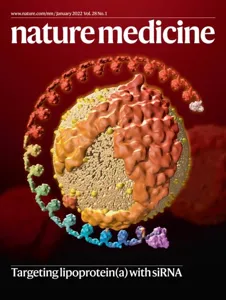
Nature Medicine
Russian Journal of Applied Chemistry

Acta Materialia

Current Opinion in Solid State & Materials Science
相关文献
Tracking mitochondrial pH fluctuation during cell apoptosis with two-photon phosphorescent iridium(iii) complexes
Kangqiang Qiu, Libing Ke, Xuepeng Zhang, Yukang Liu, Thomas W. Rees, Liangnian Ji, Jiajie Diao
2018-02-13
Communication
DOI: 10.1039/C8CC00299A
Correction: Solventless thermal crosslinked polymer protective layer for high stable lithium metal batteries
Hyunjin Kim, Jeeyoung Yoo
2020-01-27
Correction
DOI: 10.1039/D0SE90015J
Novel triarylamine-based polybenzoxazines with a donor–acceptor system for polymeric memory devices
Lu-Chi Lin, Hung-Ju Yen, Chih-Jung Chen, Chia-Liang Tsai, Guey-Sheng Liou
2014-09-17
Communication
DOI: 10.1039/C4CC06385F
Argentate(i) and (iii) complexes as intermediates in silver-mediated cross-coupling reactions
Sebastian Weske, Richard A. Hardin, Thomas Auth, Konrad Koszinowski, Craig A. Ogle
2018-04-30
Communication
DOI: 10.1039/C8CC01707G
A nuanced approach for assessing OPV materials for large scale applications
Matthew J. Griffith, Wenqing Liu, Shuixing Li, Kamilla Sivunova, Daniel Elkington, Nathan A. Cooling, Minmin Shi, Warwick Belcher, Hongzheng Chen, Paul Dastoor
2019-12-04
Paper
DOI: 10.1039/C9SE01149H
Cerium and nitrogen doped CoP nanorod arrays for hydrogen evolution in all pH conditions
Pei Liu, Yibin Lu, Wenjun Ma, Linzheng Ma, Qingyun Liu, Xiao Zhang, Jinxue Guo
2019-09-11
Paper
DOI: 10.1039/C9SE00588A
Highly mesoporous Fe and N Co-doped graphitic catalysts prepared from short-time synthesis of precursor towards highly efficient oxygen reduction
Zu Zhong Gan, Zhao Min Sheng, Huan Huang, Xian You Dai, Rui Liang Niu, Run Ping Jia
2019-09-16
Paper
DOI: 10.1039/C9SE00532C
An advanced and highly efficient Ce assisted NiFe-LDH electrocatalyst for overall water splitting
Harsharaj S. Jadhav, Animesh Roy, Bezawit Z. Desalegan, Jeong Gil Seo
2019-10-16
Paper
DOI: 10.1039/C9SE00700H
Insight into the enhanced photoelectrocatalytic activity in reduced LaFeO3 films
Yu Sun, Xiaofeng Wu, Long Yuan, Meng Wang, Mei Han, Liqun Luo, Beining Zheng, Keke Huang, Shouhua Feng
2017-01-25
Communication
DOI: 10.1039/C7CC00140A
Efficient cosensitization of new organic dyes containing bipyridine anchors with porphyrins for dye-sensitized solar cells
Hai-Lang Jia, Shan-Shan Li, Bing-Quan Gong, Lei Gu, Zheng-Lv Bao, Ming-Yun Guan
2019-10-22
Paper
DOI: 10.1039/C9SE00810A
您可能还喜欢
化合物问答
P11(CAS号:848644-86-0)安全吗?
P11作为一种化学化合物,需要谨慎处理。一般来说,该化合物无毒,但在操作过程中仍需遵循实验室安全规定,避免皮肤接触和吸入。建议在通风良好的环境中操作,并佩戴适当...
848644-86-0L-Histidyl-L-seryl-L...
化合物问答
氨甲环酸杂质C(CAS号:330838-52-3)通常如何合成?
氨甲环酸杂质C通常通过氨甲环酸的衍生物与环己烯进行缩合反应合成。常见的合成方法包括一步合成法和多步合成法,其中多步合成法可以提高产物的选择性和产率。反应通常在无...
330838-52-34-(Aminomethyl)-1-cy...
化合物问答
(±)-茉莉酸(CAS号:221682-41-3)通常如何合成?
(±)-茉莉酸的合成通常采用生物合成或者化学合成的方法。化学合成方法中,可以通过2-戊烯-1-醇与环戊酮的缩合反应,再经过氧化反应得到目标产物。该反应需要温和的...
221682-41-3{3-Oxo-2-[(2E)-2-pen...
化合物问答
(4S,4'S)-2,2'-(1,1-环己烷二基)双(4-异丙基-4,5-二氢-1,3-噁唑)(CAS号:1373357-00-6)安全吗?
(4S,4'S)-2,2'-(1,1-环己烷二基)双(4-异丙基-4,5-二氢-1,3-噁唑)属于有机化合物,应遵循实验室安全规范。在操作时应佩戴适当的个人防护...
1373357-00-6(4S,4'S)-2,2'-(1,1-C...
化合物问答
什么是6-苄氧基-5-甲氧基-2-羧基吲哚(CAS号:2495-92-3)?
6-苄氧基-5-甲氧基-2-羧基吲哚是一种有机化合物,分子式为C16H15NO3。它是一种含有苄氧基、甲氧基和羧基官能团的吲哚衍生物。
2495-92-36-(Benzyloxy)-5-meth...
化合物问答
丙二酸丁酯乙酯(CAS号:17373-84-1)安全吗?
丙二酸丁酯乙酯属于易燃物质,具有一定的毒性。在操作时应佩戴防护眼镜和手套,避免接触皮肤和眼睛。储存时应远离热源和火源,避免阳光直射,以减少火灾和爆炸的风险。
17373-84-1Butyl ethyl malonate
化合物问答
2-碘-3-甲基吡嗪(CAS号:58139-08-5)的市场或研究趋势如何?
2-碘-3-甲基吡嗪作为一种特殊结构的化合物,目前在工业和学术研究中的应用相对有限。然而,随着对特定化学结构及其潜在应用的深入研究,预计未来可能在农药、医药等领...
58139-08-52-Iodo-3-methylpyraz...
化合物问答
千层纸素A-7-0-β-D-葡萄糖醛酸苷甲酯(CAS号:82475-01-2)的物理化学性质是什么?
千层纸素A-7-0-β-D-葡萄糖醛酸苷甲酯是一种白色结晶固体,分子量为616.27 g/mol。该化合物在水中溶解度较低,在有机溶剂中溶解度较高。其反应活性主...
82475-01-25-Hydroxy-8-methoxy-...
化合物问答
什么是7-苄基-4,7-二氮杂螺[2.5]辛烷(CAS号:1222106-45-7)?
7-苄基-4,7-二氮杂螺[2.5]辛烷是一种有机化合物,其结构由一个环状的7-苄基-4,7-二氮杂螺环和一个苯基组成。该化合物的分子式为C14H16N2。它具...
1222106-45-77-Benzyl-4,7-diazasp...
化合物问答
在合成中是否有丁酰胺酸甲酯(CAS号:53171-39-4)的替代品?
丁酰胺酸甲酯的合成中可能的替代品包括其他氨基酸衍生物,如乙酰胺酸甲酯或丙酰胺酸甲酯。这些替代品在某些合成路线中可能更为便利或成本更低。
53171-39-4Methyl 4-amino-4-oxo...
来源期刊
推荐化合物
![[3-Fluoro-4-(1-pyrrolidinylcarbonyl)phenyl]boronic acid structure](https://cnstatic.chemtradehub.com/structs/874/874289-09-5-e3d4.webp "[3-Fluoro-4-(1-pyrrolidinylcarbonyl)phenyl]boronic acid structure")
![4-Fluoro-2-(4-{[(3S,4R)-4-(2-hydroxy-2-propanyl)-3-pyrrolidinyl]amino}-6,7-dimethoxy-2-quinazolinyl)phenol hydrochloride (1:1) structure](https://cnstatic.chemtradehub.com/structs/143/1431697-96-9-619c.webp "4-Fluoro-2-(4-{[(3S,4R)-4-(2-hydroxy-2-propanyl)-3-pyrrolidinyl]amino}-6,7-dimethoxy-2-quinazolinyl)phenol hydrochloride (1:1) structure")
推荐供应商




免责声明
本页面提供的学术期刊信息仅供参考和研究使用。我们与任何期刊出版商均无关联,也不处理投稿事宜。如有投稿相关咨询,请直接联系相关期刊出版商。
如发现页面信息有误,请发送邮件至 support@chemtradehub.com 联系我们。我们将及时核实并处理您的问题。